
Avoiding Fire Risks with Outdoor Summer Activities
Outdoor fire safety is crucial during Colorado's dry summer months, as small mistakes can lead to significant fire risks. This post highlights common fire hazards associated with summer activities and offers practical prevention tips.
- Grilling is the leading cause of summer fires, often due to grease buildup and improper placement of grills.
- Fire pits should have a 10-foot clearance and be monitored closely to prevent ember escape.
- Fireworks pose a high risk, especially in dry conditions, and many are illegal in Colorado.
Outdoor summer activities, such as grilling and fireworks, pose significant fire risks due to factors like low humidity and high winds. A single ember can quickly ignite flammable materials like fences or dry grass. Understanding these risks is essential for homeowners to implement effective fire safety measures.
A single ember from a backyard grill can ignite a fence, a deck, or dry grass in seconds. Colorado summers combine low humidity, high winds, and holiday gatherings, which makes outdoor fire safety a real concern for homeowners. This post breaks down the fire risks tied to specific summer activities and how to stop them before they start.
At ARC Restoration, our crews respond to fire damage across the Front Range every summer. Most of what we see traces back to a handful of avoidable mistakes.
Why Outdoor Fire Safety Matters More in Colorado Summers
Colorado’s dry climate turns small mistakes into fast-moving fires. Grasses cure early, wind gusts carry sparks, and afternoon heat dries out mulch and wood. A grease flare-up that would fizzle in a humid state can spread across a yard here.
Fire risk peaks between June and September, when people spend the most time outside. That overlap between activity and dryness is what drives claims we handle each year.
The most common outdoor fire sources we see
- Charcoal and gas grills placed too close to siding or railings
- Fire pits without spark screens or clearance
- Fireworks landing on dry grass or shake-shingle roofs
- Cigarettes and matches tossed into mulch beds
- Portable propane stored near heat or flame
Grilling Safety: The Number One Summer Fire Cause
Grilling causes more home fires than any other summer activity. Grease buildup and misplaced grills account for most incidents. The good news: both are easy to correct.
Grill placement rules that prevent damage
- Keep the grill at least 10 feet from siding, decks, and eaves.
- Never grill under a covered porch or wooden overhang.
- Set the grill on concrete or bare dirt, not a wood deck.
- Clean grease trays before every cookout to stop flare-ups.
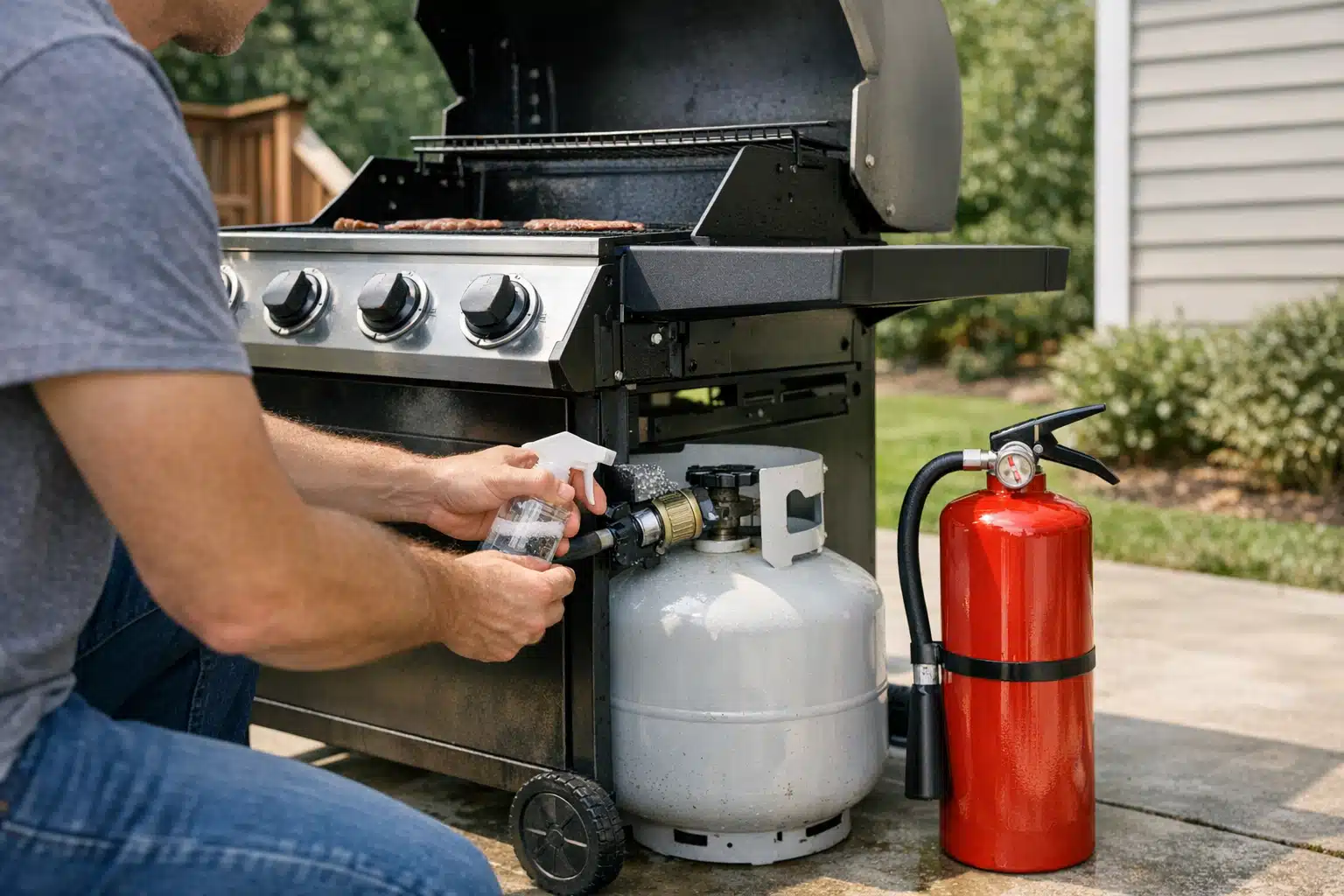
- Keep a fire extinguisher or garden hose within arm’s reach.
A gas leak is the hidden danger with propane grills. Test connections with soapy water before the season starts. Bubbles mean a leak that needs fixing before you light the burners.
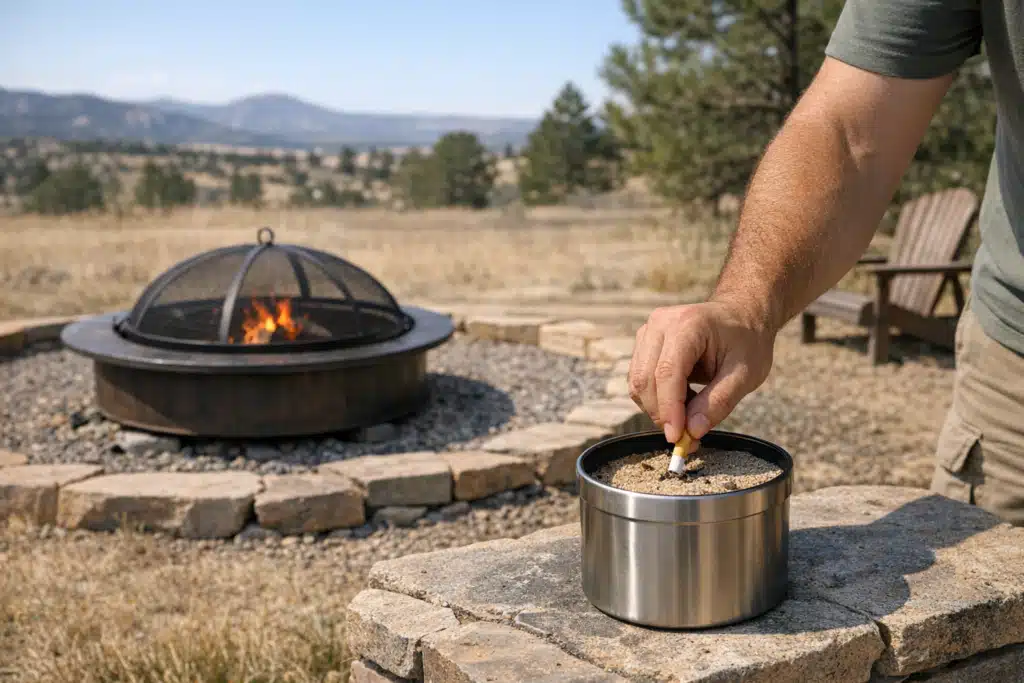
Charcoal grills need extra care with disposal. Hot coals can smolder for over 24 hours. Douse them with water and store ashes in a metal can away from the house.
Fire Pit and Bonfire Safety for Backyard Gatherings
Fire pits cause damage when embers escape or clearance is ignored. A spark screen and a cleared zone stop most problems. Wind is the wild card that turns a controlled fire into a hazard.
How to run a safe backyard fire pit
- Clear a 10-foot radius of grass, leaves, and furniture.
- Use a metal spark screen to trap flying embers.
- Skip the fire pit on windy days above 15 mph.
- Burn dry, seasoned wood only, never trash or leaves.
- Keep water and a shovel beside the pit at all times.
Check for a fire ban before you light anything. Colorado counties post Stage 1 and Stage 2 restrictions during dry spells. Open burning during a ban carries fines and much higher fire risk.
Never leave a fire pit unattended, even for a few minutes. Coals reignite when wind picks up. Drown the fire fully and stir the ashes until they are cool to the touch.
Fireworks: Handling the Riskiest Summer Activity
Fireworks start thousands of fires around the Fourth of July each year. Many are illegal in Colorado, and dry conditions make legal ones dangerous too. Roofs, fences, and dry grass ignite from stray sparks.
Steps to lower fireworks fire risk
- Check local law, as many Front Range cities ban all fireworks.
- Light fireworks over pavement, never grass or gravel.
- Keep a bucket of water ready for duds and spent shells.
- Soak used fireworks overnight before throwing them away.
- Point aerials away from homes, trees, and dry brush.
Sparklers seem harmless but burn near 2,000 degrees. That heat ignites clothing, mulch, and dry grass fast. Attending a public show removes the risk from your property entirely.
Camping and Outdoor Cooking Fire Precautions
Campfires and portable stoves cause fires when left burning or placed on dry ground. The same rules that protect a campsite protect your backyard. Clearance, water, and attention prevent most escapes.
Portable propane and camp stove safety
- Store propane tanks upright, outdoors, away from heat.
- Never use a camp stove or grill indoors or in a garage.
- Check hoses and valves for cracks before each use.
- Let stoves cool completely before packing them away.
Backyard smokers and pizza ovens run hot for hours. Keep them off wooden decks and away from fences. Radiant heat scorches nearby surfaces long after the flames die down.

 Posted on Google
What to Do If an Outdoor Fire Damages Your Property
Act on safety first if a fire spreads beyond your control. Get everyone away from the flames and call 911 before anything else. Small fires can double in size within a minute.
After the fire is out
- Wait for the fire department to confirm the area is safe.
- Photograph all damage for your insurance claim.
- Avoid entering structures with burned framing or wiring.
- Call a restoration company to assess smoke and structural damage.
Smoke and soot spread far beyond the visible burn area. Even a contained deck fire can push residue into your home. Fast cleanup stops corrosion and lingering odor from setting in.
How ARC Restoration Helps After Summer Fires
ARC Restoration handles fire, smoke, and soot cleanup across Colorado’s Front Range. Our crews remove damaged materials, treat smoke odor, and restore affected structures. We work directly with your insurance to speed up the claim.
Summer fires from grills, fire pits, and fireworks make up a steady share of our calls. We have seen how quickly a small flame reaches a home. Fast response limits how far the damage travels.
Conclusion
Strong outdoor fire safety comes down to clearance, water on hand, and constant attention during summer activities. Keeping grills, fire pits, and fireworks away from dry material stops most backyard fires before they start. When prevention falls short, quick cleanup keeps damage from spreading.
If a fire has damaged your property, ARC Restoration responds fast. Call or text 720-799-2434, email office@advancedrestorationcolorado.com, or visit https://advancedrestorationcolorado.com.
Sources
- National Fire Protection Association – Grilling Safety
- U.S. Consumer Product Safety Commission – Fireworks Information Center
- Colorado State Forest Service – Wildfire Mitigation
- U.S. Fire Administration – Outdoor Fire Safety


