
How to Choose the Right Fire Extinguisher for Summer Grilling
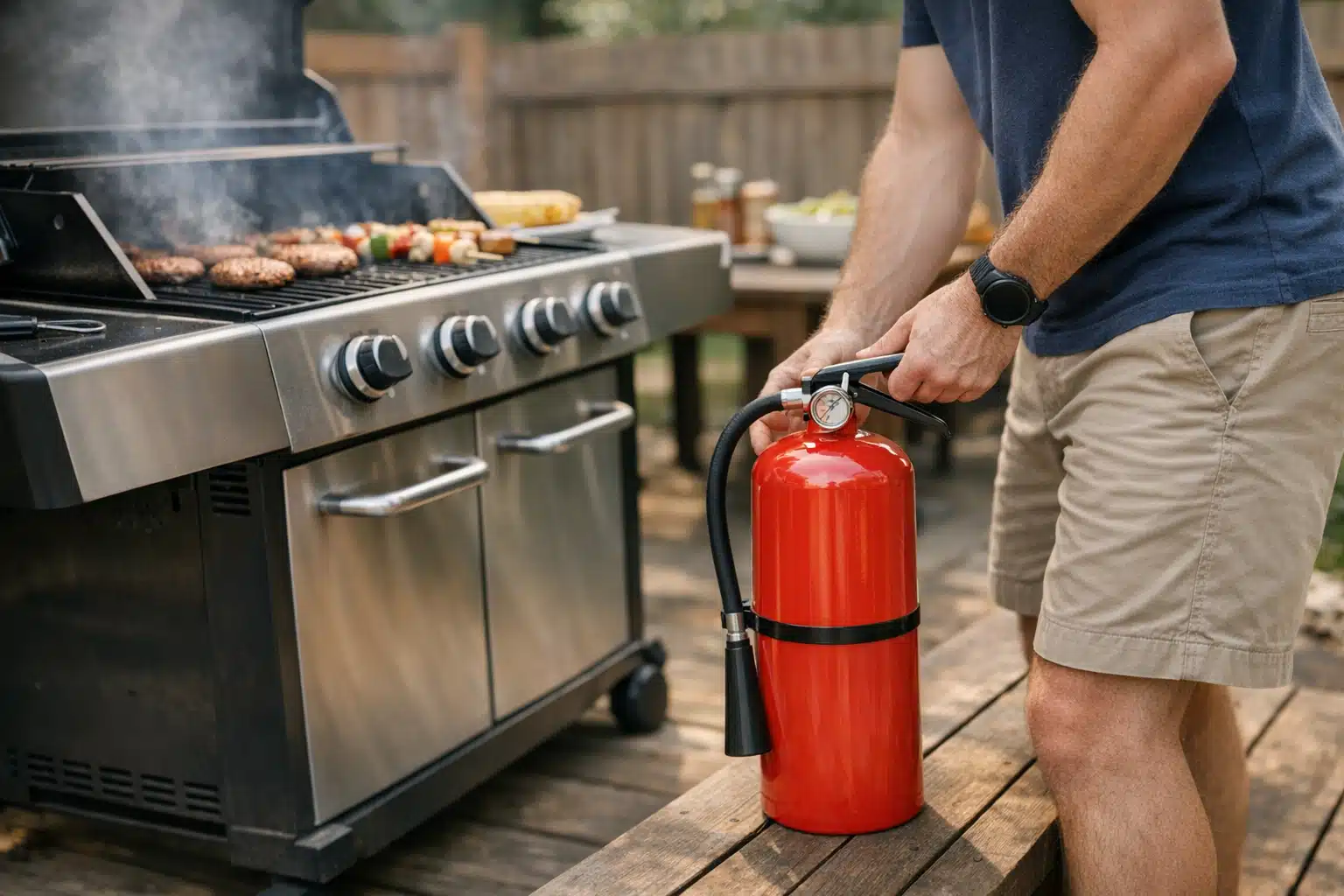
Choosing the right fire extinguisher for summer grilling is essential to prevent flare-ups and protect your home. This guide explains the types of extinguishers needed for different grill setups and offers tips on proper storage and maintenance.
- A multipurpose ABC dry chemical extinguisher rated at least 2-A:10-B:C is recommended for most backyard grills. It effectively handles grease and propane fires.
- Store the extinguisher within 30 feet of the grill, but not directly beside it, and keep it out of direct sunlight to maintain pressure.
- Regularly clean grease buildup in the grill's drip tray and check propane connections to minimize fire risks.
To choose the right fire extinguisher for summer grilling, consider the type of grill you have and the potential fire hazards associated with it. Look for an extinguisher rated for Class B fires, which are common with flammable liquids. Ensure it is easily accessible and regularly maintained to effectively manage any flare-ups.
Every July, fire departments across the country respond to a spike in backyard grill fires. The most common mistake homeowners make is grabbing the wrong extinguisher or reaching for a garden hose. A summer fire extinguisher matched to your grill setup can stop a flare-up before it reaches your deck, siding, or fence.
This post covers which extinguisher classes fight grill fires, how to size and place your unit, and the specific hazards that show up between Memorial Day and Labor Day.
Why Grill Fires Need a Specific Extinguisher
Grill fires involve two fuel types: flammable liquids and grease. A standard water extinguisher makes both worse. Spraying water on burning grease scatters it and can create a fireball.
Fire extinguishers are rated by class based on what they put out:
- Class A — ordinary combustibles like wood, paper, and cloth
- Class B — flammable liquids including grease, propane, and lighter fluid
- Class K — cooking oils and animal fats at high heat
- Class C — electrical fires from powered equipment
Grilling fires almost always fall into Class B or Class K. That distinction drives your entire buying decision.
Grease Fires Are the Summer Culprit
Drippings from burgers, sausage, and marinated meat pool in the bottom of a grill. When that grease ignites, temperatures climb past 600°F fast. A Class B or K extinguisher smothers the fire without spreading the burning oil.
How to Choose the Right Summer Fire Extinguisher
The right summer fire extinguisher for a home grill is a multipurpose ABC dry chemical unit rated for at least 2-A:10-B:C. It handles grease flare-ups, propane leaks, and the wood or fabric fires that spread from a grill.
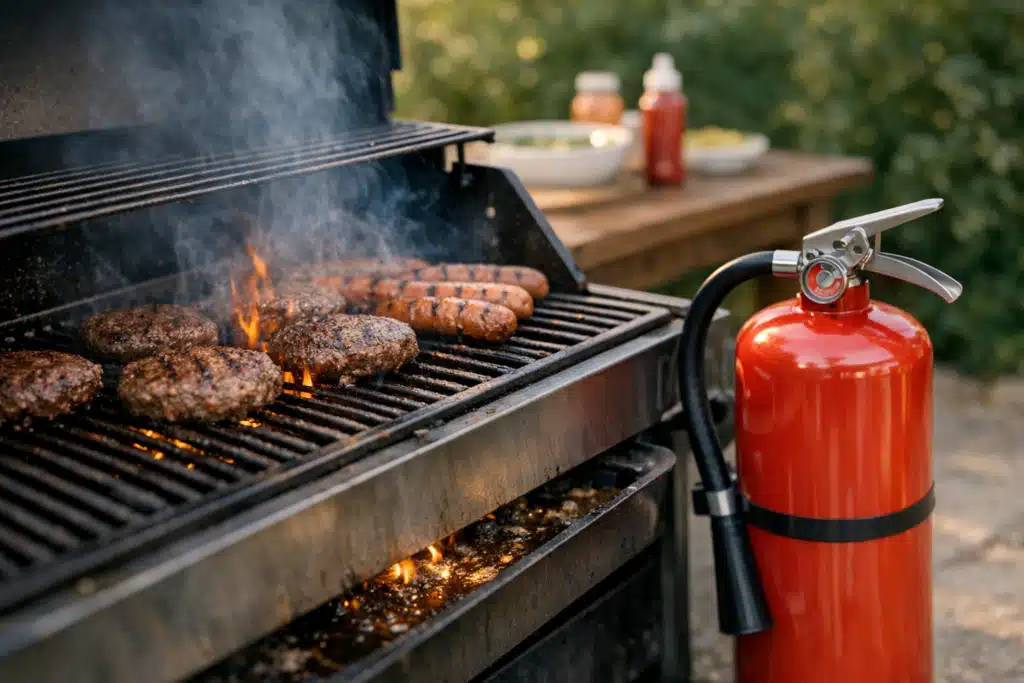
Follow these steps to pick yours:
- Match the class to your grill. Charcoal and gas grills both need Class B coverage for grease and fuel.
- Check the numeric rating. A 2-A:10-B:C rating gives enough capacity for a backyard fire without being too heavy to aim.
- Pick a size you can control. A 5-pound unit balances discharge time and handling for most adults.
- Confirm the UL listing. Look for an Underwriters Laboratories mark on the label.
- Add a fire blanket for oil fires. A blanket rated for cooking fires smothers small grease flames with no cleanup.
ABC vs. Class K: Which One for Your Setup
Most homeowners are served by an ABC dry chemical extinguisher. Class K units are built for commercial deep fryers and heavy oil volumes.
- Backyard gas or charcoal grill: ABC dry chemical, 5-pound
- Smoker with a grease tray: ABC dry chemical plus a fire blanket
- Outdoor deep fryer or turkey fryer: Class K wet chemical
- Griddle station or catering rig: Class K wet chemical
A turkey fryer deserves its own mention. Overfilled fryers cause some of the worst summer oil fires, and only a Class K unit or a fire blanket handles them safely.
Where to Store Your Grilling Extinguisher
Mount your extinguisher within 30 feet of the grill but not right beside it. You want it reachable without walking into the flames.
Storage rules that matter in summer heat:
- Keep it out of direct sun — cabinet or shaded wall mount works
- Avoid a closed car trunk, where heat can degrade the seal
- Check the pressure gauge monthly during grilling season
- Replace or recharge any unit that has been partially discharged
A dry chemical extinguisher stored above 120°F can lose pressure. Colorado patios in full afternoon sun hit that range, so shade placement counts.
Common Summer Grilling Fire Risks
Grill fires cluster around a few repeat scenarios. Knowing them helps you position both your extinguisher and your habits.
Grease Buildup in the Drip Tray
Months of cooked-on grease turn into fuel. A single hot flare-up ignites the whole tray. Clean the tray after every few cookouts to cut this risk.
Propane Leaks and Connections
Loose regulator fittings leak gas that pools and ignites on startup. Test connections with soapy water before the first cook of the season. A Class B extinguisher covers the fire, but shutting the tank valve stops the fuel.
Grills Too Close to the House
Radiant heat and stray embers ignite siding, deck railings, and dry landscaping. Keep the grill at least 10 feet from any structure or overhang.
Dry Vegetation and Wind
Colorado summers bring dry grass and gusty afternoons. An ember carried by wind can start a yard fire fast. This is where Class A coverage in an ABC unit earns its place.

 Posted on Google
How to Use a Fire Extinguisher on a Grill Fire
The technique is the PASS method, and it takes seconds to learn:
- Pull the safety pin
- Aim at the base of the flames, not the top
- Squeeze the handle in a steady grip
- Sweep side to side until the fire is out
For a gas grill fire, turn off the burners and close the propane tank valve first if you can reach it safely. Never lift or move a burning grill.
If the fire spreads beyond the grill or your extinguisher empties, leave and call 911. A small flare-up becomes a structure fire in under two minutes.
When Grilling Safety Fails: What Comes Next
Even careful grilling safety habits do not stop every fire. When flames reach siding, decking, or interior walls, the damage runs deeper than char marks.
Smoke residue coats surfaces, soot works into porous materials, and water from firefighting soaks structural elements. Fast cleanup limits how far that damage travels.
ARC Restoration handles fire and smoke damage cleanup for Colorado homes hit by grill and structure fires. Our crews address soot removal, odor treatment, and structural drying before problems compound.
Key Takeaways
A 5-pound ABC dry chemical extinguisher covers most backyard grills, with a fire blanket or Class K unit for oil and fryer fires. Store it in shade within 30 feet, learn the PASS method, and clean grease buildup between cookouts.
If a grill fire damages your home this summer, ARC Restoration provides fire and smoke cleanup across Colorado. Call or text 720-799-2434, email office@advancedrestorationcolorado.com, or visit https://advancedrestorationcolorado.com.
Sources
- National Fire Protection Association – Grilling Safety
- U.S. Fire Administration – Cooking Fire Safety
- National Fire Protection Association – Fire Extinguisher Types and Ratings


