
Dealing with Smoke Damage from Summer Forest Fires
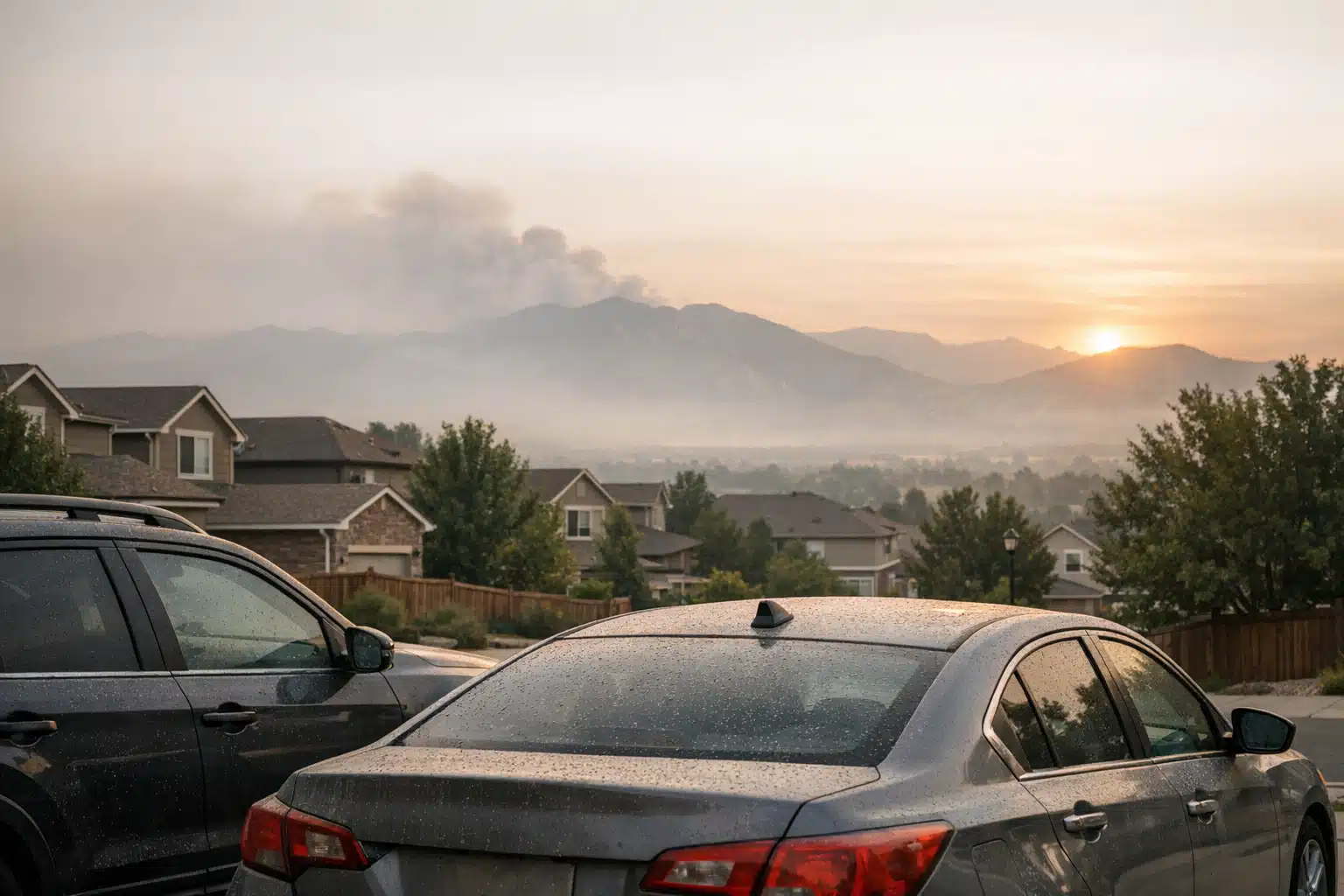
Smoke from a wildfire 40 miles away can coat your Colorado home in soot before you smell anything. That is the reality of forest fire smoke damage along the Front Range, where dry summers push fine particulates into neighborhoods far from the burn zone.
This article covers where smoke hides, why it keeps causing problems weeks later, and the steps that stop permanent staining and odor. You will learn what to handle yourself and when the damage calls for restoration equipment.
Why Forest Fire Smoke Damage Keeps Getting Worse in Colorado
Colorado’s fire season now stretches from May into October. Drought conditions and beetle-killed timber give summer fires more fuel and longer burn windows.
The 2020 Cameron Peak and East Troublesome fires showed how far smoke travels. Homes in Fort Collins, Loveland, and Denver metro reported soot and odor from flames miles away.
Wind patterns along the foothills funnel smoke into valleys and residential pockets. A home never touched by flame can still suffer heavy interior contamination.
What Makes Wildfire Smoke Different from a House Fire
Wildfire smoke carries burned vegetation, resin, and organic material. This creates a sticky, acidic residue that bonds to surfaces.
The particles are also finer than most structure-fire soot. They slip past window seals, door gaps, and attic vents with ease.
Where Smoke Damage Hides Inside Your Home
Smoke does not stay on visible walls. It settles in places most homeowners never check until odor or staining returns.
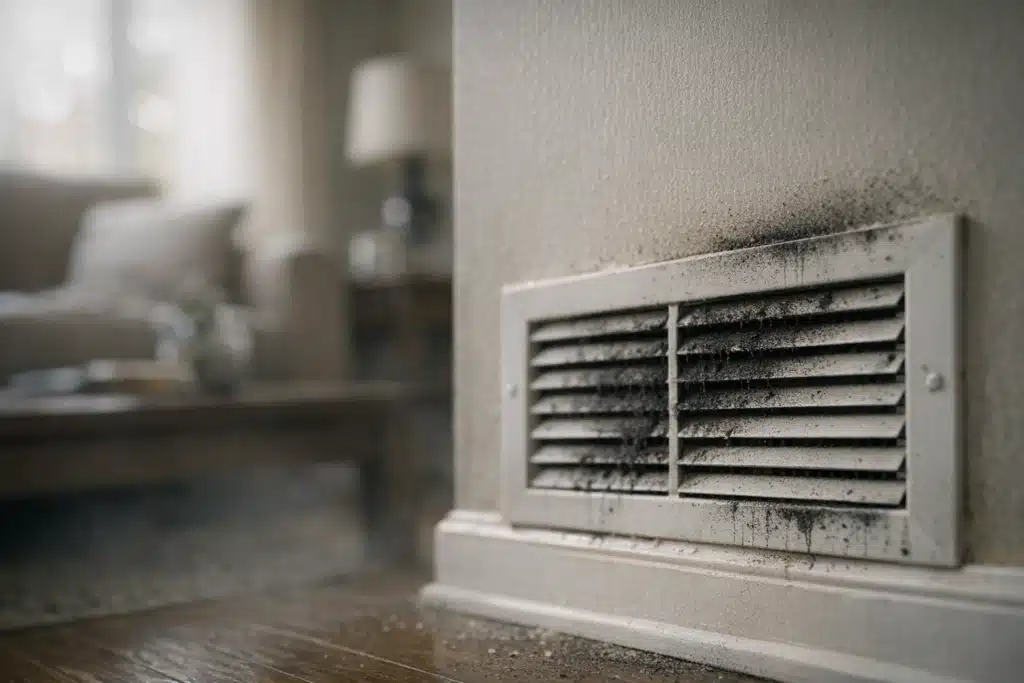
- HVAC systems — ductwork pulls smoke particles in and redistributes them every cycle.
- Attic insulation — porous material traps particulates and holds odor for months.
- Behind outlets and switch plates — negative air pressure draws smoke into wall cavities.
- Fabric and upholstery — curtains, couches, and mattresses absorb odor fast.
- Kitchen surfaces — grease films bond with soot and resist standard cleaners.
The acidic residue etches glass, corrodes metal, and yellows plastics over time. Left alone, damage that started as a smell becomes permanent staining.
First Steps to Take After Forest Fire Smoke Damage
Act within the first 48 hours to limit lasting harm. Acidic soot bonds tighter the longer it sits on surfaces.
- Shut down your HVAC system to stop circulating contaminated air.
- Replace air filters and check whether ducts pulled in smoke.
- Document everything with photos before you clean, for your insurance claim.
- Ventilate carefully only when outside air quality improves.
- Avoid wiping soot dry — this grinds particles into surfaces and stains them.
Wear an N95 mask or better during any cleanup. Fine wildfire particulates cause respiratory irritation and worse for sensitive groups.
What You Can Clean Yourself
Hard, sealed surfaces respond to careful cleaning. Use a HEPA vacuum first, then a dedicated soot sponge before any liquid cleaner.
Light residue on sealed countertops, glass, and finished wood is manageable. Work top to bottom and change cleaning cloths often.
What Requires Restoration Equipment
Odor trapped in porous materials rarely clears with retail products. Insulation, ductwork, and deep upholstery need specialized treatment.
Restoration teams use tools most homeowners cannot rent:
- Hydroxyl generators that break down odor molecules without evacuating the home.
- Thermal fogging that reaches the same pathways smoke traveled.
- Commercial HEPA air scrubbers that pull fine particulates from the air continuously.
- Duct cleaning systems that remove contamination from the full HVAC loop.
Why HVAC Cleaning Matters Most After Summer Fires
Your HVAC system is the single largest source of recurring odor after wildfire exposure. It draws smoke in and spreads it across every room.
Many Front Range homeowners clean visible surfaces, then wonder why the smell returns. The answer sits in the ductwork and blower assembly.
A clean surface next to a contaminated duct system stays clean for days at best. The particulates recirculate with the next cooling cycle during a hot Colorado afternoon.
Signs Your Ducts Are Contaminated
- Odor intensifies when the AC or furnace runs.
- Visible soot streaks around vents and registers.
- Dust from vents carries a burnt smell.
- Symptoms flare indoors even after surface cleaning.

 Posted on Google
How Insurance Handles Forest Fire Smoke Damage Claims
Most Colorado homeowner policies cover smoke damage, even without direct fire contact. Documentation determines how smoothly a claim moves.
Photograph affected rooms, HVAC components, and personal property before cleanup. Keep receipts for filters, cleaning supplies, and temporary lodging.
Restoration companies provide moisture readings, particulate testing, and itemized scopes that adjusters accept. This paperwork speeds approval and reduces disputes over coverage.
Protecting Your Home Before the Next Fire Season
Colorado summers now start earlier and run drier. A few steps reduce how much smoke enters during the next event.
- Upgrade to MERV 13 filters to catch finer particulates.
- Seal gaps around windows, doors, and attic penetrations.
- Add a portable HEPA air purifier for a safe room during heavy smoke days.
- Set your HVAC to recirculate instead of pulling outside air when smoke arrives.
- Track air quality using Colorado’s official monitoring maps.
Homes near the foothills face the highest exposure. A prep plan cuts both cleanup cost and health risk when the next fire starts.
Key Takeaways
Forest fire smoke damage reaches Colorado homes far from the flames, and its acidic residue causes permanent harm if left untreated. The HVAC system drives most recurring odor, which makes duct cleaning the step that determines whether the smell truly leaves.
ARC Restoration handles smoke damage cleanup, odor removal, and HVAC decontamination across the Front Range. Call or text 720-799-2434, email office@advancedrestorationcolorado.com, or visit https://advancedrestorationcolorado.com to schedule an assessment.
Sources
- U.S. Environmental Protection Agency – Wildfires and Indoor Air Quality (IAQ)
- Colorado Department of Public Health and Environment – Air Quality and Wildfire Smoke
- Ready.gov – Wildfires Preparedness
Smoke from wildfires can significantly damage homes in Colorado, even from fires miles away. This article explains where smoke hides, why it causes ongoing issues, and the necessary steps to prevent lasting damage.
- Smoke can infiltrate homes through HVAC systems, insulation, and porous materials, leading to persistent odors and stains. It is essential to act quickly within the first 48 hours to limit damage.
- Cleaning hard surfaces can be done by homeowners, but porous materials often require professional restoration equipment for effective odor removal.
- Insurance policies typically cover smoke damage, so documenting the damage and keeping receipts is crucial for a smooth claims process.
Smoke damage from forest fires occurs when fine particulates from wildfire smoke infiltrate homes, coating surfaces with soot and potentially causing health issues. This can happen even when the fire is miles away, as the smoke travels through the air and settles in neighborhoods, affecting indoor air quality.


