
Preventing Water Damage from Summer Sprinklers
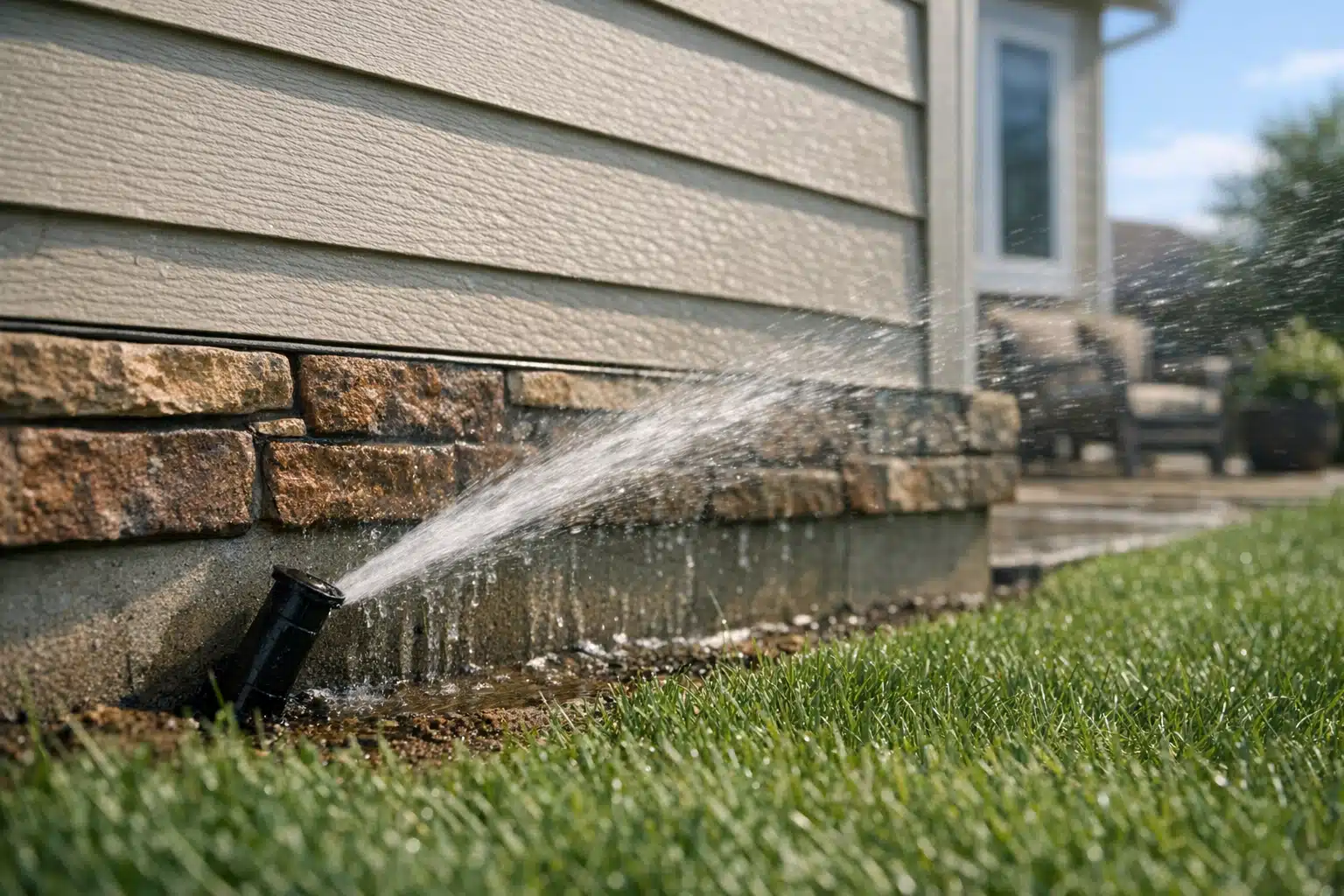
A misaligned sprinkler head can spray your foundation 15 minutes a day, every day, for an entire summer. That adds up to hours of water soaking into soil next to your basement walls. Most homeowners never notice until a musty smell appears or paint starts bubbling.
Sprinkler water damage ranks among the most preventable causes of summer basement flooding in Colorado homes. This article covers where the water goes wrong, how to spot early warning signs, and specific steps to keep irrigation water away from your structure.
Why Summer Sprinkler Water Damage Happens
Sprinkler water damage is structural harm caused by irrigation water pooling against or seeping into a building. Unlike a burst pipe, it works slowly and quietly across weeks of routine watering.
Colorado’s expansive clay soil makes the problem worse. Clay swells when saturated and pushes against foundation walls with surprising force.
Summer heat also tricks homeowners into over-watering. More cycles mean more chances for water to collect where it should not.
The Most Common Failure Points
We see the same setups cause damage year after year:
- Heads pointed at the house — spray hits siding, windows, and foundation directly.
- Beds that slope toward the foundation — water follows gravity to your basement wall.
- Cracked or tilted heads — a broken head can dump gallons in one spot per cycle.
- Zones running at night — problems go unseen until damage is done.
- Watering right against window wells — a full window well drains straight into a basement.
How to Prevent Sprinkler Water Damage This Summer
Preventing sprinkler water damage starts with one rule: keep irrigation water at least three feet from your foundation. Follow these steps to check your system.
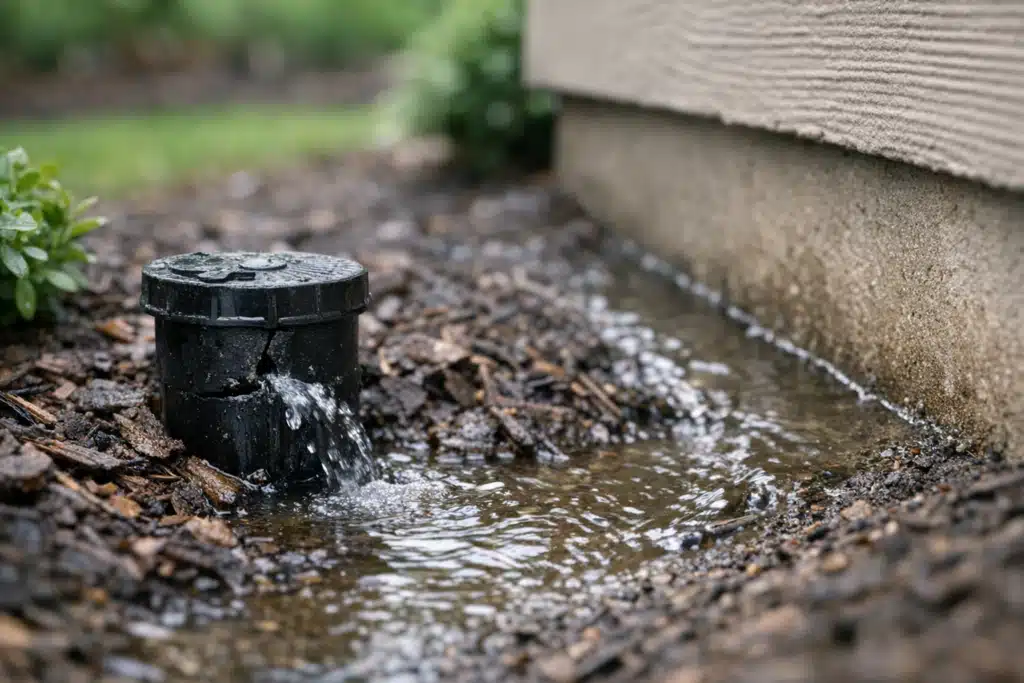
- Run each zone during daylight. Watch every head complete a full rotation. Look for spray hitting the house.
- Measure the throw. Any head spraying within three feet of the foundation needs adjustment or a shorter nozzle.
- Inspect window wells. Confirm no head sprays into or near them. Add covers if water reaches the glass.
- Check for pooling after a cycle. Walk the perimeter 20 minutes after watering. Standing water near walls signals a grading or head problem.
- Test drip lines. Cracked emitters near the foundation leak steadily without obvious spray.
Adjust Heads Away From the Structure
Rotary and spray heads both allow arc adjustment. Turn the arc so water covers grass and beds, not walls.
Replace fixed nozzles that overshoot with a lower-radius model. A 5-foot nozzle beats a 15-foot nozzle planted next to your house.
Fix Grading Before It Fixes You
Soil should slope away from the foundation at least six inches over the first ten feet. Flat or reverse-sloped beds trap sprinkler runoff against the wall.
Re-grade problem areas with soil, not mulch alone. Mulch holds moisture and can hide standing water.
Outdoor Summer Water Risks Homeowners Miss
Summer irrigation creates hazards that indoor plumbing never does. The water source runs on a timer and repeats daily.
Overwatering During Heat Waves
When temperatures climb, many controllers get bumped to longer or extra cycles. Soil near the foundation stays saturated between cycles and never dries out.
Group your watering into deeper, less frequent sessions instead. Fewer cycles give soil time to drain away from the structure.
Broken Heads From Mowing and Traffic
Summer mowing clips heads. Kids, pets, and parked cars snap risers.
A sheared head at ground level near the house floods that spot every cycle. Walk your yard weekly during mowing season to catch damage early.
Backyard Features That Add Water
Pools, hose bibs, and hand-watering all add moisture the ground must handle. Combined with sprinklers, they overload soil next to patios and basement walls.
Direct pool splash-out and hose runoff away from the house on hard surfaces.
Warning Signs Water Is Reaching Your Foundation
Early detection saves thousands in repairs. Catching seepage before it soaks drywall keeps a small fix small.
- Musty smell in the basement after watering days.
- Efflorescence — white chalky residue on concrete walls.
- Peeling paint or bubbling drywall along lower walls.
- Damp carpet edges near exterior basement walls.
- New cracks in foundation walls from soil pressure.
- Higher water bills without a change in habits.
Any of these after a run of hot, heavy-watering days points to irrigation as the source.

 Posted on Google
A Simple Summer Maintenance Routine for Your Sprinkler System
Consistent summer maintenance stops most irrigation damage before it starts. Build these checks into your seasonal habits.
Monthly Checks
- Run every zone in daylight and watch for misaligned spray.
- Straighten tilted heads and clear debris from nozzles.
- Confirm the controller matches the current weather, not spring settings.
After Every Storm or Yard Project
- Look for pooling near the foundation once soil is already wet.
- Check heads near new landscaping or dug-up areas.
- Install a rain sensor so the system skips cycles after heavy rain.
A rain sensor alone prevents days of needless watering into saturated ground. It pays for itself in one wet week.
What to Do If Sprinkler Water Already Got In
If water has reached your basement, act within the first 24 to 48 hours. Mold begins growing in that window on wet drywall and carpet.
- Shut off the affected zone at the controller.
- Remove standing water and move belongings off the wet floor.
- Photograph everything for insurance and your records.
- Start air movement with fans and open windows on dry days.
- Call a restoration team if water touched drywall, carpet, or insulation.
Hidden moisture behind walls causes the worst long-term damage. Meters and thermal cameras find water your eyes cannot.
Key Takeaways
Keep sprinkler water three feet from your foundation, run zones in daylight, and slope soil away from the house. Monthly checks and a rain sensor stop most sprinkler water damage before it reaches your basement. When irrigation water gets inside, fast drying in the first 48 hours limits the harm.
ARC Restoration handles water extraction, structural drying, and mold prevention for Colorado homes hit by irrigation flooding. Call or text 720-799-2434, email office@advancedrestorationcolorado.com, or visit https://advancedrestorationcolorado.com.
Sources
- EPA WaterSense – Landscaping and Irrigation Tips
- FEMA – Prevent and Reduce Flood Damage
- Colorado State University Extension – Yard and Garden Watering
Sprinkler water damage is a common issue for homeowners, especially in Colorado, where misaligned systems can lead to significant structural harm. This article outlines how to identify potential problems and offers practical steps to prevent water from pooling near foundations.
- Misaligned sprinkler heads can lead to water soaking into soil next to basement walls, causing damage over time. Homeowners should check their systems regularly to ensure proper alignment and function.
- Keeping irrigation water at least three feet from the foundation is crucial to prevent damage. Regular maintenance and adjustments can help avoid costly repairs.
- Early warning signs of water damage include musty smells, efflorescence, and bubbling paint. Addressing these issues quickly can save homeowners from extensive repairs.
A misaligned sprinkler head can direct water towards your foundation for extended periods, causing significant moisture buildup in the soil next to your basement walls. Over time, this can lead to water damage, which homeowners often discover only when they notice unpleasant odors or paint deterioration.


