
How to Protect Your Home from Unexpected Summer Power Surges
Protecting your home from summer power surges is essential, especially during Colorado's thunderstorm season. This guide outlines effective strategies to safeguard your appliances and wiring from unexpected voltage spikes.
- A whole-home surge protector should be installed at the main electrical panel to intercept large surges. Point-of-use surge protectors are also important for sensitive electronics.
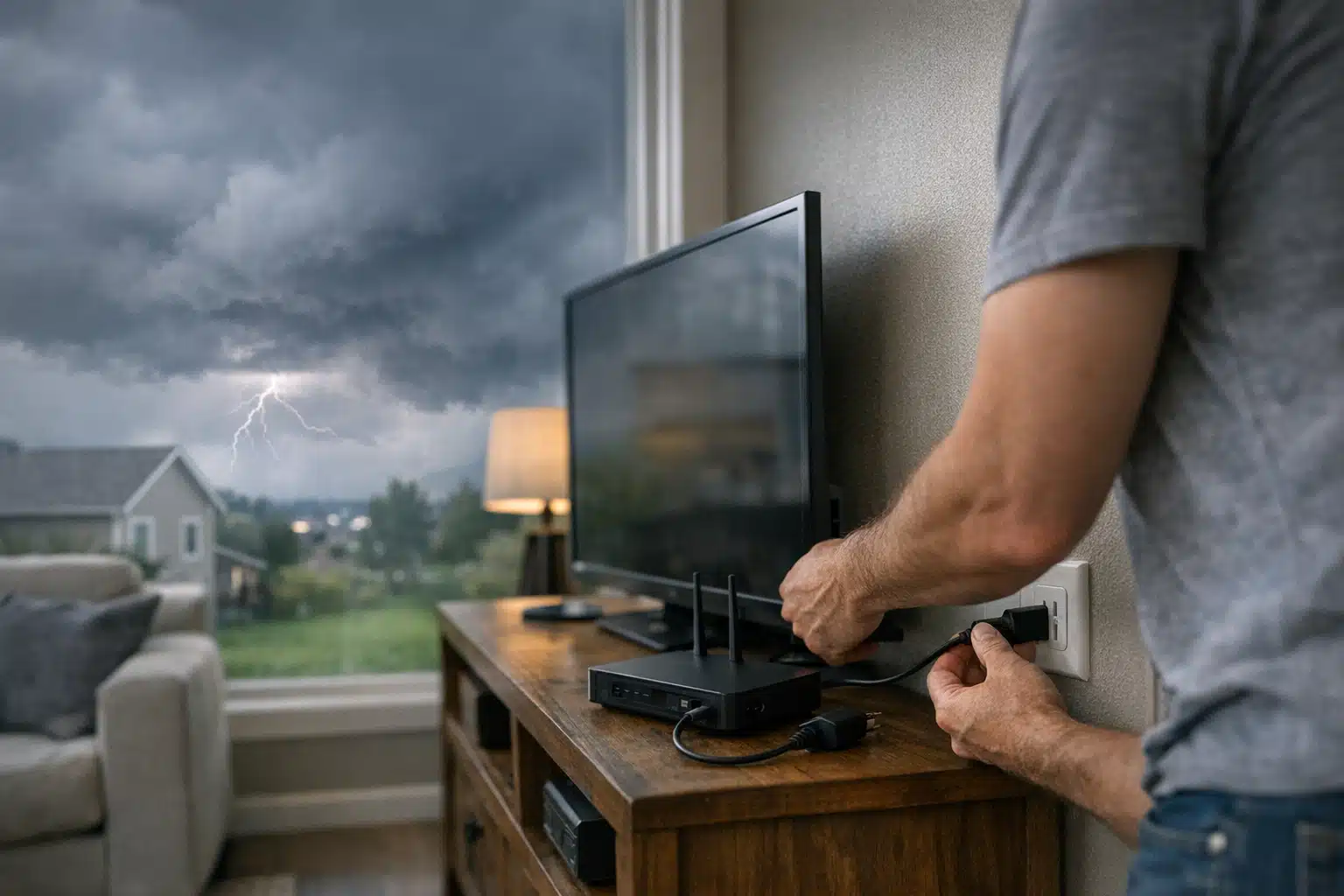
- Unplugging devices during severe storms is the only guaranteed way to protect against direct lightning strikes.
- After a surge, watch for signs like burning smells or flickering lights, and document any damage for insurance claims.
To protect your home from summer power surges, install surge protectors on all major appliances and electronics. Additionally, consider using whole-house surge protection systems that can shield your entire electrical system. Regularly inspect your wiring and ensure that your home insurance covers power surge damage for added security.
A single lightning strike near your home can send thousands of volts racing into your outlets in milliseconds. Colorado’s summer thunderstorm season turns this into a weekly threat, especially along the Front Range where afternoon storms build fast. Summer power surge protection keeps your appliances, electronics, and wiring safe when the sky opens up.
This post walks you step by step through protecting your home before, during, and after a storm. You will learn what causes surges, which safeguards matter most, and what to do when damage happens anyway.
Why Summer Storms Cause the Worst Power Surges
A power surge is a brief spike in electrical voltage that exceeds the normal 120 volts flowing through your outlets. Even a spike lasting one microsecond can fry a circuit board.
Summer storms create surges in several ways. Colorado’s dry, high-altitude air produces intense lightning activity between June and August.
- Direct lightning strikes hit power lines or your home and push massive voltage inside.
- Nearby strikes induce surges in wiring even without a direct hit.
- Grid switching happens when utilities reroute power after storm outages.
- Power restoration after a blackout sends a jolt as electricity floods back.
That last one catches many homeowners off guard. The surge often arrives minutes after the storm passes, when the utility restores service.
What a Surge Actually Damages
Surges target anything with a microprocessor or delicate circuitry. In our restoration work, we see the same casualties repeatedly.
- HVAC control boards and air conditioner compressors
- Refrigerators, dishwashers, and washing machines
- Televisions, computers, and gaming consoles
- Garage door openers and smart home hubs
- Electrical panels and wiring behind walls
The wiring damage is the dangerous part. A surge can scorch insulation inside a wall and start a fire hours later.
Summer Power Surge Protection: A Step-by-Step Plan
Protecting your home takes layers, not a single device. Follow this order for the strongest defense against storm-driven voltage spikes.
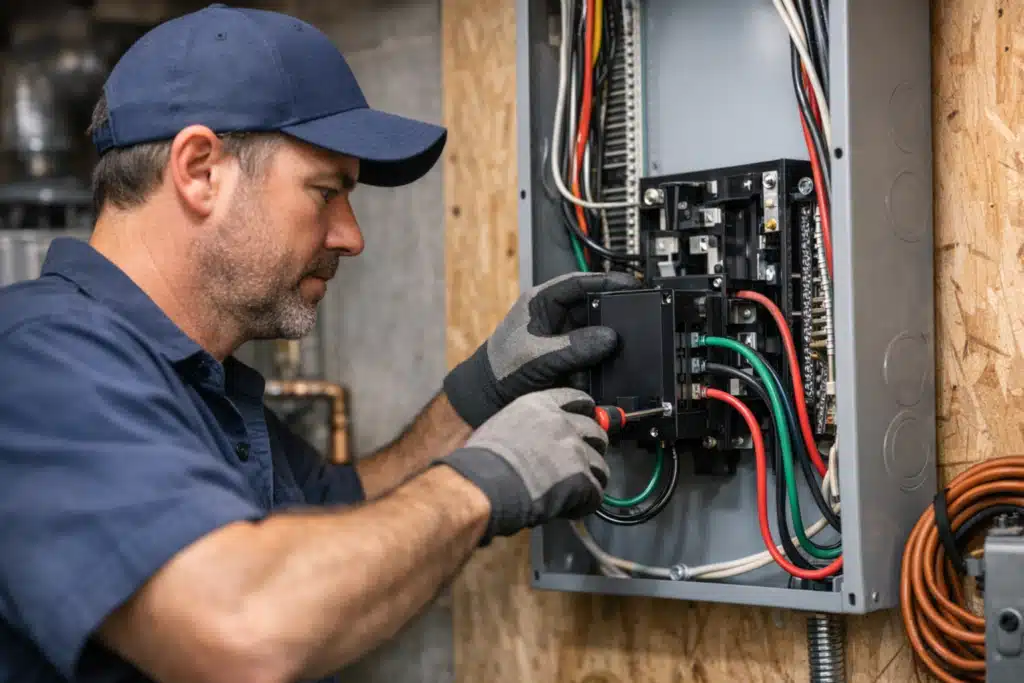
- Install a whole-home surge protector. A licensed electrician mounts this at your main electrical panel. It intercepts large surges from lightning and grid switching before they spread.
- Add point-of-use surge protectors. Plug sensitive electronics into UL-listed surge strips rated at 2,000 joules or higher. These catch smaller spikes the panel device lets slip.
- Protect specialty lines. Surges travel through coaxial cable, phone lines, and Ethernet too. Use surge strips with coax and data ports for TVs and modems.
- Unplug during severe storms. No device stops a direct lightning strike. Unplugging is the only certain protection for expensive electronics.
- Verify your grounding. A surge protector only works with proper grounding. Have an electrician confirm your panel and rods meet code.
Whole-home units cost between $300 and $700 installed. That figure is small against a $6,000 HVAC replacement after a strike.
How to Choose a Surge Protector That Works
Not every power strip protects anything. Many are just multi-outlet extension cords with no suppression at all.
Check for these markings before you trust a device:
- UL 1449 certification printed on the label.
- Joule rating of 2,000 or higher for electronics.
- Clamping voltage of 400 volts or lower for faster response.
- An indicator light that shows the unit still functions.
Surge protectors wear out. Each spike degrades the internal components until they stop suppressing. Replace point-of-use strips every three to five years, or sooner after a major storm.
What to Do Before a Colorado Storm Rolls In
Front Range storms often give you 30 to 60 minutes of warning. Use that window to reduce your exposure.
- Unplug computers, gaming systems, and televisions.
- Turn off and unplug window air conditioners.
- Set your central AC thermostat to off if lightning is close.
- Charge phones and backup batteries in advance.
- Move electronics away from windows in case of wind damage.
Weather apps with lightning-strike tracking help you time this. When strikes fall within 10 miles, start unplugging.
The Central Air Conditioner Problem
Your AC is the most expensive victim of summer surges. A spike can destroy the compressor or control board in one hit.
Ask your electrician about a dedicated HVAC surge protector at the disconnect box. It shields the unit specifically during the season it runs hardest.
What to Do After a Surge Hits Your Home
Act fast if you suspect surge damage. The signs are not always obvious, and hidden wiring damage grows worse over time.
Watch for these warning signs after a storm:
- Burning smell near outlets or the electrical panel
- Outlets or switch plates warm to the touch
- Flickering lights that continue after power returns
- Appliances that will not turn on or behave erratically
- Tripped breakers that refuse to reset
If you smell burning or see scorch marks, cut power at the main breaker. Call your utility and a licensed electrician immediately.
When a Surge Causes Fire or Water Damage
Electrical surges start house fires. A scorched wire behind drywall can smolder and ignite hours after the storm.
Surge-triggered fires also bring water damage from sprinklers or fire hoses. That combination leaves smoke residue, soaked insulation, and structural harm.
ARC Restoration handles this exact aftermath. Our crews clean smoke damage, dry saturated materials, and rebuild affected areas after electrical fires.

 Posted on Google
Insurance and Documentation Steps
Most homeowner policies cover surge damage from lightning. Coverage for grid-related surges varies by insurer.
Protect your claim with clear records:
- Photograph every damaged item and any scorch marks.
- Save receipts and model numbers for destroyed appliances.
- Note the date and time of the storm and outage.
- Keep the electrician’s damage report.
- File promptly, since some policies limit surge claim windows.
Whole-home surge protection also lowers risk in the eyes of some insurers. Ask whether installation earns a policy discount.
Building Long-Term Home Safety Against Surges
Layered protection improves your home safety across every storm season, not just one bad afternoon. Combine the panel device, point-of-use strips, and unplugging habits for the strongest result.
Schedule an electrical inspection every few years in older homes. Aluminum wiring and worn panels raise surge fire risk sharply.
A little prevention protects far more than electronics. It guards the wiring inside your walls and the people under your roof.
Conclusion
Summer power surge protection comes down to layered defense: a whole-home protector at the panel, UL-listed strips on electronics, and unplugging during close lightning. Watch for burning smells and flickering lights after storms, and document any damage fast for your insurer.
If a summer storm caused surge damage, fire, or water intrusion in your home, ARC Restoration can help you recover. Call or text 720-799-2434, email office@advancedrestorationcolorado.com, or visit https://advancedrestorationcolorado.com.
Sources
- Ready.gov – Thunderstorms & Lightning
- Electrical Safety Foundation International – Surge Protection
- National Fire Protection Association – Electrical Safety
- National Weather Service – Lightning Safety


