
Understanding the Effects of High Summer Temperatures on Your Roof
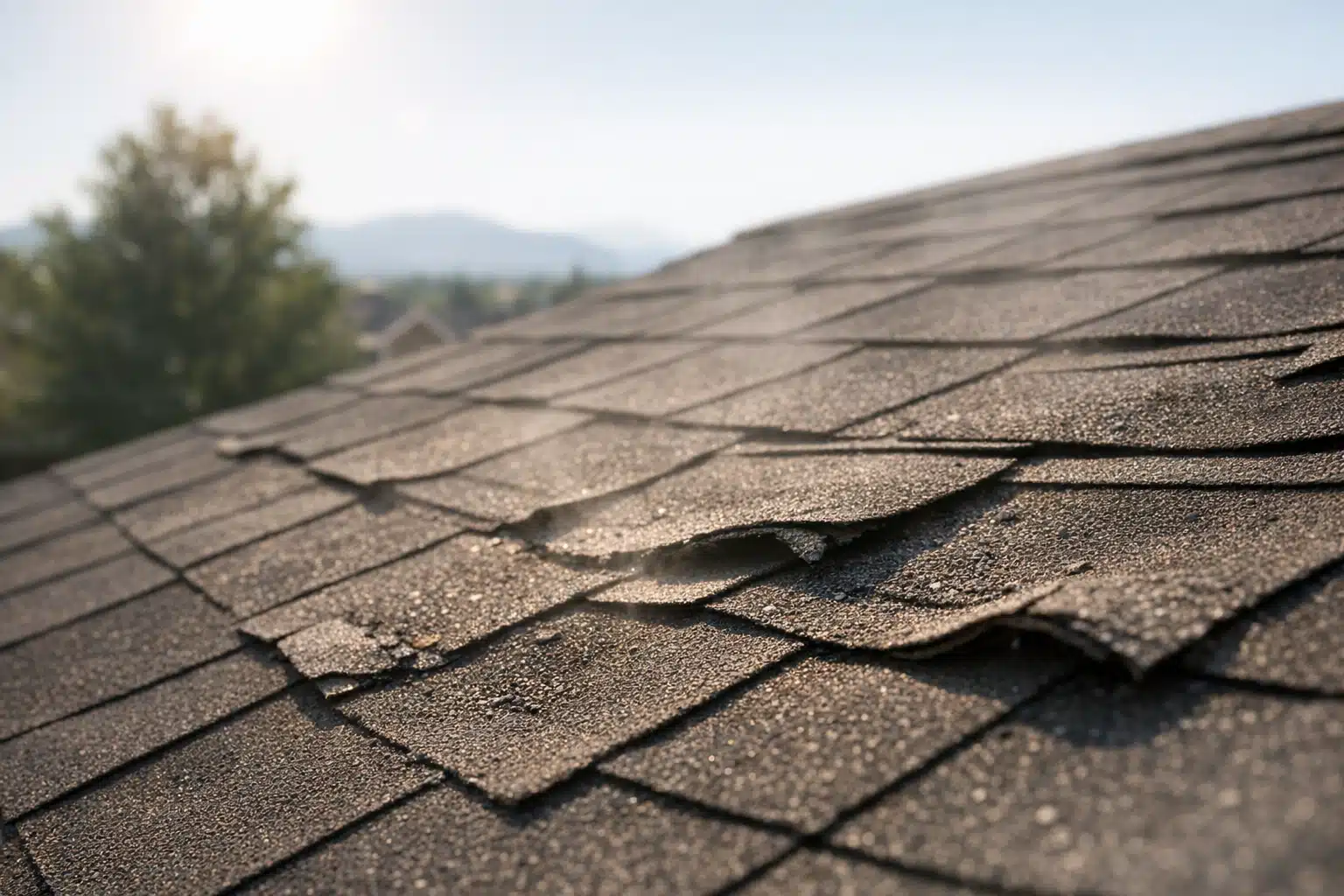
Your roof surface can hit 150 degrees or hotter on a Colorado July afternoon, even when the air reads 90. That heat gap is where summer roof damage begins, and most homeowners never see it until a leak shows up inside.
This post breaks down how extreme heat attacks each roofing material, which warning signs matter, and when the damage crosses into repair territory.
ARC Restoration has inspected hundreds of heat-stressed roofs across the Front Range. What follows comes from those inspections, not a textbook.
How High Temperature Effects Reach Your Roof
Roof surface temperature runs 50 to 90 degrees hotter than the surrounding air. Dark asphalt shingles absorb the most solar radiation and hold it longest.
Colorado adds a second stressor: altitude. At 5,000-plus feet, UV intensity climbs sharply, accelerating material breakdown beyond what lower-elevation roofs face.
The daily heat cycle matters more than any single hot day. Shingles expand under midday sun, then contract as temperatures drop 40 degrees overnight. That expansion-contraction loop fatigues materials month after month.
How Extreme Heat Damages Different Roofing Materials
Each roofing material fails under heat in its own way. Knowing your material tells you what to watch for.
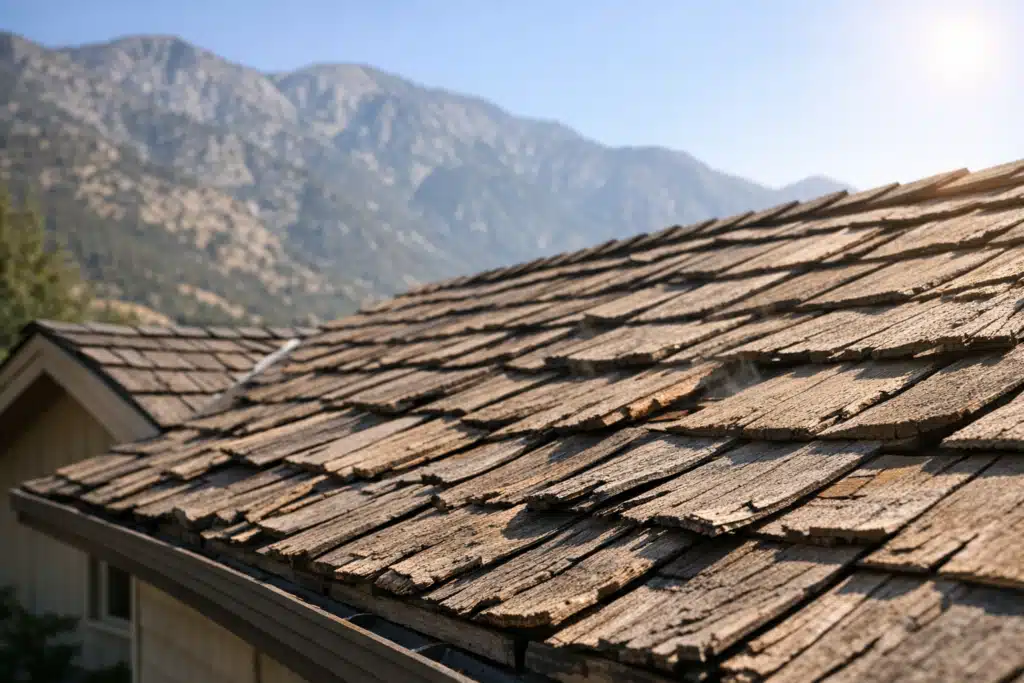
Asphalt Shingles
Asphalt shingles suffer the most visible summer roof damage. Heat drives out the volatile oils that keep shingles flexible.
- Cracking: Dried shingles split along the surface, exposing the mat underneath.
- Curling: Edges lift and cup as the shingle loses moisture.
- Granule loss: Protective granules loosen and wash into gutters after storms.
- Blistering: Trapped moisture forms bubbles that pop and leave bare spots.
Granule loss speeds everything up. Once granules go, UV rays hit the asphalt directly and aging jumps.
Wood Shakes
Wood shakes dry out, shrink, and split under sustained heat. Gaps open between shakes, letting wind-driven rain reach the deck.
Warped shakes also curl at the edges. That curl catches wind and tears loose during summer storms.
Metal Roofing
Metal handles heat better but expands and contracts more per degree. Panels shift, and fasteners work loose over repeated cycles.
Loose fasteners create tiny gaps around screw heads. Water finds those gaps during afternoon monsoon downpours.
Tile and Slate
Tile resists heat well but the underlayment beneath does not. Felt underlayment bakes brittle and cracks long before the tile shows wear.
That hidden failure fools homeowners. The roof looks fine from the ground while the waterproof layer underneath has already given out.
The Damage You Cannot See From the Ground
Heat damage runs deeper than the surface. Attic conditions tell the real story.
An unventilated attic can reach 150 degrees in summer. That heat cooks your roof deck from below and shortens shingle life from the inside.
- Deck warping: Plywood sheathing swells and buckles under trapped heat.
- Adhesive failure: Shingle sealant strips soften and lose their grip.
- Insulation breakdown: Extreme attic heat degrades insulation R-value over time.
Poor ventilation is the hidden multiplier. A roof with blocked soffit vents ages years faster than a properly vented one.
Warning Signs of Summer Roof Damage
Catch heat damage early and you avoid a full replacement. Watch for these specific signs after a hot stretch.
- Granules in gutters: Sandy sediment after cleaning points to shingle breakdown.
- Curled or cupped shingle edges: Visible from the ground with binoculars.
- Cracked or brittle shingles: Surface splits that run in no set pattern.
- Interior ceiling stains: Yellow or brown rings signal a compromised barrier.
- Rising cooling bills: A failing roof lets heat pour into living space.
- Popped fastener heads: On metal roofs, look for raised screws.
One sign rarely means an emergency. Two or three together usually mean the roof needs attention before the next storm.
Why Colorado Summers Hit Roofs Harder
Front Range weather stacks stressors that few regions face at once. Intense UV, wide temperature swings, and sudden hailstorms combine.
A shingle weakened by June heat cracks more readily under July hail. Heat softens the material, then impact finishes the job.
This pairing is what we see most on inspections. Homeowners blame the hailstorm, but heat set the stage weeks earlier.
The Monsoon Factor
Afternoon thunderstorms follow the hottest hours of the day. Cool rain hits a roof still baking at 140 degrees.
That thermal shock stresses shingles and sealants. Repeated cycles loosen bonds that keep water out.

 Posted on Google
How to Protect Your Roof From Heat Damage
You cannot lower Colorado’s summer temperatures. You can reduce how much heat your roof absorbs and traps.
- Improve attic ventilation: Balanced intake and exhaust vents cut attic heat dramatically.
- Add attic insulation: A proper R-value keeps deck heat out of living space.
- Choose lighter shingle colors: Lighter roofs reflect more solar energy at replacement time.
- Clear debris from valleys: Trapped leaves hold heat and moisture against shingles.
- Schedule a post-summer inspection: Late August catches damage before winter arrives.
Ventilation gives the biggest return. Fixing airflow often adds years to a roof already showing early wear.
When to Call for a Roof Inspection
Book an inspection if you see granule loss combined with any interior staining. That pairing points to active water intrusion.
Roofs older than 15 years deserve a yearly summer check. Aging materials lose heat tolerance and fail faster each season.
After a hailstorm on a heat-stressed roof, get eyes on it quickly. Combined damage spreads faster than either problem alone.
Key Takeaways
Summer roof damage starts with surface temperatures far above the air reading, and Colorado’s altitude and UV make it worse. Watch for granule loss, curling, and interior stains, and fix attic ventilation to slow the aging clock.
If your roof shows heat stress or storm damage this summer, ARC Restoration inspects and repairs Colorado roofs before small problems become leaks. Call or text 720-799-2434, email office@advancedrestorationcolorado.com, or visit https://advancedrestorationcolorado.com.
Sources
- U.S. Department of Energy – Cool Roofs
- U.S. Environmental Protection Agency – Using Cool Roofs to Reduce Heat Islands
- National Roofing Contractors Association – Roofing Resources
High summer temperatures can severely impact roofing materials, particularly in Colorado's unique climate. This article outlines how heat affects different roofing types and highlights key warning signs of damage that homeowners should watch for.
- Roof surfaces can reach temperatures of 150 degrees or more, leading to potential damage that often goes unnoticed until leaks occur.
- Asphalt shingles are particularly vulnerable, suffering from cracking, curling, and granule loss due to heat exposure.
- Proper attic ventilation and regular inspections can help mitigate heat damage and prolong the life of the roof.
High summer temperatures can cause roof surfaces to reach extreme heat levels, often exceeding 150 degrees. This intense heat can lead to damage that is not immediately visible, resulting in leaks and other issues that homeowners may not notice until significant problems arise.


