
How to Prevent Water Damage in Mobile Homes During Summer
Why Summer Puts Mobile Homes at Higher Risk
Summer storms cause more mobile home water damage than many owners expect. Heavy rain, hail, and wind hit manufactured homes differently than site-built houses. Their lighter roofs, seam-based construction, and underbelly systems create entry points standard homes lack.
Mobile home water damage prevention depends on catching problems before July and August downpours arrive. This post covers the exact spots that fail, how to inspect them, and what to do when water gets in.
The strategies below focus on manufactured and mobile homes, not standard construction. That difference matters for every step that follows.
The Roof Seams and Coating Are Your First Weak Point
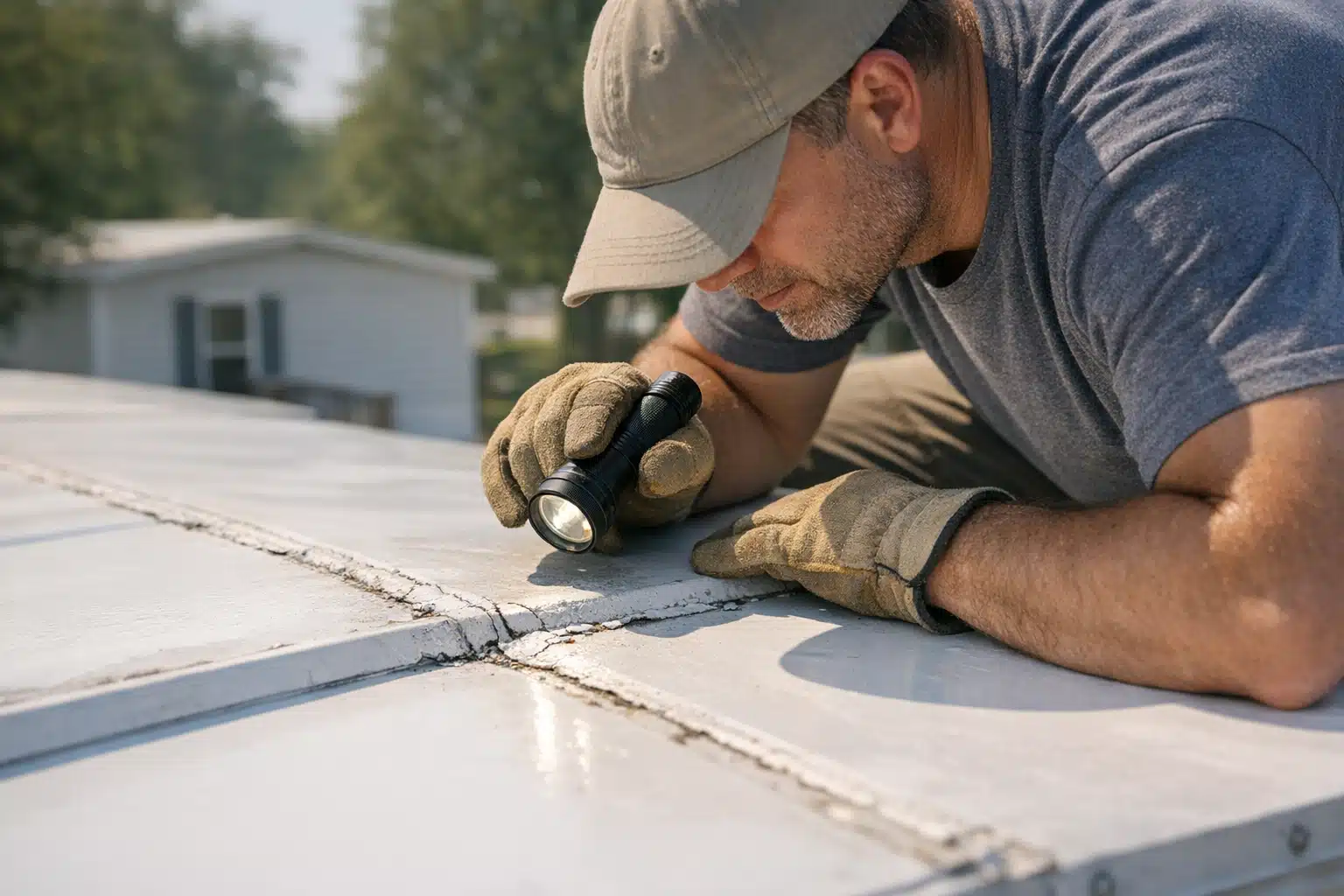
Metal and rubber membrane roofs on mobile homes rely on sealed seams. Sun exposure dries out that sealant faster than shingle roofs age. A single cracked seam can channel water into ceiling panels within one storm.
What to Inspect Before Summer
- Roof coating condition: Look for chalky, cracked, or peeling areas on flat metal roofs.
- Seam sealant: Check where roof panels overlap. Gaps or brittle caulk let rain in.
- Vent and pipe boots: Rubber collars around plumbing vents crack in heat. Reseal any that feel stiff.
- Roof-over transitions: If your home has a metal roof-over, inspect where it meets the original roofline.
Recoat flat metal roofs with an elastomeric product every three to five years. Colorado sun shortens that timeline. A fresh coat costs far less than replacing water-stained interior panels.
Check the Underbelly and Vapor Barrier
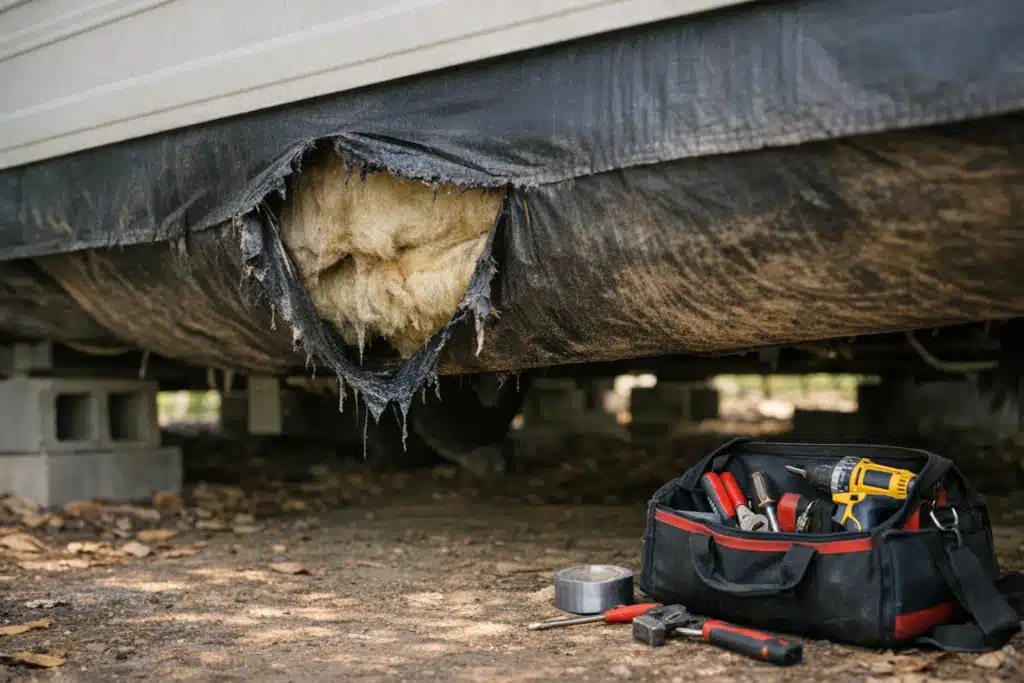
The belly wrap is the black membrane sealing the underside of your mobile home. It protects insulation, ductwork, and plumbing from ground moisture and pests. Torn belly wrap traps water and hides leaks for months.
Signs of Underbelly Problems
- Sagging black material hanging below the frame
- Insulation drooping or falling out
- Musty smells coming from floor vents
- Soft or spongy spots in flooring above
Summer plumbing leaks pool inside a damaged belly wrap instead of draining. That standing water rots subflooring from below. Patch tears with belly wrap tape and repair supports before humid months set in.
Skirting Ventilation Prevents Trapped Moisture
Skirting hides the crawl space but must breathe. Closed skirting traps humidity against your plumbing and floor. That moisture condenses and drips onto insulation all summer.
Keep vents open from late spring onward. A general rule uses one square foot of vent area per 150 square feet of floor space. Clear grass and debris blocking existing vents.
Quick Skirting Checks
- Confirm every vent panel opens and closes freely.
- Remove stored items pressed against interior skirting.
- Grade soil so rain flows away from the home, not under it.
- Look for pooling water after the first heavy summer rain.
Windows, Doors, and Wall Seams
Mobile home walls flex more than framed walls. That movement pulls caulk away from window and door frames over time. Wind-driven summer rain exploits every gap.
Run a bead of exterior sealant around window frames where old caulk has separated. Check the bottom corners first, since water collects there. Replace worn door sweeps that let rain track across thresholds.
Plumbing Failures Spike in Summer
Higher summer water usage stresses aging plumbing lines. Washing machines, hoses, and swamp coolers run harder in heat. A supply line burst inside a wall soaks insulation fast.
Where Mobile Home Plumbing Fails
- Water heater connections: Corroded fittings drip into the closet floor.
- Under-sink supply lines: Plastic connectors crack with age and pressure swings.
- Swamp cooler lines: Common in Colorado, these run only in summer and leak when reactivated.
- Outdoor spigot bibs: Split fittings send water toward the crawl space.
Test your swamp cooler water line before the first hot week. A slow drip behind the unit can run for days unnoticed. Shut off supply lines to unused fixtures during long trips.

 Posted on Google
Gutters and Drainage Around the Home
Many mobile homes lack gutters entirely. Rain sheets off the roof edge and pools at the base of the walls. That water finds its way under skirting and against tie-downs.
Adding gutters and downspouts routes water away from the perimeter. Extend downspouts at least four feet from the home. Slope the surrounding ground so runoff moves outward.
A Summer Maintenance Schedule That Works
Consistent summer maintenance beats emergency repairs every time. Break the tasks into a simple seasonal rhythm you can repeat each year.
- Early June: Inspect roof seams, recoat if needed, test swamp cooler lines.
- Mid-June: Open skirting vents, check belly wrap, clear drainage paths.
- After each major storm: Walk the perimeter for pooling and ceiling stains.
- Late August: Re-caulk windows and doors before fall rain patterns shift.
Write down what you find each year. Repeat problem spots tell you where bigger repairs are coming. Early action keeps small leaks from becoming rotted floors.
What to Do When Water Gets In Anyway
Fast response limits how far water spreads inside a mobile home. Manufactured floors and walls absorb moisture quickly because of their lighter materials. Waiting even a day invites mold into insulation and paneling.
Follow these steps if you find water intrusion:
- Stop the source if it is a plumbing leak. Shut off the main valve.
- Move belongings off wet flooring immediately.
- Pull back skirting to check whether water reached the crawl space.
- Document damage with photos for any insurance claim.
- Call a restoration team trained in manufactured homes.
Standard drying methods do not always reach the underbelly and wall cavities. Trapped moisture there causes hidden mold and structural rot. That is where restoration equipment and experience matter.
Key Takeaways
Effective mobile home water damage prevention comes down to roof seams, belly wrap, ventilation, and plumbing checks before summer heat and storms arrive. A short seasonal maintenance routine catches most problems while they are still cheap to fix.
If water has already entered your mobile home, ARC Restoration handles manufactured home water damage across Colorado. Call or text 720-799-2434, email office@advancedrestorationcolorado.com, or visit https://advancedrestorationcolorado.com to get help fast.
Sources
- U.S. Department of Housing and Urban Development – Manufactured Housing FAQs
- FEMA – Protecting Your Home and Property from Flood Damage
- Centers for Disease Control and Prevention – Mold Cleanup After Water Damage
Summer storms can lead to significant water damage in mobile homes due to their unique construction. Preventative measures should be taken before the rainy season to protect against leaks and moisture.
- Inspect roof seams and coatings regularly to prevent leaks from heavy rain.
- Check the underbelly and ensure the belly wrap is intact to avoid hidden water damage.
- Maintain proper ventilation in skirting to prevent trapped moisture that can lead to further issues.
To prevent water damage in mobile homes during summer, regularly inspect the roof for leaks, ensure gutters are clear, and check seals around windows and doors. Additionally, reinforce the underbelly and consider installing a sump pump to manage excess water during heavy storms.


