
Summer Mold Prevention Tips for Humid Areas in Your Home
Mold can colonize a damp bathroom wall in as little as 24 to 48 hours during a hot Colorado summer. When afternoon monsoon storms push outdoor moisture up and air conditioners run all day, the humid areas of your home become breeding grounds for spores.
This post covers where mold starts, what warning signs to watch for, and the exact steps for effective summer mold prevention. You will learn how to control humidity, protect vulnerable rooms, and know when a small problem needs expert help.
Why Summer Humidity Fuels Mold Growth
Mold needs three things to grow: moisture, a food source, and temperatures between 60°F and 80°F. Summer supplies all three at once.
Warm air holds more water vapor than cool air. When that moist air hits a cold surface like an air-conditioned basement wall, condensation forms. Drywall, wood framing, and carpet padding then feed the spores.
Colorado homes face a specific pattern. Dry mornings lull people into ignoring humidity, then July and August monsoon storms spike moisture fast. A finished basement that felt fine in June can smell musty by August.
The 60% Humidity Threshold
Indoor relative humidity above 60% invites mold growth. The Environmental Protection Agency recommends keeping levels between 30% and 50%.
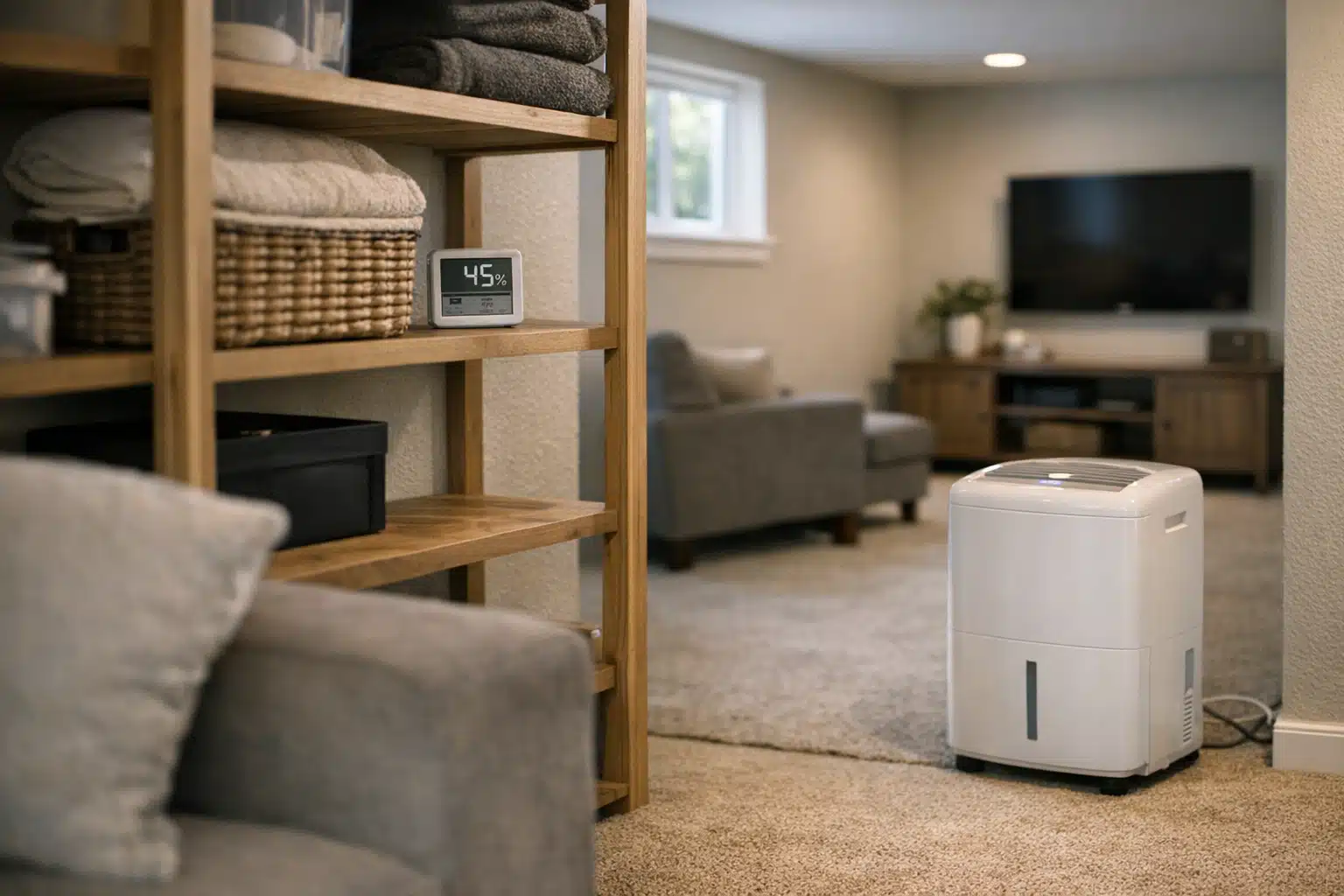
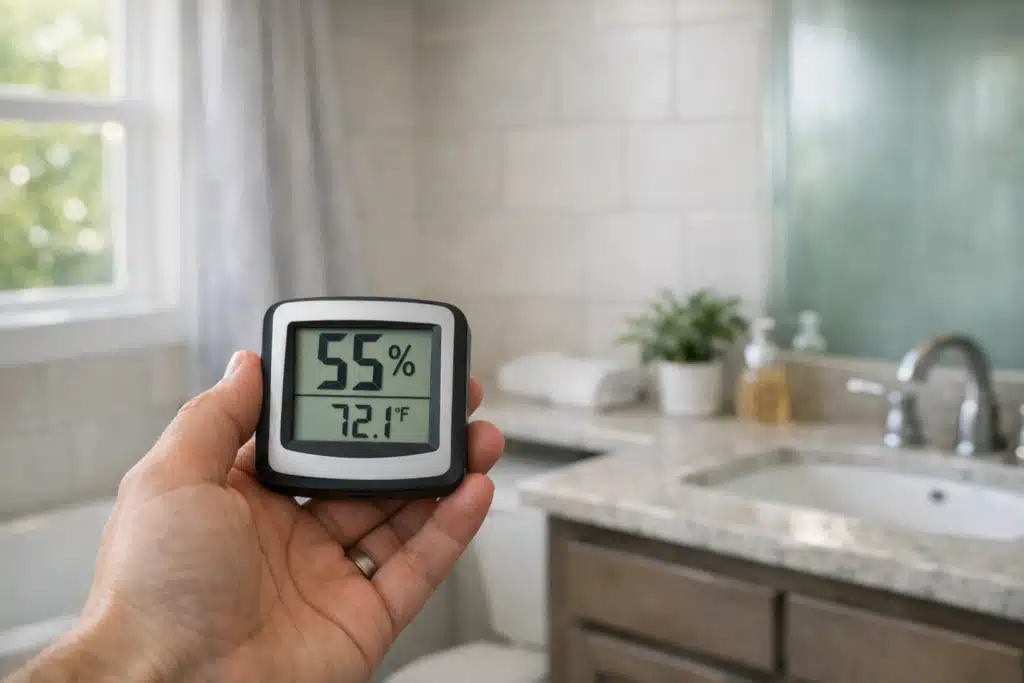
Buy a small hygrometer for under $15 and place one in your basement and one in a bathroom. Check readings after storms and after long AC cycles.
Summer Mold Prevention Starts in the Most Humid Areas
The rooms most prone to summer mold share one trait: they trap moisture and get poor airflow. Focus your effort where the risk concentrates.
Basements and Crawl Spaces
Basements sit below grade, where cool walls meet warm summer air and produce condensation. Colorado clay soil holds water after monsoon rains, pushing moisture through foundation walls.
- Run a dehumidifier sized for the square footage, emptied or plumbed to a drain.
- Seal foundation cracks with hydraulic cement before storm season.
- Pull stored boxes and furniture a few inches off exterior walls for airflow.
- Watch for a musty odor near carpet edges, a common early signal.
Bathrooms
Bathrooms combine heat, steam, and slow-drying surfaces. Grout lines, caulk seams, and the ceiling above the shower are the first spots to darken.
- Run the exhaust fan during every shower and 20 minutes after.
- Squeegee shower walls to cut standing water on tile.
- Replace cracked caulk that lets water reach drywall behind the tub.
- Wash bath mats weekly, since damp fabric hides growth.
Kitchens and Laundry Rooms
Refrigerator drip pans, dishwasher seals, and washing machine gaskets stay wet and hidden. Front-load washers are known for mold on the rubber door boot.
Wipe the washer gasket dry after each load and leave the door open between uses. Check under the sink for slow supply-line drips that feed cabinet mold.
Attics
Attics overheat in summer and trap humid air when soffit and ridge vents are blocked. A bathroom fan that vents into the attic instead of outside dumps moisture straight onto the roof deck.
Confirm every exhaust fan routes fully outdoors. Blocked insulation over soffit vents is a frequent cause of attic mold we find during inspections.
A Step-by-Step Summer Mold Prevention Routine
Follow this order each summer to stop mold before it starts. Set a reminder for the start of monsoon season in early July.
- Measure humidity in your basement, bathrooms, and any room that feels sticky.
- Set your AC fan to auto, not on, so the coil can drain condensation instead of re-evaporating it.
- Run dehumidifiers in below-grade spaces and empty them daily during storm weeks.
- Inspect plumbing under sinks, behind toilets, and around water heaters for slow leaks.
- Clear gutters and downspouts so roof runoff lands at least four feet from the foundation.
- Check window wells for pooled water after rain and add drainage gravel if needed.
- Ventilate closed rooms by opening interior doors and running ceiling fans.
Fix Water Problems Within 24 Hours
Drying wet materials within 24 to 48 hours prevents most mold growth. Speed matters more than any single product.
After a basement seepage event or a supply-line leak, extract standing water immediately. Move air across the wet area with fans and pull moisture out with a dehumidifier.
Materials that stay wet past two days may need removal. Saturated carpet padding, drywall behind baseboards, and soaked insulation rarely dry in place.
What You Can Clean Yourself
Surface mold on hard, non-porous materials under 10 square feet is a manageable DIY task. Use soap and water, then dry the area fully.
- Wear an N95 mask and gloves.
- Scrub tile, glass, and sealed countertops.
- Discard porous items like ceiling tiles or drywall that show growth.
When to Call ARC Restoration
Mold covering more than 10 square feet, hidden growth inside walls, or mold from contaminated water needs expert remediation. The same is true if anyone in the home has asthma or a weakened immune system.
Repeated growth in the same spot points to a moisture source that inspection can pinpoint. Painting over mold hides it without stopping it.

 Posted on Google
Signs You Already Have a Summer Mold Problem
Catching mold early keeps repair costs low. Watch for these signals in humid areas of your home.
- Musty smell that gets stronger in closed or below-grade rooms.
- Dark spots on grout, caulk, ceilings, or drywall corners.
- Peeling paint or bubbling drywall from moisture behind the surface.
- Worsening allergy symptoms indoors that ease when you leave the house.
- Warped baseboards or lifting flooring near exterior walls.
Materials and Tools That Help
A few inexpensive items handle most summer prevention work. Stock them before storm season rather than after a problem appears.
- Hygrometers to track humidity in problem rooms.
- A properly sized dehumidifier for basements and crawl spaces.
- Mold-resistant paint for bathrooms and laundry walls.
- Silicone caulk to reseal tubs, showers, and sinks.
- A squeegee and microfiber cloths for daily shower drying.
Key Takeaways
Summer mold prevention comes down to controlling humidity below 60%, drying any water within 48 hours, and inspecting the humid areas most prone to condensation. Focus on basements, bathrooms, attics, and appliance seals where moisture hides. Small surface mold is manageable, but hidden or spreading growth needs expert eyes.
If you spot recurring mold, a musty basement, or water damage that will not dry, ARC Restoration can inspect the source and remediate it correctly. Call or text 720-799-2434, email office@advancedrestorationcolorado.com, or visit https://advancedrestorationcolorado.com.
Sources
- U.S. Environmental Protection Agency – Mold Cleanup in Your Home
- Centers for Disease Control and Prevention – About Mold
- U.S. Environmental Protection Agency – A Brief Guide to Mold, Moisture and Your Home
Mold can quickly develop in humid areas of the home during summer, especially in places like bathrooms and basements. This guide outlines effective strategies for preventing mold growth by controlling humidity and addressing moisture issues promptly.
- Mold thrives in damp environments, requiring moisture, a food source, and warm temperatures. Keeping indoor humidity below 60% is crucial for prevention.
- Key areas to monitor include basements, bathrooms, kitchens, and attics where moisture tends to accumulate. Regular inspections and maintenance can help mitigate risks.
- Surface mold on small areas can be cleaned by homeowners, but larger or hidden mold issues should be addressed by professionals for safety and effectiveness.
To prevent mold in humid areas during summer, ensure proper ventilation in bathrooms and kitchens, use dehumidifiers to reduce moisture levels, and fix any leaks promptly. Regularly clean surfaces and use mold-resistant products to create an environment less conducive to mold growth.


