
How to Prevent Water Damage from Window Air Conditioning Units
A window air conditioning unit that drips indoors can rot a windowsill, stain drywall, and feed mold behind your walls in under a week. Most of this damage traces back to three fixable problems: bad tilt, clogged drainage, and failed seals.
This post covers exactly how to stop each one. You will learn the right installation angle, how to clear a blocked drain path, and where hidden leaks start.
Why Window Air Conditioning Units Cause Water Damage
A window AC unit produces condensation by design. As warm indoor air passes over cold evaporator coils, moisture forms and collects in a base pan.
That water is supposed to drain outside. When it does not, it finds the next lowest point — your interior wall, floor, or the framing below the window.
We see three recurring causes on service calls:
- Incorrect tilt — the unit slopes toward the room instead of outdoors.
- Blocked drainage — algae, dirt, or debris clog the drain port.
- Failed seals — gaps around the unit let rainwater run inside.
Each cause leaves a different signature. Knowing which one you have makes the fix faster.
Set the Correct Tilt for Water Damage Prevention
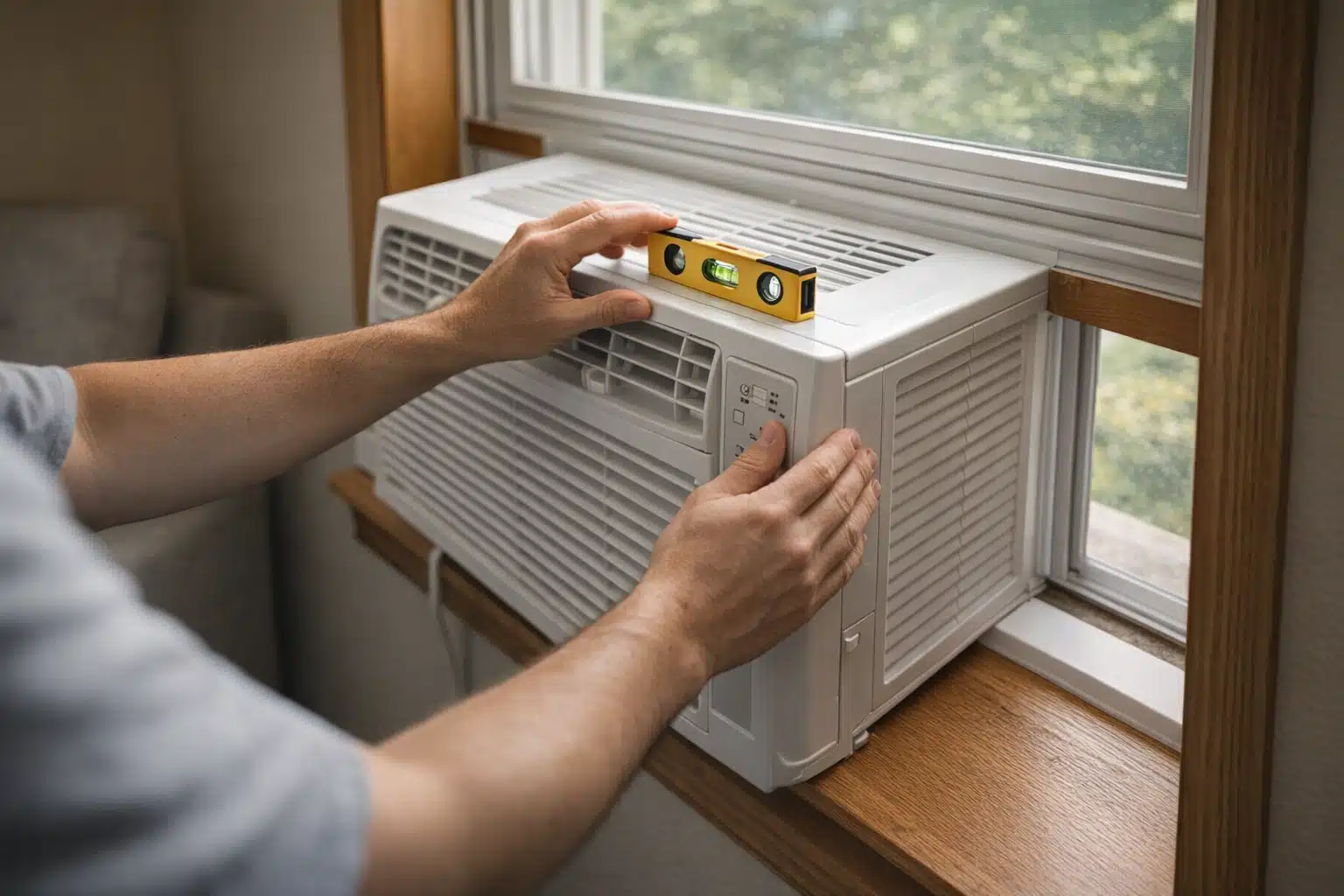
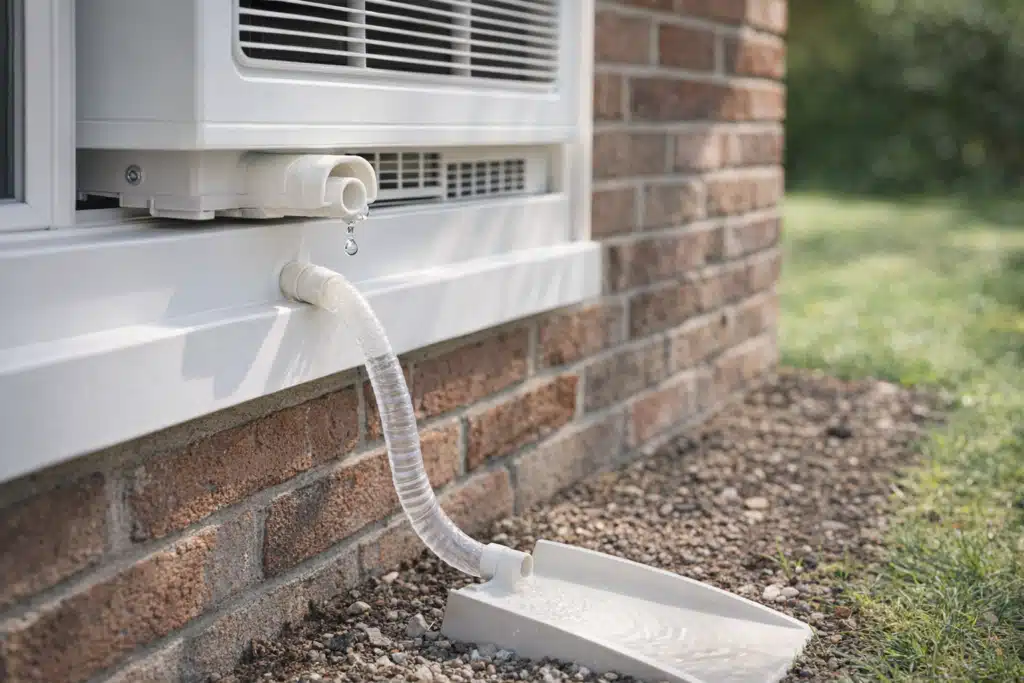
The single most common cause of indoor dripping is a unit tilted the wrong way. A window AC should slope slightly toward the outside so condensation drains away from your home.
How Much Tilt You Need
Aim for about a quarter inch of downward slope from front to back. On a standard 24-inch deep unit, that means the rear sits roughly a quarter inch lower than the front.
Check the manufacturer’s manual first. Some newer models are built to hold water in the base pan on purpose, using a slinger fan to evaporate it. Those units want a level installation, not a tilt.
How to Check and Adjust the Slope
- Place a small level on top of the unit, running front to back.
- Confirm the bubble shows a slight tip toward the exterior.
- If it tilts inward, loosen the mounting brackets.
- Slide a thin shim under the front edge to raise it.
- Retighten and recheck the level.
A unit that drips onto your carpet after every humid afternoon almost always has this problem. Fixing the angle stops the leak at its source.
Keep the Drain Port and Base Pan Clear
The drain port is a small hole or channel at the rear of the base pan that lets condensation escape. When it clogs, water backs up and spills over the front lip into your room.
What Clogs the Drain
Colorado’s dry summers still leave dust and pollen inside the pan. Combined with condensation, that grit forms a paste that plugs the drain channel.
Algae growth is the other culprit. A base pan that stays wet for weeks grows a green film that hardens into a clog.
How to Clean the Drain Path
- Turn off and unplug the unit.
- Remove the front cover and filter.
- Locate the base pan and the rear drain hole.
- Push a pipe cleaner or thin wire into the drain to clear debris.
- Flush the pan with a mix of water and a little white vinegar.
- Wipe out remaining grime with a cloth.
Do this at the start of cooling season and once mid-summer. A clean drain is the cheapest form of water damage prevention for any window unit.
Seal Gaps Around the Unit to Stop Rainwater
Condensation is one water source. Rain is the other, and it enters through gaps between the unit and the window frame.
Where Leaks Sneak In
Wind-driven rain during a Front Range thunderstorm hits the unit and runs along the top and sides. If the accordion side panels or the top gap are not sealed, that water tracks inside.
We have opened walls below second-floor window units and found soaked insulation from years of storm runoff. The homeowner never saw a drip because the water ran behind the drywall.
Sealing Steps That Work
- Foam weatherstripping — line the accordion panels where they meet the sash.
- Removable rope caulk — press it into side gaps you can peel off in fall.
- A rigid top cover — a small angled panel or awning deflects rain off the unit.
- Exterior gap check — look for daylight around the frame from inside.
Avoid permanent caulk on a seasonal unit. You will need to remove it each fall, and hardened caulk tears paint and frame material.
Support the Unit Properly to Prevent Frame and Sill Damage
A heavy window AC unit sagging in the frame does more than look crooked. It pulls the window out of square and opens gaps that channel water toward the sill.
Weight and Mounting
A mid-size 10,000 BTU unit weighs 60 to 80 pounds. Without a support bracket, that load rests entirely on the lower sash and sill.
Over a season, the sill flexes and the seal fails. Install an exterior support bracket rated for your unit’s weight to hold it level and stable.
Protect the Sill Surface
Place a thin waterproof mat or a strip of pan liner under the interior edge of the unit. If a small drip does occur, the liner catches it before it reaches wood or paint.
Check the sill each spring for soft spots or discoloration. Early rot is easy to repair; a fully saturated sill means replacement.

 Posted on Google
Signs Your Window AC Has Already Caused Water Damage
Catch damage early and you avoid a mold problem. Watch for these warning signs near any window unit:
- Peeling paint or bubbling drywall below or beside the window.
- A musty smell that grows stronger when the AC runs.
- Dark staining on the sill, wall, or nearby baseboard.
- Soft or spongy wood when you press on the sill.
- Buckled flooring directly under the window.
Mold can start growing on damp drywall within 24 to 48 hours. If you notice a musty odor plus staining, moisture is likely trapped behind the surface.
What to Do If You Find Damage
Stop using the unit and dry the area. Pull back the affected material only if it is safe to do so.
Hidden moisture inside a wall cavity needs meters and thermal imaging to map. That is where a restoration crew steps in to find the full extent before repairs begin.
A Simple Seasonal Maintenance Schedule
Consistent upkeep beats emergency cleanup every time. Follow this routine for each window air conditioning unit in your home:
- Spring install — check tilt, clean the drain, inspect and seal gaps.
- Mid-summer — clear the drain again, rinse the filter, scan for stains.
- Fall removal — dry the pan fully, store upright, inspect the sill.
- Winter storage — cover the interior opening to block cold and moisture.
Ten minutes each season prevents the kind of slow leak that rots framing over years.
Conclusion
Preventing water damage from a window air conditioning unit comes down to three habits: tilt it correctly, keep the drain clear, and seal out rain. Catch stains, musty smells, and soft sills early before mold takes hold.
If you find water damage behind a wall or under a window from an AC unit, ARC Restoration can assess the moisture and handle the cleanup. Call or text 720-799-2434, email office@advancedrestorationcolorado.com, or visit https://advancedrestorationcolorado.com.
Sources
- U.S. Environmental Protection Agency – Mold Cleanup in Your Home
- U.S. Department of Energy – Room Air Conditioners
- Centers for Disease Control and Prevention – Mold and Dampness FAQs
Preventing water damage from window air conditioning units involves addressing three main issues: incorrect tilt, clogged drainage, and failed seals. By ensuring proper installation and maintenance, homeowners can avoid costly repairs and mold growth.
- A window AC unit should tilt slightly outward to allow condensation to drain properly. Adjust the angle to about a quarter inch slope from front to back.
- Regularly clean the drain port and base pan to prevent clogs caused by dust, algae, and debris. This simple maintenance can save you from significant water damage.
- Seal gaps around the unit to prevent rainwater from entering. Use foam weatherstripping and removable caulk for effective protection.
To prevent water damage from window air conditioning units, ensure the unit is properly tilted to allow for drainage, regularly check and clear any clogged drainage holes, and inspect seals for any signs of wear or failure. Addressing these issues promptly can help avoid costly damage.


