
How to Prevent Wildfire Smoke Damage in Your Home
Colorado wildfire season peaks in late summer, when dry air and high winds push smoke across the Front Range for days at a time. Smoke particles slip into homes long after the visible haze clears, settling into drywall, HVAC systems, and soft surfaces. This post covers wildfire smoke prevention steps built for Colorado’s climate, so your home stays cleaner when the air outside turns brown.
You will learn how smoke enters a home, which sealing and filtration methods work here, and what to do when smoke is already inside. Every tip reflects what our crews see on real Colorado cleanup jobs.
Why Colorado Homes Face Higher Wildfire Smoke Risk in Summer
Colorado’s summer weather creates conditions that pull smoke indoors faster than in most states. Low humidity keeps smoke particles airborne longer. Afternoon wind patterns along the foothills carry smoke miles from the fire line.
Homes in Boulder, Jefferson, Douglas, and El Paso counties sit close to forested terrain. Even a fire 60 miles away can fill a Denver-area home with the smell of smoke overnight.
How smoke gets inside
Smoke enters homes at every gap in the building envelope. The most common entry points our teams find include:
- HVAC intakes pulling outside air with a low-grade filter
- Attic vents and soffits that stay open year-round
- Window and door gaps where weatherstripping has dried out
- Recessed lighting and outlet penetrations in ceilings
- Fireplace flues left with the damper open
Smoke particles measure smaller than 2.5 microns. They pass around loose seals that block dust and pollen with ease.
Wildfire Smoke Prevention Steps to Take Before Fire Season
The best wildfire smoke prevention happens in June, before the first big burn. Preparing early means your home is ready when an air quality alert hits with no warning. Follow these steps in order.
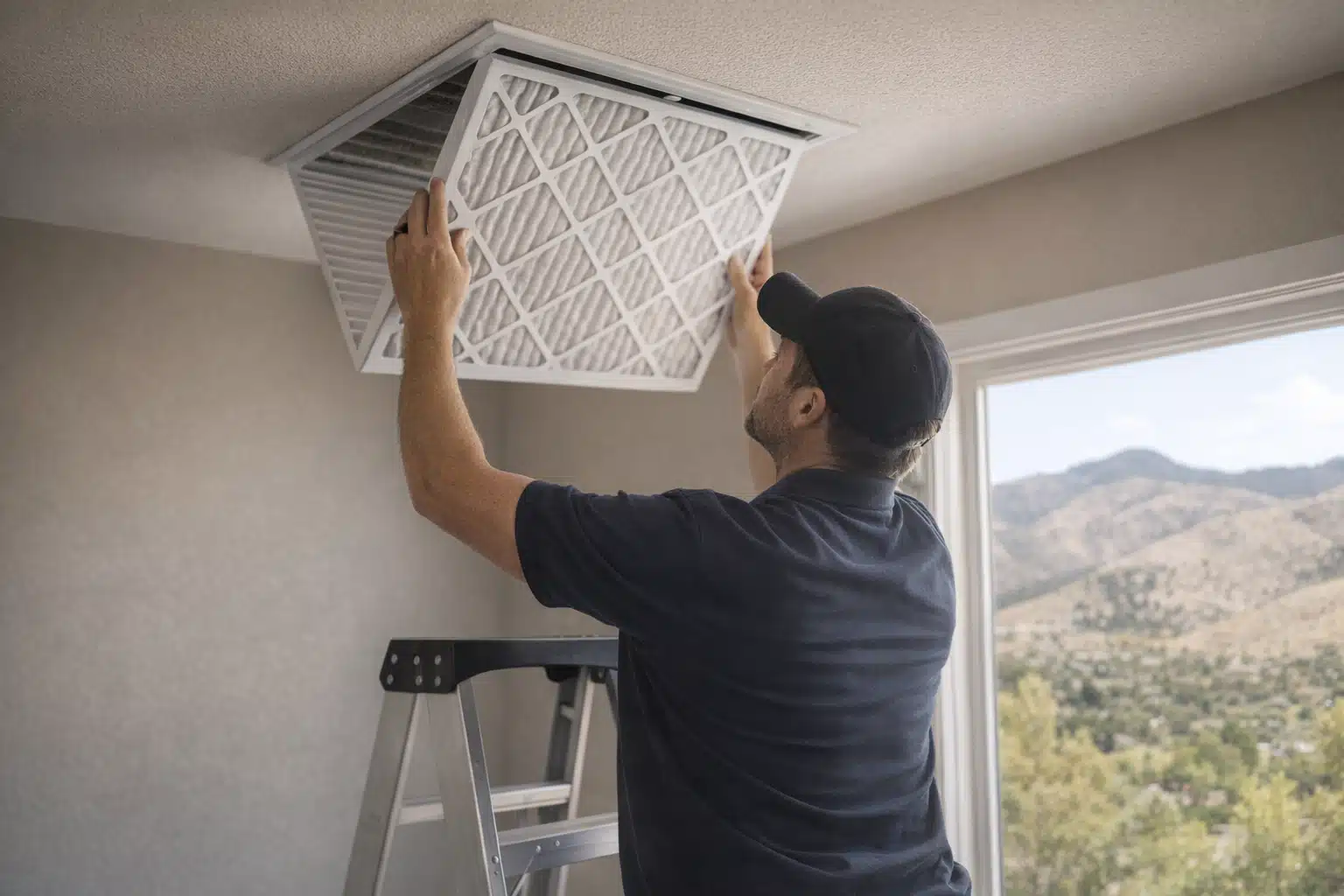
- Upgrade your HVAC filter to MERV 13. This rating captures fine smoke particles that MERV 8 filters miss. Confirm your system can handle the airflow first.
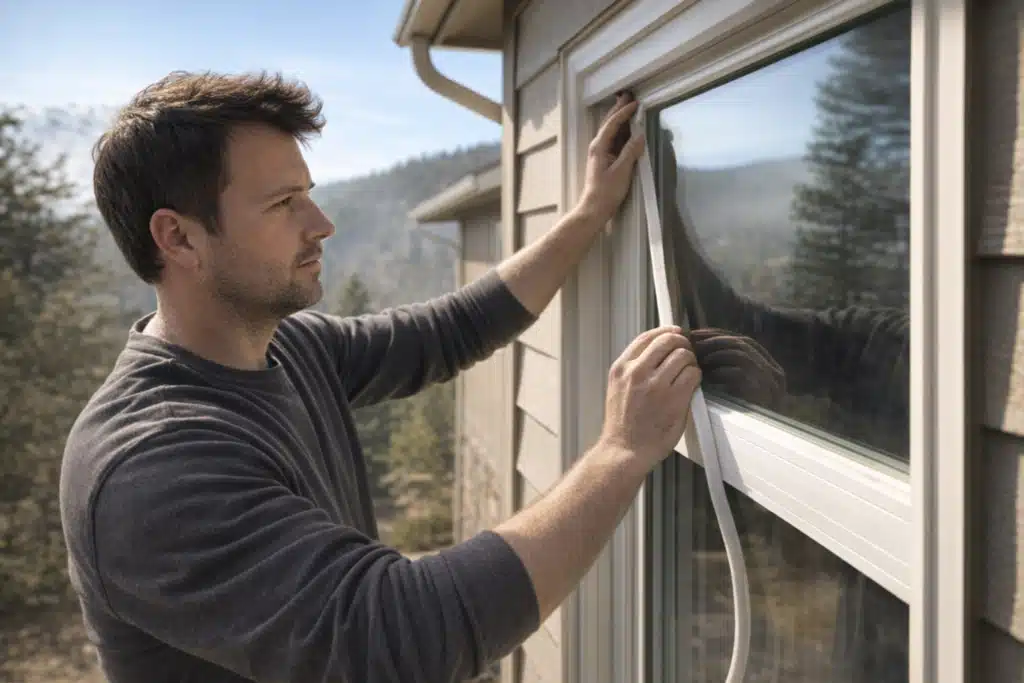
- Reseal all exterior doors and windows. Replace cracked weatherstripping and add door sweeps to gaps you can see daylight through.
- Caulk penetrations near the ceiling. Seal around recessed lights, vents, and where walls meet the attic.
- Close and seal the fireplace damper. Add a flue balloon if the damper no longer seals tight.
- Buy a portable HEPA air cleaner. Size it for your largest room and the rooms where you sleep.
Home protection against smoke works best as a layered defense. One sealed window helps little if the HVAC still pulls smoke straight into the return.
Set your HVAC to recirculate
Most Colorado homes run central air hard during July and August. Switch the system to recirculate mode when smoke moves in. Close the fresh-air intake damper if your system has one.
This keeps the blower moving air across your filter without drawing more smoke from outside. Run the fan on “on” rather than “auto” for steady filtration.
What to Do During an Active Smoke Event
When an air quality alert reaches your area, act within the first hour. Colorado smoke events can drop visibility fast, and indoor air degrades within minutes of windows staying open.
Create a clean room
A clean room is a single space kept as smoke-free as possible with filtration and sealing. Pick an interior room with few windows, such as a main-floor bedroom.
- Run a HEPA air cleaner sized for the square footage
- Close and lock all windows and doors
- Place a rolled towel along the bottom of the door
- Keep occupants and pets in this room during heavy smoke
A single clean room protects vulnerable family members when whole-home air worsens. Older adults and anyone with asthma benefit most from this setup.
Avoid adding indoor pollution
Smoke already inside grows worse when you add more particles. During a smoke event, skip these activities:
- Frying, broiling, or grilling food
- Burning candles or incense
- Vacuuming without a HEPA-rated vacuum
- Running gas appliances longer than needed
How to Tell If Smoke Damage Is Already in Your Home
Wildfire smoke leaves signs beyond the smell. Our crews check for these markers when assessing a Colorado home after a fire season:
- Yellow-brown film on window glass and light fixtures
- Lingering odor that returns when the HVAC runs
- Discolored HVAC filters turning gray within days
- Soot streaks above outlets, vents, and door frames
The odor is the hardest part to remove without equipment. Smoke residue bonds to drywall and wood, and off-the-shelf sprays only mask it. Fine soot in the ductwork keeps recirculating the smell every time the system cycles.
When to call a restoration crew
Call for help when the smell persists after cleaning, or when soot coats surfaces across multiple rooms. Trapped smoke residue needs thermal fogging, HEPA vacuuming, and duct cleaning to remove fully.
ARC Restoration handles smoke odor and soot removal across the Front Range. We treat the source, not the surface, so the smell does not return with the next heat wave.

 Posted on Google
Long-Term Home Protection Against Recurring Smoke
Colorado fire seasons repeat every summer, and the same home faces smoke year after year. A few upgrades reduce your workload each season.
- Install a whole-home air purification unit in the HVAC system for automatic filtration.
- Replace worn attic vent screens with tighter mesh that slows particle entry.
- Schedule duct cleaning after heavy smoke years to clear settled soot.
- Keep spare MERV 13 filters on hand for mid-season swaps during long events.
These upgrades pay off across multiple fire seasons. A home sealed and filtered once needs only maintenance the following summer.
Conclusion
Wildfire smoke prevention in Colorado means sealing entry points, upgrading filtration, and setting your HVAC to recirculate before smoke arrives. Act early in summer, build a clean room for active events, and watch for signs of residue that need attention. When smoke damage sets in, fast cleanup stops the odor from returning.
ARC Restoration removes wildfire smoke damage from homes across the Colorado Front Range. Call or text 720-799-2434, email office@advancedrestorationcolorado.com, or visit https://advancedrestorationcolorado.com to schedule an assessment.
Sources
- U.S. Environmental Protection Agency – Wildfires and Indoor Air Quality (IAQ)
- AirNow.gov – Protect Yourself from Wildfire Smoke
- Colorado Department of Public Health and Environment – Wildfire Smoke and Your Health
This post provides essential wildfire smoke prevention strategies tailored for Colorado's unique climate, ensuring homes remain cleaner during peak wildfire season. It details how smoke infiltrates homes and offers practical sealing and filtration methods to mitigate damage.
- Smoke enters homes through gaps in the building envelope, including HVAC intakes and window seals. Colorado's dry air and wind patterns exacerbate smoke infiltration during summer.
- Preventive measures include upgrading HVAC filters, resealing doors and windows, and using portable HEPA air cleaners for better air quality.
- During smoke events, creating a clean room and avoiding indoor pollution sources can protect vulnerable family members from harmful smoke exposure.
To prevent wildfire smoke damage in your home, seal windows and doors to keep smoke out, use air purifiers with HEPA filters, and regularly clean HVAC systems. Additionally, consider using washable covers for soft furnishings and ensure proper ventilation to minimize smoke particle accumulation during wildfire season.


