Understanding Wind Damage: Protecting Your Roof This Summer
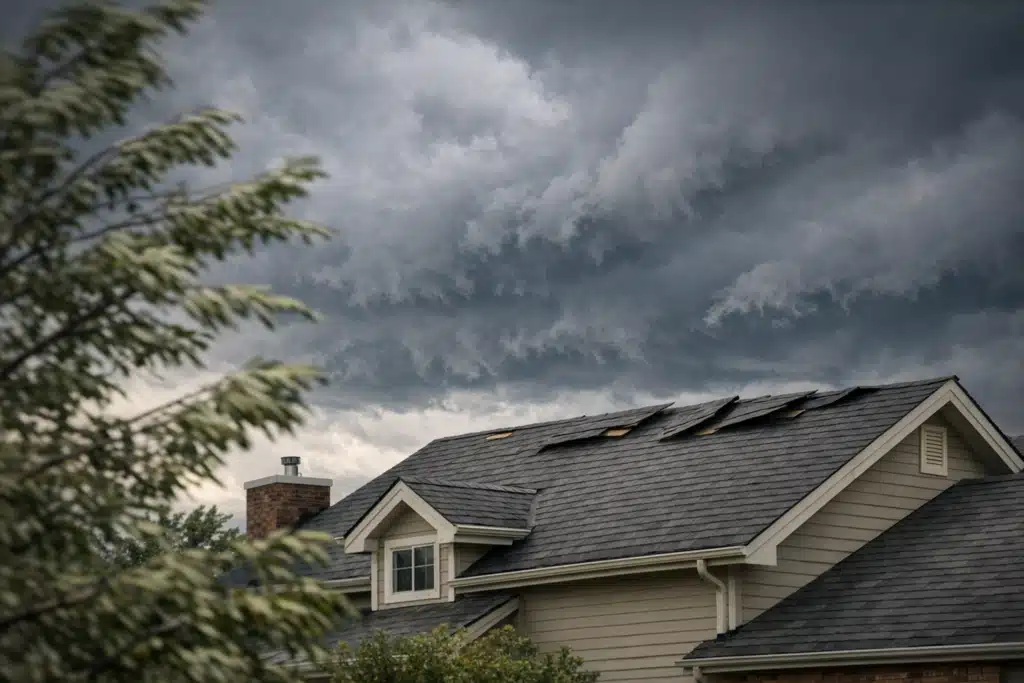
Colorado summer storms can peel shingles off a roof in a matter of minutes. Downslope winds along the Front Range regularly hit 60 to 80 mph, and gusts near the foothills have topped 100 mph. That kind of force turns a small roofing flaw into a five-figure repair bill.
This post covers wind damage prevention for Colorado homeowners during the summer storm season. You will learn how wind actually damages a roof, which warning signs to catch early, and the steps that keep your home protected.
How Wind Damages a Roof
Wind damage happens when air pressure lifts and separates roofing materials from the deck below. It rarely starts in the middle of a roof. Edges, corners, and ridges take the first hit.
As wind flows over a roof, it creates uplift on the leeward side and along overhangs. Once a single shingle tab breaks its seal, wind gets underneath and works the rest loose. One lifted shingle becomes a chain reaction.
Why Colorado Summers Are Different
Colorado wind damage is not just about hurricanes-style straight-line gusts. The Front Range sees a mix of threats that peak between June and September.
- Downslope (Chinook and Bora) winds that accelerate off the mountains and slam east-facing slopes.
- Microbursts from summer thunderstorms, which produce sudden downdrafts over 70 mph.
- Hail-driven wind that batters shingles sideways during afternoon storms.
- Dry, brittle heat that bakes asphalt shingles and makes them crack under stress.
A shingle that survived a calm spring can fail in a July microburst. Heat weakens the adhesive strip, and wind finishes the job.
Wind Damage Prevention: Steps to Take Before Summer Storms
Effective wind damage prevention starts before the first storm cloud forms. The goal is to close every gap wind can grab. Follow these steps in order.
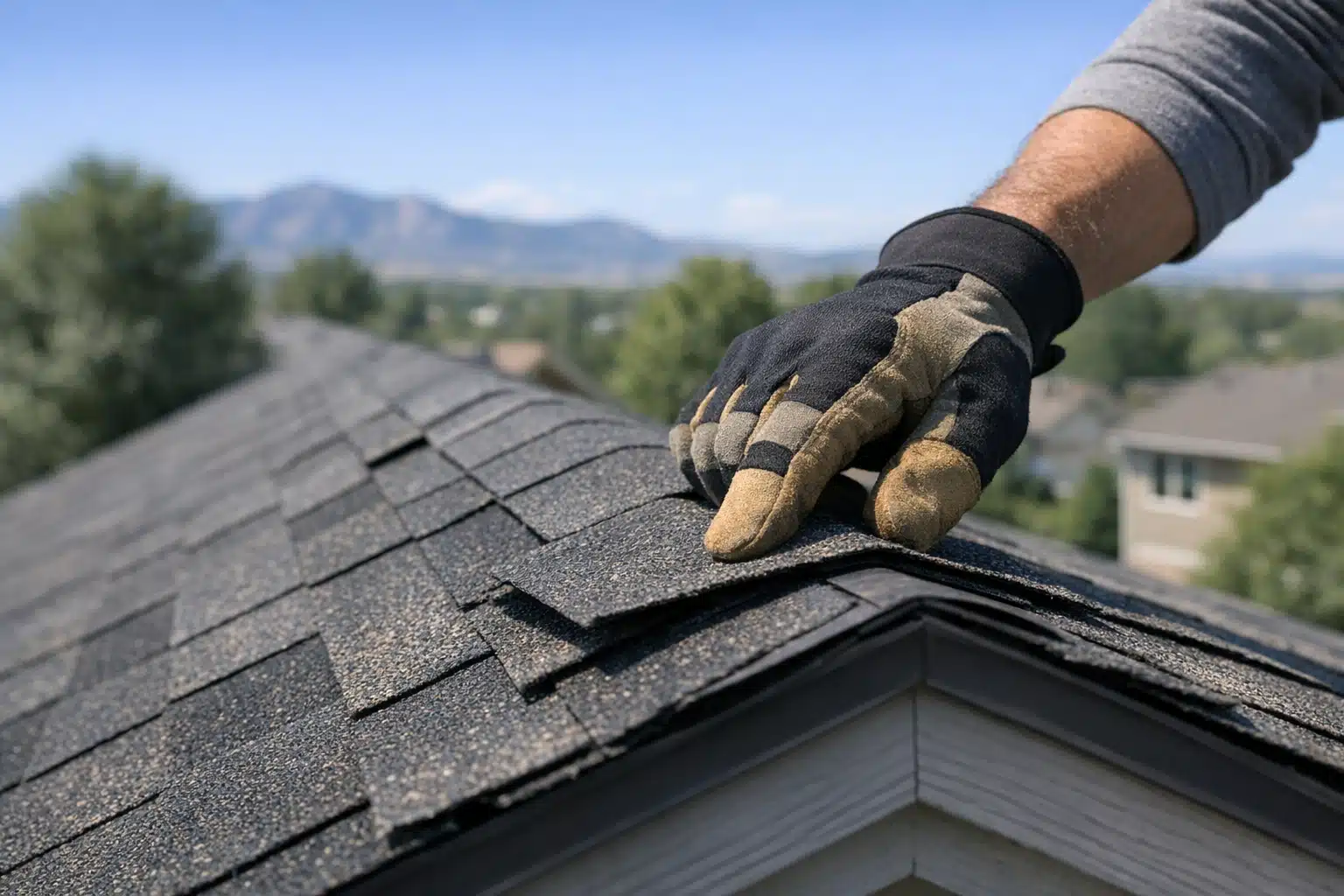
- Inspect the roof edges and ridge. Look for lifted, curled, or missing shingles along perimeters and the ridge cap.
- Check the seal strips. Press down on shingle tabs. Any that lift freely have lost their adhesive bond.
- Tighten flashing and vents. Loose metal flashing around chimneys and pipe boots gives wind an entry point.
- Clear gutters and drains. Trapped water adds weight and rots the roof deck, weakening the surface wind pulls on.
- Trim nearby branches. A single ponderosa limb over a roofline becomes a projectile in a 60 mph gust.
Do this inspection in late May or early June. That timing puts you ahead of Colorado’s peak thunderstorm months.
Shingle Type Matters in High Wind Zones
Not every shingle handles Front Range wind equally. Standard three-tab shingles carry a 60 mph rating. Architectural shingles rated for 110 to 130 mph hold up far better in microburst country.
If your roof is due for replacement, match the material to local wind loads. Many Denver-area building codes reference these ratings for a reason.
Warning Signs of Existing Wind Damage
Wind damage is not always obvious from the ground. Small failures let water in for weeks before a ceiling stain appears. Watch for these indicators after any strong summer storm.
- Shingle granules in gutters or downspouts. Heavy loss signals the protective surface is wearing away.
- Lifted or creased shingles visible from the yard.
- Exposed nail heads where shingles pulled back.
- Bent or detached flashing around vents and chimneys.
- Debris in the attic or daylight visible around roof penetrations.
A creased shingle looks intact but has a broken seal underneath. It will fail in the next gust. Treat creasing as damage, not a cosmetic issue.
What a Microburst Leaves Behind
Microburst damage clusters on one side of the roof. You might see a clean line where shingles are gone on the west face while the east face looks untouched. That directional pattern helps confirm wind was the cause during an insurance claim.
Document the pattern with dated photos. Insurers in Colorado see thousands of summer wind claims and look for this kind of evidence.
Roof Protection Measures That Actually Hold
Strong roof protection combines material upgrades with proper installation. Wind finds the weakest fastener, not the average one. These measures address the failure points we see most across Front Range homes.
- Six-nail shingle installation. Adding two nails per shingle raises wind resistance well past the four-nail minimum.
- Roofing cement on edge shingles. A dab under each perimeter tab stops the chain-reaction lift.
- Ridge vent reinforcement. Ridge caps blow off first; secure fasteners keep them down.
- Ice-and-water shield at eaves and valleys. This membrane protects the deck if shingles tear away.
- Sealed roof deck. Taped seams on the plywood create a secondary barrier against wind-driven rain.
These upgrades cost far less during a planned re-roof than after storm damage. A sealed deck alone can prevent an attic full of water.
Summer Timing for Repairs
Schedule wind-related repairs in early summer, not mid-August. Roofing crews book solid after the first major storm wave. Getting on the calendar in June means your roof is ready before the heaviest activity.
Warm, dry days help sealant cure and shingle adhesive re-bond. Repairs done in ideal weather last longer than emergency patches in the rain.

What to Do Immediately After Wind Damage
Fast action after a storm limits interior damage and strengthens your insurance claim. Water spreads quickly once the roof surface is compromised. Take these steps the same day when it is safe.
- Photograph everything from the ground before touching anything.
- Cover interior leaks with buckets and move valuables away from drip zones.
- Tarp exposed areas only if you can do so safely from a stable surface.
- Call a restoration company for an inspection and emergency mitigation.
- Contact your insurer and file the claim with your dated photos.
Do not wait for a small leak to grow. Trapped moisture leads to mold in Colorado attics within days during warm weather.
Key Takeaways
Wind damage prevention comes down to closing the gaps wind grabs first: edges, ridges, and flashing. Inspect your roof in early summer, upgrade to wind-rated materials when you re-roof, and act fast when a microburst hits. Small, early fixes cost a fraction of full storm repairs.
ARC Restoration handles storm inspections, emergency tarping, and full roof restoration for Front Range homeowners. Call or text 720-799-2434, email [email protected], or visit https://advancedrestorationcolorado.com to schedule an inspection before the next storm.
Sources
- National Weather Service – Boulder/Denver Forecast Office
- FEMA – High Wind Building Science Resources
- Insurance Institute for Business & Home Safety (IBHS)
Colorado homeowners need to be aware of the risks posed by summer storms that can cause significant wind damage to roofs. This article outlines how wind damages roofs, prevention strategies, and the importance of timely repairs.
- Colorado summer storms can produce winds of 60 to 100 mph, leading to costly roof repairs. Homeowners should inspect their roofs for vulnerabilities before storm season.
- Effective prevention includes checking shingles, tightening flashing, and clearing gutters to minimize wind damage risks.
- In the event of wind damage, prompt action is crucial to limit interior damage and support insurance claims.
Wind damage to roofs occurs when strong winds, particularly during summer storms, dislodge shingles and compromise the roof's integrity. In areas like Colorado, winds can reach speeds of 60 to 100 mph, making even minor roofing issues potentially costly, leading to significant repair expenses.