
The Importance of Regular Sump Pump Maintenance
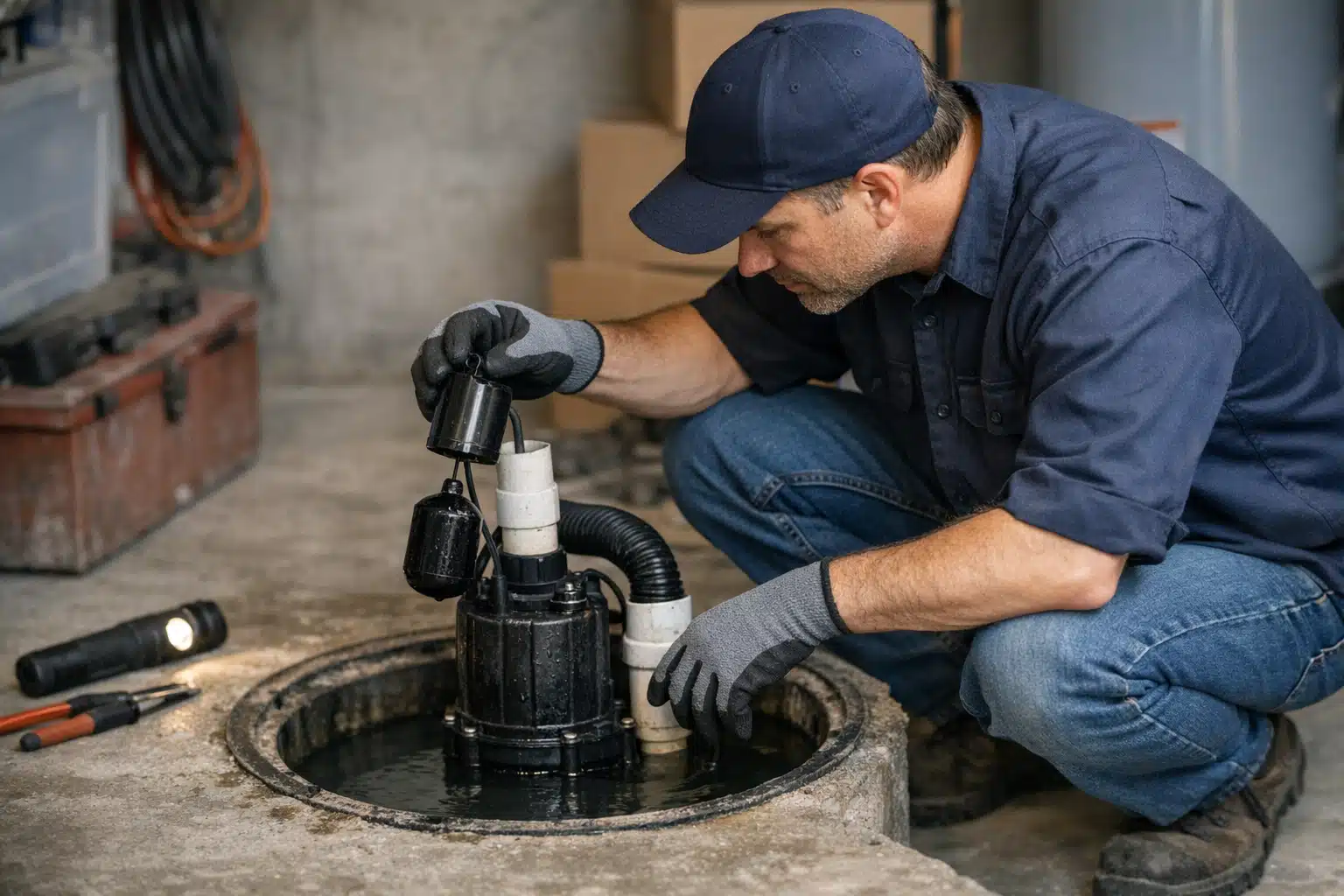
A sump pump that sits untouched for a year has a 30% chance of failing right when Colorado’s spring melt arrives. That failure often shows up as four inches of water across a finished basement floor. Regular sump pump maintenance is the difference between a dry March and a five-figure water damage claim.
This post covers why maintenance matters, what fails most, and the exact checks that keep your pump running during heavy rain and snowmelt. You will learn a seasonal schedule built around Front Range weather patterns.
Why Sump Pump Maintenance Matters Before Spring Rains
A sump pump moves groundwater away from your foundation before it seeps inside. It sits idle for months, then must run for hours during the first big thaw. Idle equipment fails more than equipment in constant use.
Colorado’s spring creates the worst-case load for these pumps. Snowpack melts, the ground saturates, and afternoon rain stacks on top of it. A pump that was fine in October gets tested hard in April.
The common failure pattern we see: a homeowner’s pump ran flawlessly all last spring, then failed the following March because the float switch stuck. Nobody tested it in between. The basement flooded during the first 48-hour rain event.
What Basement Flooding From a Failed Pump Costs
Water damage restoration in a finished basement runs from $3,000 to $15,000 depending on how long water sits. Drywall wicks moisture upward within hours. Carpet padding holds water and grows mold within 48 hours.
A replacement sump pump costs $150 to $400. An annual maintenance check costs almost nothing if you do it yourself. The math favors prevention every time.
The Parts That Fail Most on Sump Pumps
Most sump pump failures trace back to a small number of components. Knowing which ones lets you check the right things.
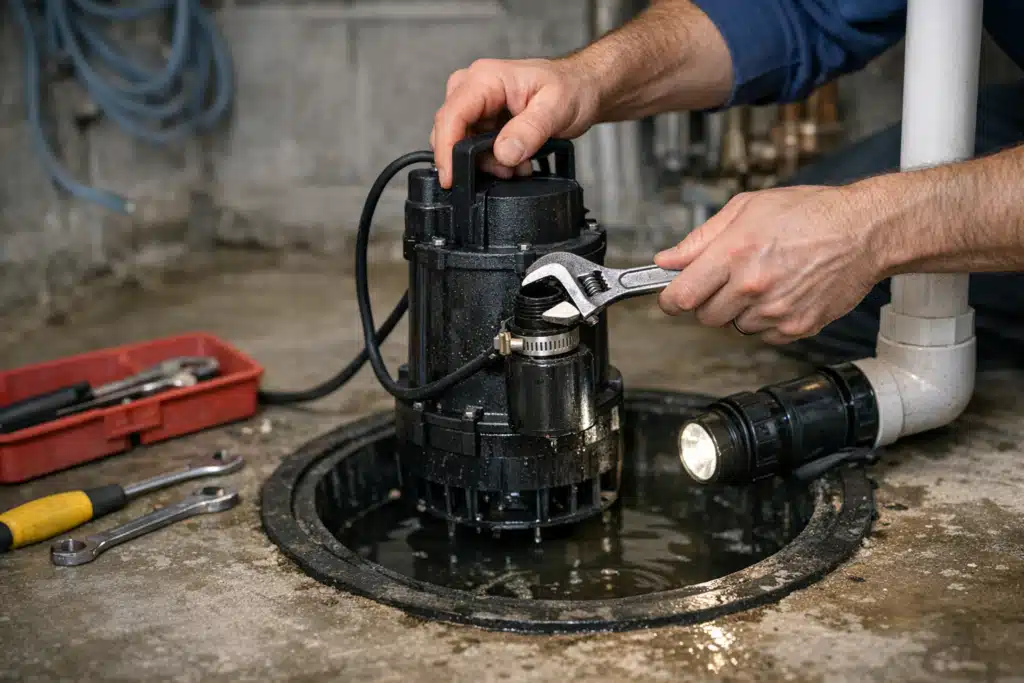
- Float switch: Sticks in the down position and the pump never turns on. This causes more flooding than any other single fault.
- Check valve: Fails and lets pumped water flow back into the pit, making the pump cycle nonstop until it burns out.
- Discharge line: Freezes or clogs, so water has nowhere to go even when the pump runs.
- Impeller: Jams with gravel or debris that settled in the pit over winter.
- Power supply: A tripped GFCI outlet leaves the pump dead with no warning.
Each of these takes minutes to check. Skipping the checks is what turns a $20 part into a flooded floor.
A Seasonal Sump Pump Maintenance Schedule for Colorado Homes
Front Range weather demands two heavy maintenance windows: late fall and early spring. The fall check protects against freezing discharge lines. The spring check confirms the pump will handle snowmelt.
Monthly Quick Check (2 minutes)
- Pour a bucket of water into the sump pit.
- Watch the float rise and the pump switch on.
- Confirm the pit empties, then the pump shuts off on its own.
- Listen for grinding or rattling that signals a worn impeller.
Fall Maintenance (Before First Freeze)
- Check that the discharge line slopes away and drains fully.
- Clear any low spots where water could sit and freeze.
- Add a freeze-guard fitting if your line runs above ground.
- Test the backup battery or water-powered backup system.
Spring Maintenance (Before Snowmelt Peaks)
- Unplug the pump and remove it from the pit.
- Clean gravel and sediment from the intake screen and impeller.
- Inspect the check valve for backflow when the pump stops.
- Test the float switch by hand, moving it up and down.
- Reset and test the GFCI outlet the pump plugs into.
These preventative measures target the exact stress spring puts on the system. Sediment buildup and stuck floats cause most April failures we respond to.
Backup Power: The Difference During a Spring Storm
Spring storms knock out power and dump rain at the same time. A pump with no backup is useless during the exact hours it matters most. A battery backup or water-powered backup keeps water moving during an outage.
What we recommend: a battery backup rated for at least seven hours of continuous pumping. Test the battery every fall and replace it every three years. A dead backup battery gives false confidence, which is worse than no backup at all.
Signs Your Sump Pump Is About to Fail
Pumps rarely die without warning. Catching these signs early lets you replace the unit on your schedule, not during a flood.
- The pump runs constantly or cycles on and off rapidly.
- It makes grinding, rattling, or humming noises.
- Visible rust appears on the motor housing or pit walls.
- The pump is more than seven years old.
- Water sits in the pit long after the pump should have cleared it.

Everyone we came in contact with at ARC are professional, friendly and excellent in their roles and expertise. Without hesitation, I recommend ARC for all your property damage restoration needs – they're awesome!
 Posted on Google
What Happens When Maintenance Gets Skipped
A skipped check almost never causes an immediate problem. That delay is the trap. The pump keeps working through summer and fall, then fails during the first saturated ground event.
By the time water covers the floor, the damage compounds fast. Standing water reaches outlets, saturates stored belongings, and lifts flooring. Mold begins forming inside 48 hours in a warm basement.
Fast response limits the damage. Water extraction within the first day prevents most structural harm. Waiting turns a cleanup into a full rebuild of walls and floors.
When to Call a Restoration Team
Some situations need more than a homeowner check. Call for help when you notice any of the following.
- Standing water has already entered the basement.
- The pit fills faster than a working pump can empty it.
- You smell must or see mold near the sump area.
- Water reaches drywall, insulation, or electrical outlets.
Fast extraction and drying stop mold and protect your foundation. A trained crew handles water damage that a shop vacuum cannot.
Conclusion
Regular sump pump maintenance stops basement flooding before Colorado’s spring melt overwhelms an untested pump. A few minutes each month and two seasonal checks catch the stuck floats, clogged lines, and dead batteries that cause most failures. The cost of prevention is a fraction of a flooded basement.
If your basement has flooded or your pump has failed, ARC Restoration responds fast to extract water and dry the space. Call or text 720-799-2434, email office@advancedrestorationcolorado.com, or visit https://advancedrestorationcolorado.com.
Sources
Regular maintenance of sump pumps is essential to prevent failures during Colorado's spring melt, which can lead to significant water damage. This article outlines the importance of maintenance, common failure points, and a seasonal schedule tailored to local weather patterns.
- A sump pump that is not maintained has a 30% chance of failing during spring, potentially causing extensive flooding.
- Key components like the float switch and check valve often fail, leading to costly water damage.
- Performing monthly checks and seasonal maintenance can prevent issues and save homeowners from expensive repairs.
Regular sump pump maintenance is crucial to prevent failures during critical times, such as Colorado's spring melt. A neglected sump pump has a significant chance of failing, which can lead to severe water damage in basements. Proper upkeep ensures the pump operates effectively, protecting your home from costly repairs.


