
Preparing for Unexpected Summer Hailstorms
Colorado sees some of the most damaging hail in the country, and the worst storms show up on clear June and July afternoons. A sunny morning can turn into golf-ball-sized ice by 3 p.m. with almost no warning. That is why hailstorm preparation matters most for homeowners who assume summer means calm skies.
This post breaks down what to check before hail season peaks, what to do when a storm forms fast, and how to handle damage after the ice stops falling. The focus is on the surprise storms that catch people mid-barbecue, not the ones forecasters flag days ahead.
Why Summer Hailstorms Catch Colorado Homeowners Off Guard
Hail forms when strong updrafts push raindrops into freezing air high in a thunderstorm. The Front Range sits in a zone where warm plains air meets cold mountain air, which builds these storms quickly. The Denver-Boulder-Fort Collins corridor is known as “Hail Alley” for this reason.
The May-through-September window produces the heaviest hail activity. Storms can develop in under an hour, giving little time to react. A calm summer weather forecast does not rule out afternoon hail.
What Makes These Storms Dangerous
- Speed of formation — cells build in 30 to 60 minutes.
- Stone size — Colorado hail reaches baseball size in strong storms.
- Wind-driven angles — hail hits siding and windows, not just roofs.
- Timing — most storms peak between 1 p.m. and 6 p.m., when cars sit in driveways.
Hailstorm Preparation Before the Season Starts
The best hailstorm preparation happens weeks before any storm cloud forms. Once hail is falling, your window to act is gone. Handle these tasks in spring so you are ready.
1. Inspect Your Roof for Weak Points
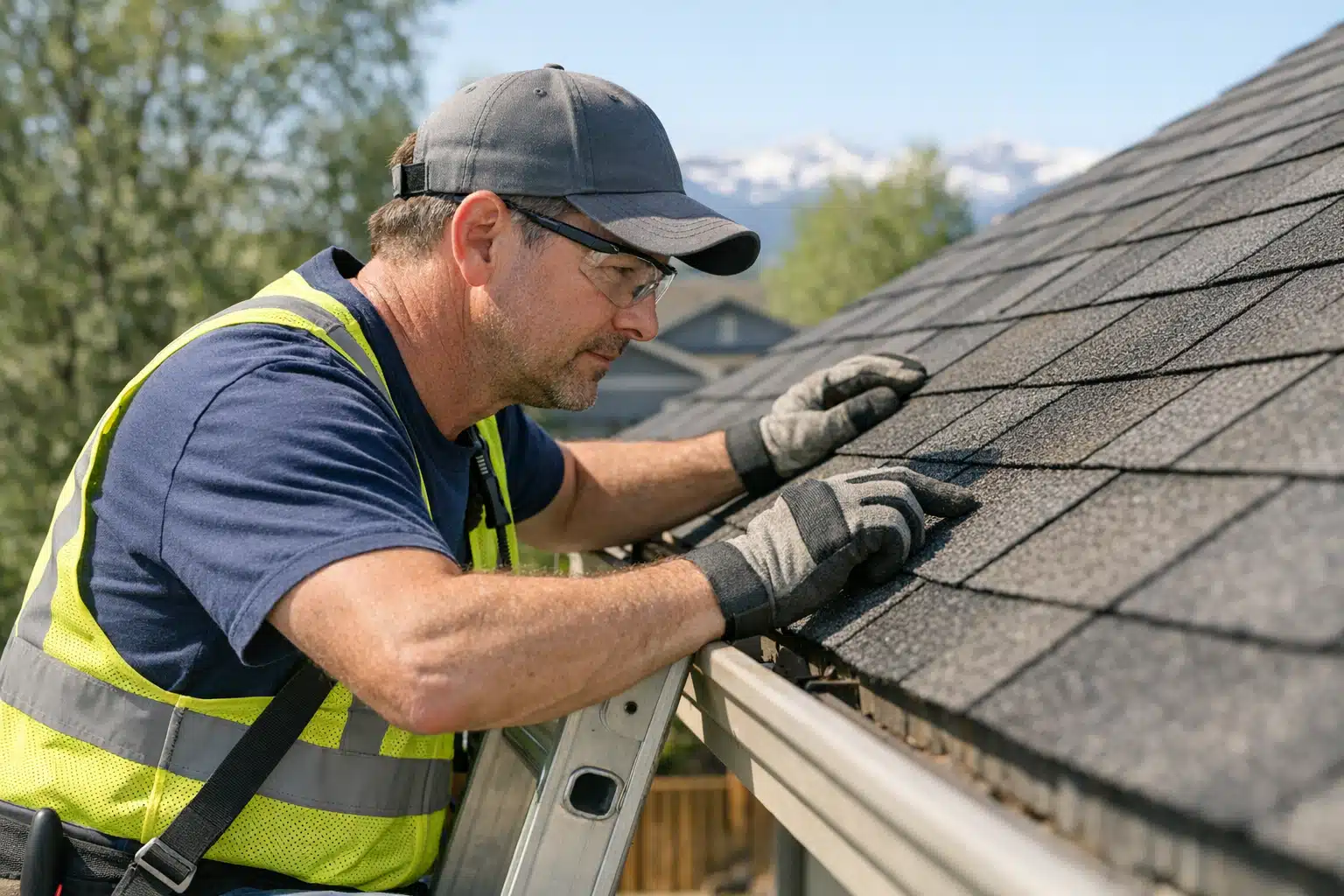
A roof already missing shingles or granules takes far worse damage from hail. Walk your property and look for curling, cracked, or bald spots. Aging asphalt shingles are the first thing to fail under impact.
Check flashing around chimneys and vents too. Loose flashing lets wind-driven rain in after hail cracks the seal.
2. Trim Trees Near the House
Hail-heavy storms carry strong winds that snap weak branches. A limb over your roof becomes a projectile in a 60 mph gust. Cut back anything hanging over the roofline or near windows.
3. Secure or Plan for Vehicle Cover
Cars are the most common hail casualty in Colorado summers. If you lack a garage, map out a covered parking spot near work or home. A carport, parking structure, or even a store overhang beats an open driveway.
4. Review Your Insurance Coverage
Read your homeowner and auto policies before you need them. Confirm whether you have actual cash value or replacement cost coverage on your roof. Many Colorado policies now carry separate, higher hail deductibles.
What to Do When a Hailstorm Forms Fast
When radar lights up and the sky turns green-gray, you have minutes, not hours. Move quickly and prioritize safety over property. Here is the order that works.
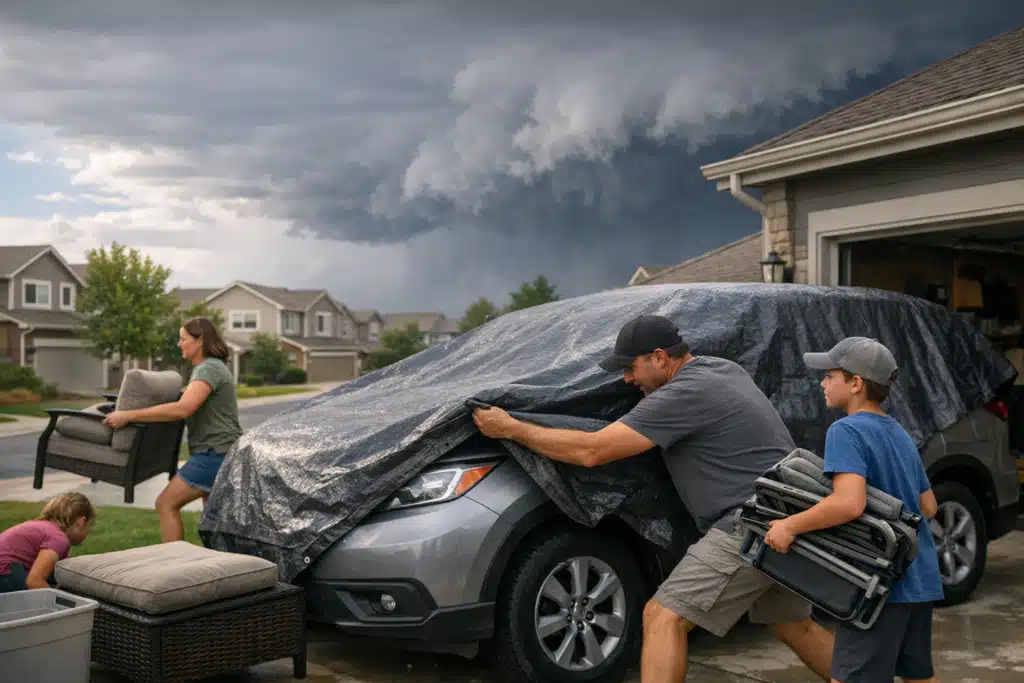
- Move vehicles under cover. A garage, carport, or thick tree canopy reduces dents. If nothing is available, drape blankets or floor mats over hoods and roofs.
- Close all windows and blinds. Closed blinds catch glass if a window breaks.
- Bring in patio items. Cushions, umbrellas, and grills can shatter or fly.
- Move away from windows. Wind-driven hail can break glass at an angle.
- Stay inside until the storm passes fully. Second waves often follow the first.
Never go outside to move a car once hail starts. Baseball-sized stones cause serious injury on impact.
After the Storm: How to Assess Hail Damage
Hail damage is not always obvious from the ground. A roof can look fine and still have hundreds of bruised shingles. Knowing what to check protects you from hidden leaks weeks later.
Signs of Roof Hail Damage
- Dark spots or dents on shingles where granules are knocked off.
- Granules in gutters and downspouts — a common early clue.
- Cracked or split shingles visible from a ladder.
- Dents on metal vents, gutters, or flashing.
Other Areas to Check
Look at siding, window screens, and AC units for dents and punctures. Check decks and fences for splintering. Metal surfaces show hail dents most clearly and confirm stone size.
Document Everything Right Away
Take dated photos of every damaged surface before you touch anything. Photograph hailstones next to a ruler or coin for scale. Save these images for your insurance claim.

 Posted on Google
When to Call a Restoration Company
Call for help the moment you spot water inside or clear roof damage. Hail cracks create paths for rain, and a delay lets water spread into walls and insulation. Fast action limits mold growth and structural rot.
A restoration crew handles emergency roof tarping, water extraction, and drying. They also document damage in a format insurance adjusters accept. ARC Restoration works with Colorado homeowners across the Front Range after summer storms.
What a Restoration Team Handles That DIY Cannot
- Emergency tarping to stop active leaks within hours.
- Moisture detection using meters that find hidden water.
- Structural drying with commercial equipment.
- Detailed damage reports that support your claim.
Building a Simple Hail Readiness Kit
Keep a small kit ready for the fast-forming storms that define Colorado summers. Store it where you can grab it in under a minute. This turns panic into a quick routine.
- Moving blankets or old comforters for car protection.
- Bungee cords or rope to secure covers.
- A flashlight and backup phone charger.
- A printed copy of your insurance policy numbers.
- Contact info for a restoration company you can reach fast.
Key Takeaways
Summer hail in Colorado arrives fast and hits hardest between early afternoon and evening. Strong hailstorm preparation means inspecting your roof, protecting vehicles, and knowing your insurance coverage before storm season peaks. When damage happens, quick documentation and fast repair prevent small cracks from becoming major water damage.
If hail has hit your home this summer, ARC Restoration can inspect the damage and start repairs before leaks spread. Call or text 720-799-2434, email office@advancedrestorationcolorado.com, or visit https://advancedrestorationcolorado.com.
Sources
- NOAA National Severe Storms Laboratory – Severe Weather 101: Hail
- Insurance Information Institute – Hail Damage and Insurance
- National Weather Service – Denver/Boulder Forecast Office
Colorado experiences severe hailstorms that can develop rapidly, often catching homeowners off guard during summer. Preparation is key to minimizing damage and ensuring safety when these storms strike.
- Homeowners should inspect roofs for vulnerabilities and trim nearby trees before hail season.
- Vehicles should be secured under cover to prevent hail damage, and insurance policies should be reviewed.
- After a storm, it's important to document damage and call a restoration company for quick repairs.
Preparing for summer hailstorms in Colorado is crucial because these storms can develop rapidly, often transforming clear skies into severe weather with little warning. Homeowners need to take proactive measures to protect their property from potential damage caused by large hailstones, which can occur during June and July.


