
Summer Grilling Safety: Avoiding Fire Hazards
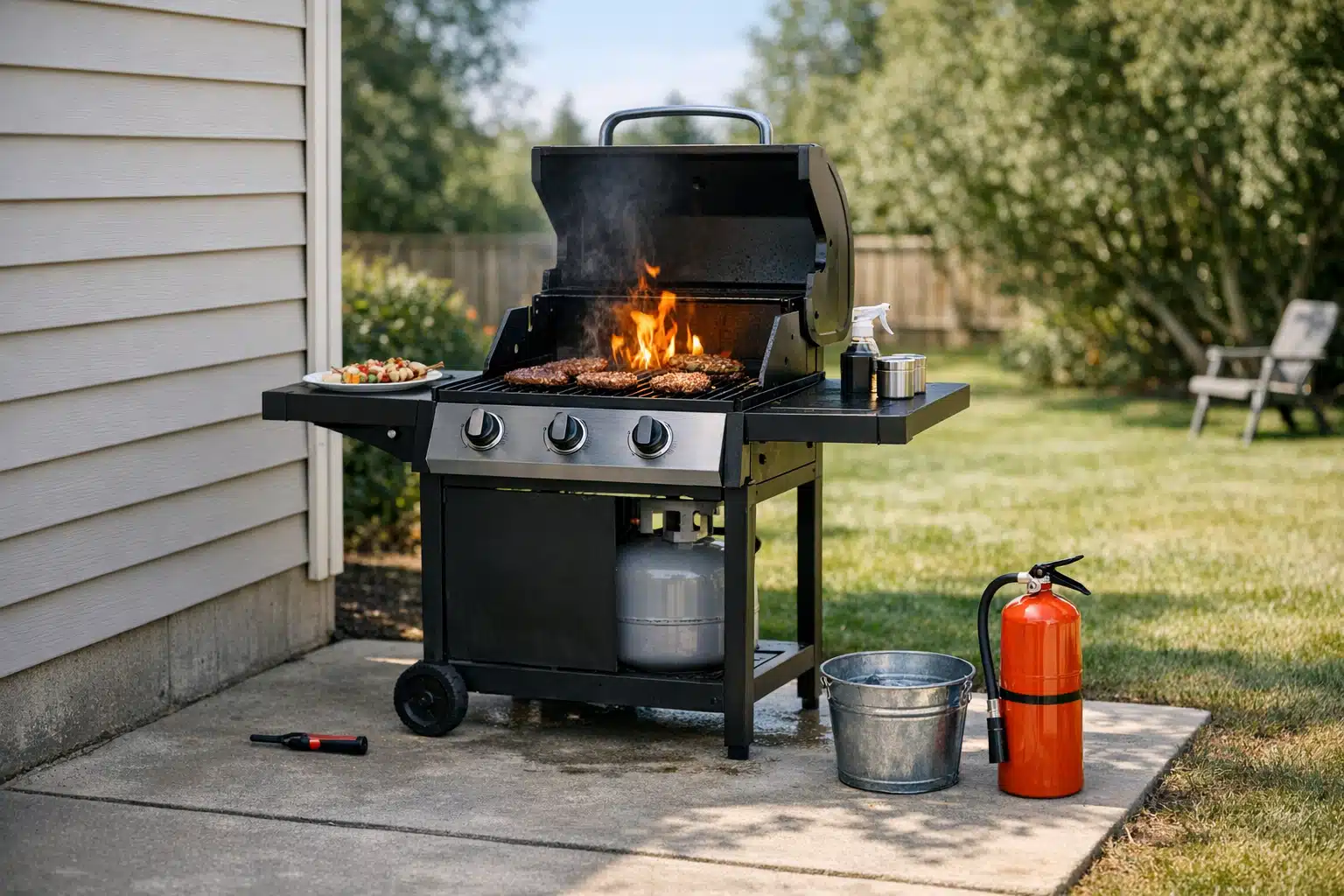
Every July, fire departments across Colorado respond to backyard grill fires that started with a small, avoidable mistake. A grease buildup ignites. A propane hose leaks. A grill placed too close to vinyl siding melts and catches. Grilling safety comes down to a handful of specific habits that stop small sparks from becoming structure fires.
This post covers where to place your grill, how to handle propane and charcoal, and what to do when flames spread. Each tip targets a real cause of summer fire hazards we see in restoration work.
Why Summer Grilling Causes More Fires Than You Think
Grills cause an average of 11,000 home fires per year in the United States. Most happen between May and August. The peak is July, when backyard cooking hits its highest volume.
The damage rarely stops at the grill. Flames climb siding, reach soffits, and enter attics. Smoke pushes into living spaces and coats walls, insulation, and HVAC systems.
We have cleaned homes where a 0 grill caused ,000 in structural and smoke damage. The starting point was almost always preventable.
Grilling Safety Starts With Placement
Grill placement is the single most controllable fire risk. A grill needs open space above and around it, away from anything that burns.
The 3-Foot Rule
Keep at least three feet of clearance between the grill and any structure. Vinyl siding melts at temperatures a grill easily produces. Wood railings, fences, and deck posts ignite faster than most people expect.
- Never grill under a covered patio or roof overhang. Rising heat pools against the ceiling.
- Avoid grilling on wooden decks without a fire-resistant mat underneath.
- Keep the grill off dry grass. Colorado summers leave lawns brittle and easy to ignite.
- Stay clear of low tree branches and hanging planters above the cooking area.
Level Ground Matters
A grill on uneven ground can tip. A toppled charcoal grill spreads hot coals across a deck in seconds. Set your grill on flat, stable surfaces before lighting it.
Propane Grill Safety: Check the Hose Every Time
Propane leaks are the leading cause of gas grill explosions. A cracked hose or loose fitting releases gas that ignites the moment you press the igniter.
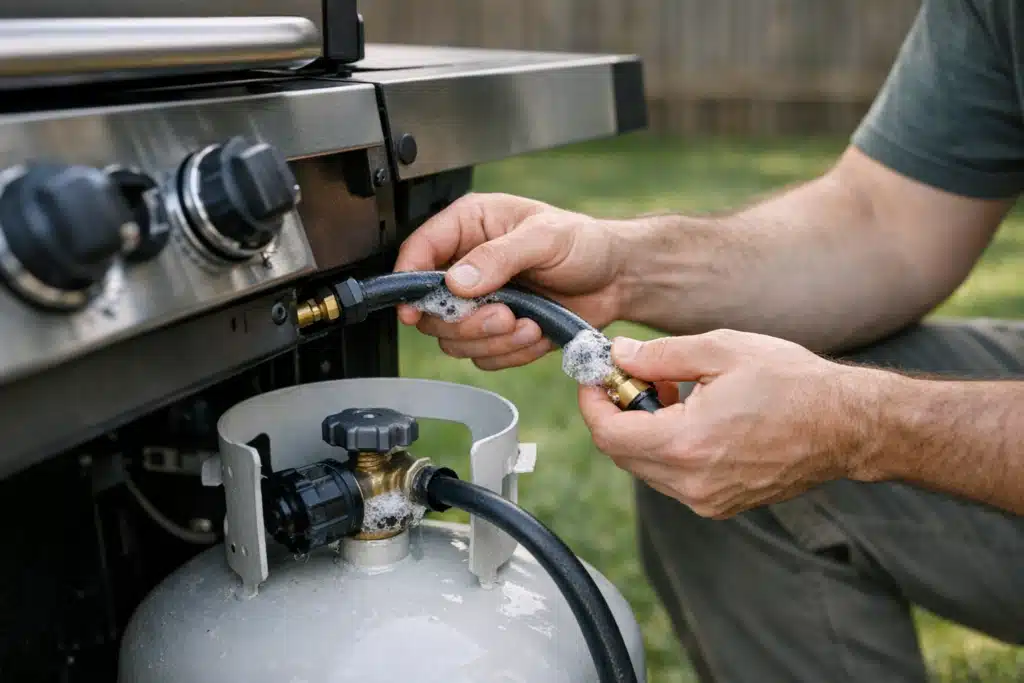
How to Test for a Propane Leak
Run this check at the start of every grilling season and after any tank swap:
- Mix equal parts water and dish soap in a spray bottle.
- Open the propane tank valve with the burners off.
- Spray the soap mixture along the hose and connections.
- Watch for growing bubbles, which mean escaping gas.
- Close the valve and tighten or replace the part before lighting.
If you smell gas and see no bubbles, shut off the tank. Do not light the grill. Have it inspected before use.
When a Burner Won’t Light
Turn off the gas and wait five minutes before trying again. Gas that pools inside a closed lid can flash when it finally ignites. That flash can singe eyebrows or burn hands.
Charcoal Grill Safety: Manage the Hot Coals
Charcoal fires stay dangerous long after the food is done. Coals hold enough heat to start a fire hours after cooking ends.
Lighter Fluid Rules
Add lighter fluid only to unlit coals. Squirting fluid onto burning briquettes can send flame up the stream toward the container. Store the bottle far from the grill once lit.
A charcoal chimney starter removes the need for fluid entirely. It lights coals with newspaper and heat, cutting the flare-up risk.
Disposing of Ashes
Cool ashes are a common source of house fires that start after the party ends. Coals dumped in a plastic trash can or paper bag can smolder and reignite.
- Let coals burn out fully, then wait 48 hours before disposal.
- Soak ashes in water inside a metal container if you need to move them sooner.
- Store ash cans on concrete, away from siding, decks, and fences.
Grease Buildup: The Hidden Fire Hazard
Grease fires start inside grills people assume are clean. Fat drips onto burners and collects in trays, feeding sudden flare-ups.
Clean the grease trap after every few uses. A full tray can ignite and drip burning grease onto whatever sits below the grill.
Scrape grates and burner covers regularly. A grill that flames up on its own has grease that needs removal, not more cooking heat.

 Posted on Google
Keep Kids, Pets, and Distractions Away
A three-foot kid-free zone around the grill prevents burns and knocked-over equipment. Children reach for bright flames and hot handles without hesitation.
Never leave a lit grill unattended. Most spread-fire damage happens when the cook steps inside for a few minutes. Wind can shift flames onto siding in that short window.
What to Do If a Grill Fire Spreads
A small flare-up is normal. A fire that jumps to your deck or siding is an emergency that moves fast.
Immediate Steps
- Close the grill lid to cut oxygen if the fire is inside the grill.
- Shut off the propane valve if you can reach it safely.
- Use a Class B fire extinguisher rated for grease and gas fires.
- Never throw water on a grease fire. Water scatters burning grease and spreads flames.
- Call 911 the moment fire reaches your home’s structure.
Keep a fire extinguisher within reach of the grill every time you cook. Baking soda smothers small grease flare-ups when an extinguisher is not handy.
After the Fire Is Out
Smoke and heat damage extend past what you can see. Charred siding, melted soffits, and smoke inside walls need assessment before repairs. Soot carries an odor that settles into fabric, insulation, and ductwork.
What Grill Fire Damage Looks Like in a Home
A contained grill fire still leaves problems long after the flames stop. We regularly find:
- Melted vinyl siding that warped from radiant heat alone.
- Smoke staining on exterior walls and under eaves.
- Soot inside the home pulled in by open windows or vents.
- Structural charring on deck framing and support posts.
Fast cleanup limits how far smoke odor and soot penetrate. The longer residue sits, the harder it is to remove from porous surfaces.
Key Takeaways for Safe Summer Grilling
Grilling safety comes down to placement, propane checks, grease control, and never walking away from an open flame. Three feet of clearance and a clean grease trap prevent most backyard fires. Keep a Class B extinguisher within reach every time you cook.
If a grill fire has damaged your siding, deck, or home interior, ARC Restoration handles fire and smoke cleanup across Colorado. Call or text 720-799-2434, email office@advancedrestorationcolorado.com, or visit https://advancedrestorationcolorado.com for fast response.
Sources
- National Fire Protection Association – Grilling Safety
- U.S. Fire Administration – Grilling Fire Safety Outreach
- U.S. Consumer Product Safety Commission – Grill Safely
Grilling safety is essential to prevent fires during the summer months, particularly in July when incidents peak. By following specific safety tips regarding grill placement, propane management, and grease control, individuals can significantly reduce the risk of fire hazards.
- Grills cause an average of 11,000 home fires annually, with most occurring between May and August. July sees the highest number of incidents.
- Proper grill placement is crucial; maintain at least three feet of clearance from structures and avoid grilling under covered areas.
- Regularly check propane hoses for leaks and ensure grease traps are cleaned to prevent flare-ups and potential fires.
Summer grilling safety involves adopting specific habits to prevent fire hazards while cooking outdoors. This includes regularly cleaning grease buildup, checking for propane leaks, and ensuring grills are positioned away from flammable materials like vinyl siding. By following these practices, you can significantly reduce the risk of grill-related fires.


