
Thermal Imaging in Water Detection: What It Finds and What It Doesn’t
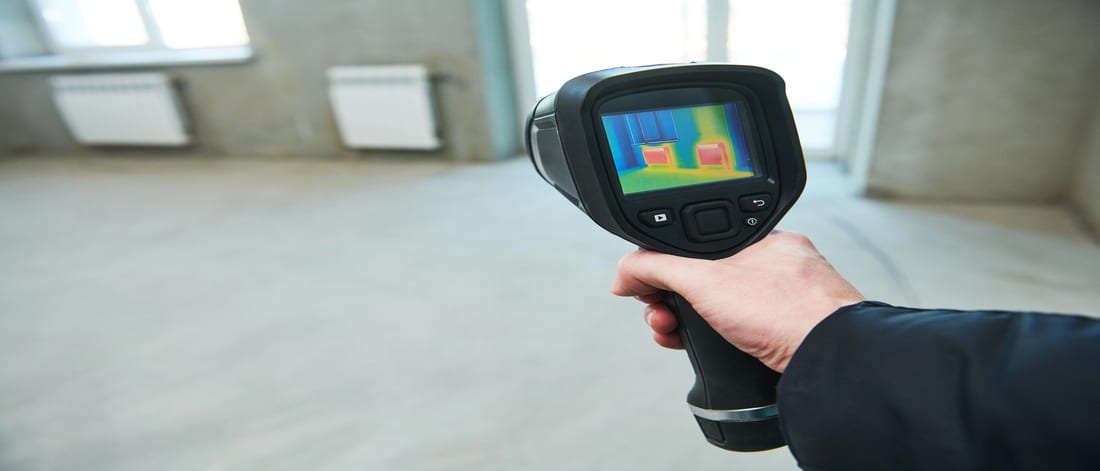
Thermal imaging has become a go-to tool in modern water damage inspections, offering a fast, non-invasive way to spot potential hidden moisture. By revealing subtle temperature differences across walls, ceilings, and floors, these cameras can point inspectors toward areas that may be affected. But while the technology is powerful, it’s not foolproof, and it doesn’t actually “see” water. Understanding what thermal imaging can and can’t do is key to avoiding misdiagnosis and ensuring accurate results. In this guide, we’ll break down how thermal imaging works, where it excels, and where it falls short so you know what to expect during a professional inspection.
How Thermal Imaging Technology Actually Works
Thermal imaging technology works by detecting infrared radiation, heat energy, which all objects emit when their temperature is above absolute zero. These cameras convert that invisible energy into visible images, allowing inspectors to see temperature differences across building materials like drywall, wood, and insulation.
At the core of this technology are microbolometer sensors, tiny heat-sensitive elements arranged in a grid. Thousands of these sensors work together to capture detailed thermal data across entire surfaces, identifying even slight temperature variations as small as 0.05°C (0.09°F). The result is a thermogram, or visual map, that displays warmer and cooler areas in contrasting colors or grayscale.
When moisture enters building materials, it changes how those materials interact with heat. Evaporation from wet areas pulls heat away, creating cooler surface temperatures, while water-saturated materials also store and release heat differently than dry ones. Thermal cameras detect these subtle differences, helping inspectors locate areas that may be affected by hidden moisture.
Most building inspection cameras operate within the long-wave infrared spectrum (8–14 micrometers), which is ideal for evaluating temperature variations in construction materials. However, it’s important to understand the limitations of this technology. Thermal imaging only measures surface temperature; it does not directly detect moisture or determine how much water is present.
Because of this, temperature anomalies must always be verified using moisture meters or other approved testing methods, such as those outlined in ASTM standards. Proper interpretation also requires experience, since similar thermal patterns can be caused by factors like air leaks, missing insulation, or thermal bridging—not just moisture.
The Science Behind Temperature Differences and Moisture
When water gets into building materials like walls or ceilings, it creates measurable temperature changes on the surface. Wet materials become cooler than dry materials because of evaporative cooling. This happens when water changes from liquid into water vapor (a gas). This change needs energy, which gets pulled from the wet material itself. The wet spots usually measure 2-5°F cooler than the dry spots around them.
Different building materials hold moisture in different ways. Porous materials (materials with tiny holes and spaces) like drywall and wood absorb water easily. These materials show bigger temperature differences between wet and dry areas. Non-porous materials (solid materials without holes) like metal or glass don’t absorb much water. These surfaces show smaller temperature changes even when moisture touches them.
A thermal camera works by detecting infrared radiation (invisible heat energy) that comes from these temperature differences. The camera shows wet areas as cooler spots and dry areas as warmer spots.
Several environmental factors change how fast water evaporates and what the thermal camera displays:
- Relative humidity (the amount of moisture already in the air)
- Air movement and ventilation patterns
- The specific material type being measured
- Room temperature and seasonal conditions
These factors affect evaporation rates, which directly impact the thermal patterns the camera captures. Understanding these variables helps identify moisture problems accurately in buildings and structures.
Evaporative Cooling: The Primary Detection Method
When water changes from liquid to gas, it pulls in about 540 calories of heat energy for each gram of water at normal air pressure. Scientists call this energy transfer the latent heat of vaporization. This heat absorption makes the wet surface cooler than the dry areas around it. Your thermal imaging camera spots these temperature differences as cooler zones on the screen.
During building inspections, wet spots that are actively drying show up 2-10°F cooler than nearby dry materials. The exact temperature difference depends on factors like room humidity, air flow patterns, and what type of material holds the moisture (wood, drywall, concrete, or insulation).
The thermal camera works best when the relative humidity in the room stays under 60%, and fresh air circulates through the space. High humidity slows down how fast water evaporates, which means less cooling happens and smaller temperature differences appear on your camera.
More air movement speeds up evaporation, which creates stronger cooling effects and clearer thermal patterns on wet building materials.
Knowing how evaporative cooling works helps you pick the right time to scan a building for moisture problems. You can read the thermal images more accurately when you understand what conditions, like humidity levels, air circulation, material types, and temperature gradients, affect the cooling patterns your camera displays.
This knowledge separates actual moisture issues from false readings caused by poor scanning conditions.
Identifying Active Leaks Through Surface Temperature Changes
Active leaks produce distinct thermal patterns that set them apart from older or dried water damage. When water is continuously escaping from a pipe or fixture, it creates a consistent temperature difference at the source, making the affected area stand out clearly during a thermal scan.
These patterns often appear as concentrated hot or cold spots, depending on the type of leak. Hot water lines typically show warmer areas, while cold water leaks appear cooler due to both the lower water temperature and the added cooling effect of evaporation. This contrast helps inspectors quickly narrow down the location of an active issue.
The key difference between active leaks and past moisture damage is stability. Active leaks maintain a consistent temperature variation throughout the inspection, while residual moisture from previous leaks gradually blends back to the surrounding temperature over time. This distinction is critical for determining whether water intrusion is ongoing or has already stopped.
Accurate documentation requires more than thermal images alone. Industry standards call for capturing both infrared and standard photos, along with verifying findings using moisture meters. While thermal imaging highlights temperature differences, moisture meters confirm actual water content, together providing reliable evidence of active leaks versus leftover moisture from past damage.
Thermal Bridging in Saturated Building Materials
Water-soaked materials move heat through them at much faster rates than dry materials. This creates clear temperature patterns that infrared cameras can detect. Scientists call this effect thermal bridging. Water makes materials conduct heat 10-25 times faster than when those same materials stay dry.
Concrete walls, brick structures, and wooden frames show this effect most clearly. The wet spots register as cooler areas on thermal scans. These wet zones measure 2-5°C colder than the dry material around them.
Building inspectors follow ASTM C1153 and ASTM E1933 testing standards when checking for moisture problems. Wait 4-6 hours after rain or snow before taking infrared readings. This waiting period lets the building surface reach stable temperature levels. Without this wait time, inspectors might confuse water evaporation effects with actual moisture trapped inside walls.
Take thermal images in a methodical pattern across all suspected areas. Record the temperature readings and photograph each section.
Dry building materials maintain even temperatures across their surfaces. Moisture problems create scattered cold patches that form irregular shapes. These cold zones mark where water has penetrated the structure. Temperature maps reveal the exact location and spread of water damage inside walls, roofs, and foundations.
Optimal Conditions for Successful Moisture Detection
Infrared thermal imaging cameras need at least a 10°C (18°F) temperature difference between wet and dry building materials to find moisture problems. The scanning environment should stay stable for several hours before inspection.
Don’t scan during fast temperature changes or when direct sunlight hits the surface, because these conditions create false heat patterns that hide real moisture issues.
ASTM C1153 states that indoor spaces need at least a 5.5°C (10°F) temperature difference between inside and outside air. Conduct moisture scans during early morning hours (5-8 AM) or late evening hours (8-11 PM) when evaporative cooling makes wet materials easier to detect.
The substrate surfaces (walls, floors, ceilings, roofs) must keep steady temperatures for correct moisture assessment.
Environmental factors that change detection accuracy include:
- Wind speed affects surface cooling rates
- Relative humidity percentage in the air
- HVAC systems (heating and air conditioning equipment) cycling on and off
Document these weather conditions and mechanical system operations during each thermal inspection. Control or record these variables to get reliable moisture detection results.
Water-damaged areas show different thermal signatures than dry materials when proper temperature gradients exist between the inspection target and the surrounding environment.
Building Materials That Compromise Thermal Imaging Accuracy
Even when conditions meet ASTM C1153 guidelines, certain building materials can limit or completely block the effectiveness of thermal imaging. Because infrared cameras rely on reading surface temperatures, anything that reflects, traps, or prevents heat transfer can hide what’s happening beneath.
Highly reflective materials like aluminum siding, stainless steel panels, and copper flashing don’t emit reliable infrared signals. Instead, they reflect surrounding temperatures, making it difficult or impossible for inspectors to detect moisture behind them. Similarly, thick masonry walls and concrete, especially those over 8 inches deep, retain heat for long periods, masking temperature differences below the surface where moisture may exist. Foil-faced insulation and radiant barriers present another challenge, as they effectively block infrared energy altogether, preventing detection of any hidden moisture behind them.
In these situations, inspectors must rely on alternative methods to confirm conditions. Moisture meters, both pin-type and pinless, provide direct readings of water content, while tools like borescopes allow for visual inspection inside wall cavities. In some cases, limited destructive testing may be necessary to fully assess hidden damage.
Understanding material properties is essential for accurate interpretation. Each material has an emissivity rating that determines how effectively it emits infrared energy. Low-emissivity materials, like reflective metals, produce unreliable readings, while high-emissivity materials, such as wood and concrete, offer more accurate thermal images. Checking these properties in advance helps inspectors avoid misinterpretation and ensures a more efficient, accurate assessment.
Hidden Moisture That Thermal Cameras Cannot See
Thermal imaging cameras show temperature differences on surfaces. These cameras fail to find moisture hiding in certain spots inside walls, floors, and other building parts.
- Moisture between vapor barriers and structural sheathing stays hidden from thermal cameras. The vapor barrier (a plastic or foil sheet that blocks water vapor) stops the temperature difference from reaching the outside surface where the camera looks. The camera only reads what it can see on the surface.
- Water inside insulated wall cavities goes undetected when insulation material blocks heat movement. Fiberglass batts, foam boards, and spray foam all work as thermal buffers. This means they stop temperature changes from passing through to the surface. The camera can’t sense moisture trapped behind this insulation layer.
- Moisture beneath tile or stone installations escapes thermal detection. Dense materials like ceramic tile, porcelain, natural stone, and marble block have temperature transfer. Heat and cold can’t move through these thick materials fast enough to create a readable temperature pattern on the surface.
- Water trapped within concrete slabs creates detection problems. When moisture sits several inches deep inside a concrete floor or foundation slab, the thick concrete mass prevents the temperature signal from reaching the top surface. The camera reads only the surface temperature, missing the wet concrete below.
ASTM C1153 explains that thermal cameras need temperature differences to reach the scanned surface. When building layers, like vapor barriers, insulation, tile, stone, or thick concrete block, thermal imaging fails.
Building inspectors and water damage technicians must use other detection tools: pin-type moisture meters (which penetrate surfaces), pinless moisture meters (which scan behind surfaces using electromagnetic signals), infrared thermometers, and invasive probing (drilling small test holes). These complementary methods find hidden moisture that thermal cameras miss.
Common False Positives in Thermal Inspections
Thermal imaging cameras detect surface temperature patterns, not actual moisture, which makes false positives a common challenge during inspections. Without proper interpretation, normal temperature variations can easily be mistaken for water damage, leading to unnecessary repairs and inaccurate assessments.
Several everyday building conditions can mimic the appearance of moisture on a thermal scan. HVAC components, such as air conditioning ducts and vents, often appear as cold spots because they lower surrounding surface temperatures, sometimes by 15°F or more. Metal framing, such as steel studs, can also create misleading patterns by conducting heat differently from insulation and drywall, resulting in vertical lines that resemble water intrusion. Even recently cleaned surfaces can trigger false readings, as residual moisture from mopping or steam cleaning can temporarily cool the area during evaporation.
Because of these limitations, thermal imaging findings must always be verified. Moisture meters are essential for confirming whether a temperature anomaly is truly caused by water. These tools measure actual moisture content within materials, providing the evidence needed to distinguish between real water damage and harmless temperature differences.
Industry standards require this type of confirmation before diagnosing a moisture issue. Skipping verification not only increases the risk of misdiagnosis but can also lead to unnecessary costs for property owners and potential liability for inspectors. Accurate results depend on combining thermal imaging with direct moisture testing and informed interpretation.
Air Currents and Ventilation Effects on Readings
Air leaks create more confusion in thermal imaging than any other building problem. When air moves through cracks and gaps, it changes surface temperatures in ways that look identical to water damage on thermal cameras.
The American Society for Testing and Materials (ASTM C1060 standard) explains that air infiltration creates specific heat patterns. These patterns appear on thermal scans as temperature differences that building inspectors frequently mistake for moisture problems.
Where Air Movement Causes False Readings
Air flow through building envelope penetrations causes surface cooling. You see this cooling effect at:
- Electrical outlet boxes in exterior walls
- Unsealed pipe penetrations through floors and ceilings
- Gaps around window frames and door jambs
- Recessed light fixtures in insulated ceilings
- Junction points where walls meet foundations
These locations show temperature drops between 5°F and 15°F compared to surrounding surfaces. This temperature change matches the cooling effect that happens when water evaporates from wet building materials.
Solar Heating and Environmental Interference
Heat from the sun creates temperature patterns on buildings that look similar to water damage when using thermal cameras. Solar radiation heats up building surfaces and creates temperature differences that hide real moisture problems.
Walls facing south and west hold heat for several hours after the sun goes down, which produces false readings that look like water evaporation from actual leaks.
Three main environmental factors interfere with moisture detection:
- Direct sunlight on roofs and walls (creates temperature differences of 10-30°F above normal air temperature)
- Bounced heat from nearby surfaces, including parking lots, driveways, and window glass
- Heat transfer paths through building materials like metal studs and concrete that carry outside heat into the structure
Industry standards from ANSI/IICRC S500 recommend performing thermal scans during early morning hours or after building surfaces reach the same temperature as the surrounding air.
Inspection reports must include current weather conditions, recent sun exposure on the building, and the waiting time between sun exposure and scanning. These documentation requirements follow ASTM C1153 testing protocols and protect the accuracy of water intrusion investigations.
When to Use Moisture Meters Instead of Thermal Imaging
Thermal cameras scan large wall and ceiling surfaces fast. Moisture meters give you exact numbers that show how much water sits inside drywall, wood, and concrete. These measurements matter when you file insurance claims, start water damage cleanup, or prove materials meet industry dry standards (IICRC S500).
| Scenario | Thermal Imaging | Moisture Meter |
| First inspection | Main tool | Backup check |
| Water behind walls | Shows temperature differences | Needs direct material contact |
| Exact measurements | Shows heat patterns only | Reports the moisture percentage |
| Report paperwork | Pictures of problem areas | Numbers for official records |
Both devices work better together. The thermal camera points to cold spots where water might hide. The moisture meter then touches those spots and confirms if water damage exists. During the drying process, the moisture meter tracks daily progress until materials reach safe moisture levels below 15% for wood framing and less than 1% for concrete slabs.
Combining Multiple Detection Methods for Accurate Results
Using thermal imaging cameras, moisture meters, and visual inspection together increases detection accuracy from 70% to 95% in water intrusion cases. This three-part protocol prevents false readings from temperature differences caused by building materials rather than water damage.
Follow this verification sequence:
- Thermal scan first – Infrared cameras map temperature patterns across walls, ceilings, and floors to locate areas that need closer examination.
- Moisture meter confirmation – Pin-type or pinless moisture detection tools measure actual water content at locations showing temperature variations.
- Visual documentation – Digital photographs capture water stains, white mineral deposits (efflorescence), or damaged materials to support instrument readings.
Document results from each detection method separately. Compare the data points from all three sources. When thermal imaging, moisture meters, and visual evidence all show water damage at the same location, the diagnosis is certain. This systematic inspection process follows IICRC S500 water damage assessment standards used by restoration professionals.
The combined approach works because each detection method reveals different aspects of water intrusion. Infrared thermography shows thermal patterns created by evaporative cooling. Moisture meters quantify water saturation levels in building materials like drywall, wood, and concrete.
Visual inspection identifies physical deterioration and water migration paths. Together, these methods create a complete picture of the extent and severity.
Best Practices for Thermal Imaging Inspections
Thermal imaging is a powerful tool for detecting potential water damage, but accurate results depend on proper technique, timing, and verification. Following proven best practices helps ensure reliable findings and reduces the risk of misinterpretation:
- Create the right temperature contrast
Thermal cameras are most effective when there’s a noticeable difference—ideally around 10°F—between wet and dry materials. Without sufficient contrast, moisture may not appear clearly on the scan.
- Inspect during optimal times of day.
Early morning (6–8 AM) or late evening (8–10 PM) provides more stable indoor conditions and minimizes the impact of sunlight and fluctuating temperatures.
- Maintain proper camera positioning
Hold the camera perpendicular to the surface being inspected and keep a distance of about 3 to 15 feet. This range delivers the most accurate and consistent readings across typical building materials.
- Use correct camera settings
Set emissivity to approximately 0.95 for common materials like drywall, wood, and concrete. Adjust level and span settings to enhance contrast so temperature differences—and potential problem areas—are easier to identify.
- Establish baseline temperatures
Record readings from known dry areas in each space. These reference points make it easier to spot unusual hot or cold patterns that may indicate moisture.
- Always verify with moisture meters
Thermal imaging highlights temperature anomalies, not moisture itself. Follow up every suspect area with a pin-type or pinless moisture meter to confirm actual water content, as required by industry standards.
- Document environmental conditions
Record room temperature, relative humidity, and outdoor weather during the inspection. These factors directly affect thermal performance and are essential for accurate reporting and insurance documentation.
Combining proper scanning techniques with verification and thorough documentation ensures more accurate assessments and helps distinguish real water damage from misleading temperature variations.
Thermal imaging is an effective tool for identifying hidden moisture during water damage inspections, utilizing temperature differences to guide inspectors. However, it does not directly detect water and requires verification with other methods to avoid misdiagnosis.
- Thermal cameras reveal temperature variations in building materials, helping locate potential moisture issues. They work best under specific environmental conditions, like low humidity and stable temperatures.
- Active leaks create distinct thermal patterns, allowing inspectors to differentiate between ongoing issues and past damage. Accurate assessments require both thermal images and moisture meter readings.
- Understanding factors like air movement and material types is essential for interpreting thermal images correctly and ensuring reliable results during inspections.
Thermal imaging is used in water detection to identify hidden moisture by detecting subtle temperature differences in surfaces like walls, ceilings, and floors. This non-invasive technology helps inspectors locate potential water damage areas, although it cannot directly see water and has limitations that must be understood for accurate assessments.


