
Spring Landscaping Tips to Protect Your Home from Water Damage
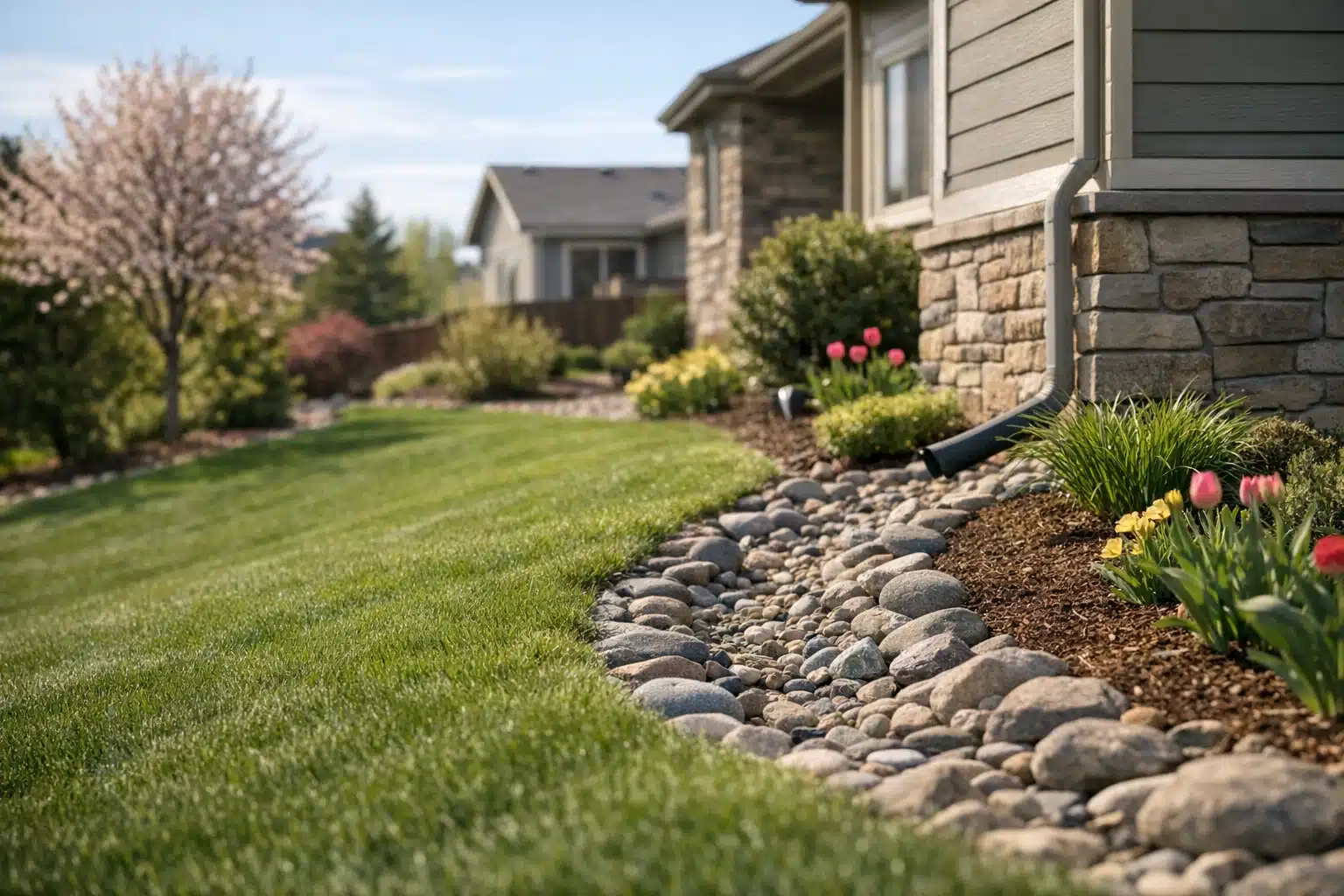
Poor landscaping causes 70% of residential water damage that happens during spring snowmelt and heavy rains. The ground around your home either protects your foundation or funnels water straight into your basement.
These landscaping tips will help you create a defense system that keeps water where it belongs—away from your house. Spring is the perfect time to implement these changes before Colorado’s unpredictable weather patterns arrive.
Grade Your Property to Direct Water Flow
Proper grading creates a slope that moves water away from your foundation at a rate of 6 inches over the first 10 feet. This grade prevents water from pooling against basement walls where it can seep through cracks or overwhelm waterproofing systems.
Walk around your home with a level or smartphone app that measures slopes. Look for areas where soil has settled against your foundation or where previous landscaping created low spots.
Fix Common Grading Problems
Colorado homes face unique challenges from freeze-thaw cycles that shift soil throughout winter. These movements create depressions that collect snowmelt right against your foundation.
- Fill settled areas with compactable soil, not loose dirt that will settle again
- Remove built-up mulch that has created a dam against your foundation
- Extend downspouts if they dump water into low-lying areas near your home
- Create berms to redirect surface water toward street drainage or natural slopes
Install Strategic Drainage Systems
Drainage systems capture water that grading alone cannot handle. French drains, swales, and dry wells work together to manage heavy spring runoff from roofs, driveways, and saturated soil.
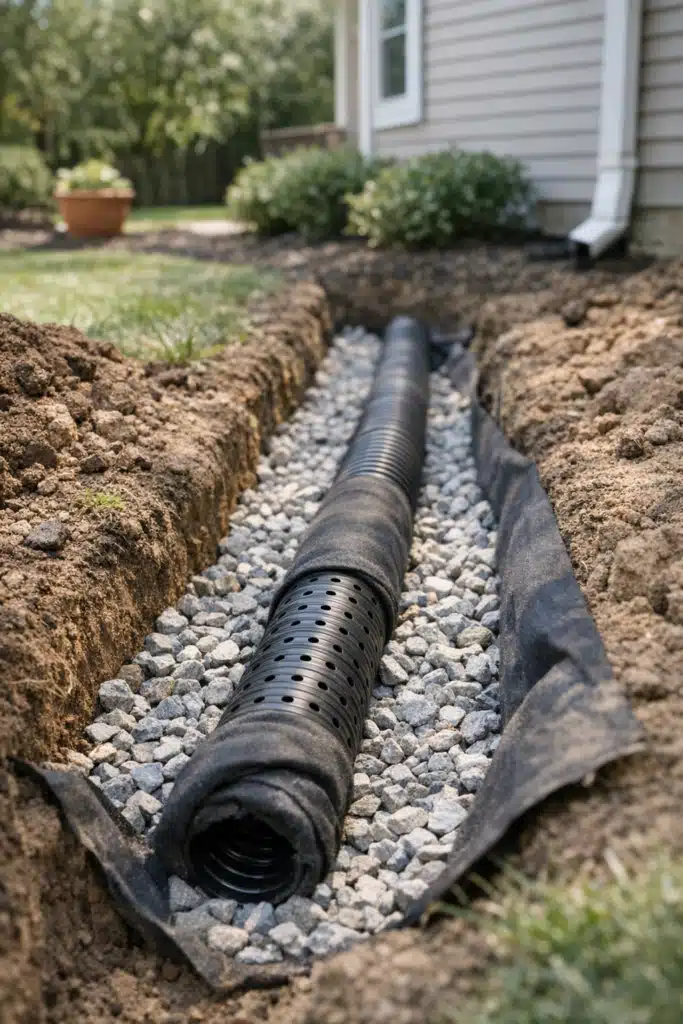
French drains are perforated pipes buried in gravel trenches that collect groundwater before it reaches your foundation. Install them 2-3 feet deep along the uphill side of your home where water naturally flows toward your house.
Choose the Right Drainage Solution
Different drainage problems require specific solutions. Surface water needs different management than groundwater seepage.
- Swales handle surface runoff from large areas like driveways or slopes
- Catch basins collect water from low spots and channel it to storm drains
- Dry wells store excess water underground where it can slowly absorb into surrounding soil
- Channel drains intercept water flowing across paved surfaces toward your home
Select Plants That Manage Water Naturally
Deep-rooted plants create natural drainage channels while shallow-rooted groundcover prevents soil erosion that can change your property’s grade over time. The right plant selection works as a living water management system.
Avoid plants with invasive root systems near your foundation. Tree roots can crack foundation walls, while shallow-rooted shrubs offer little help with water absorption.
Best Plants for Water Management
These Colorado-adapted plants thrive in wet spring conditions while helping to prevent water damage:
- Blue grama grass develops deep roots that absorb standing water quickly
- Rocky Mountain iris tolerates wet spring soil and helps prevent erosion on slopes
- Serviceberry shrubs create natural barriers that slow runoff without aggressive root systems
- Sedums and native wildflowers work well in rain gardens designed to capture roof runoff
Maintain Gutters and Downspout Extensions
Gutters that overflow or downspouts that dump water too close to your foundation undo all your careful landscaping work. One inch of rain on a 1,000-square-foot roof produces 623 gallons of water that must go somewhere.
Clean gutters twice yearly and inspect downspout connections after heavy storms. Loose joints allow water to escape onto the ground near your foundation instead of flowing away through extensions.
Extend Downspouts Effectively
Standard downspout extensions often get moved during lawn care or winter snow removal. Create permanent solutions that survive seasonal maintenance.
- Bury downspout extensions underground to prevent displacement
- Connect to drainage systems that carry water to street gutters or dry wells
- Install splash blocks on sloped areas to prevent soil erosion
- Add hinged extensions that fold up during mowing but extend during storms
Create Rain Gardens for Natural Water Collection
Rain gardens are shallow depressions planted with native vegetation that capture and filter stormwater runoff. They prevent water damage while creating attractive landscape features that require minimal maintenance once established.
Position rain gardens at least 10 feet from your foundation in areas where water naturally collects. Size them to handle runoff from your roof area—typically 20-30% of the drainage area feeding into them.
Build an Effective Rain Garden
Successful rain gardens balance water collection with proper drainage to prevent standing water that attracts mosquitoes.
- Dig 6-8 inches deep with sloped sides for easy maintenance access
- Add amended soil that drains within 24 hours after heavy rain
- Plant native species that tolerate both wet and dry conditions
- Mulch lightly to prevent soil erosion without impeding water infiltration

 Posted on Google
Address Hardscape Water Issues
Driveways, patios, and sidewalks create impermeable surfaces that concentrate water flow. Poor hardscape drainage can direct thousands of gallons toward your foundation during spring snowmelt and summer thunderstorms.
Inspect where water flows off paved surfaces during rain. Look for areas where runoff pools against your home or flows directly toward basement window wells.
Redirect Hardscape Runoff
Simple changes to existing hardscape can dramatically reduce water pressure against your foundation:
- Install channel drains along driveways that slope toward your house
- Add permeable pavers to areas where water consistently pools
- Create gravel strips between paved surfaces and your foundation
- Seal and slope concrete surfaces away from your home during repairs
Time Your Landscaping Projects
Spring landscaping timing matters for both plant survival and immediate water protection. Complete drainage projects before spring snowmelt begins but wait for soil to dry before heavy grading work.
Colorado’s unpredictable spring weather creates narrow windows for different landscaping tasks. Frozen ground prevents drainage installation, while muddy conditions make grading impossible.
Spring Landscaping Timeline
Follow this sequence to maximize your landscaping effectiveness:
- March: Plan drainage projects and order materials while ground thaws
- April: Install hardscape drainage before heavy spring rains begin
- May: Complete grading work and plant rain gardens after soil dries
- June: Establish new plantings and test all drainage systems
When to Call Water Damage Professionals
Some water damage prevention requires professional expertise that goes beyond basic landscaping. Foundation drainage, basement waterproofing, and structural grading issues need specialized knowledge to prevent costly mistakes.
If you notice water stains in your basement, musty odors, or foundation cracks, these indicate existing water problems that landscaping alone cannot solve. Professional assessment can identify the source and recommend comprehensive solutions.
Smart landscaping creates the first line of defense against water damage, but it works best as part of a complete moisture management strategy. ARC Restoration can assess your property’s water risks and recommend both landscaping improvements and structural solutions. Contact us at 720-799-2434 to schedule a consultation that will protect your home year-round.
Sources
- FEMA – Benefits of Natural Floodplain Functions
- Colorado State University Extension – Stormwater Management: Rain Gardens
- EPA – Soak Up the Rain: Rain Gardens
Spring landscaping is crucial for preventing water damage to homes, as poor landscaping contributes to 70% of such issues during heavy rains and snowmelt. Implementing effective grading, drainage systems, and plant selection can protect foundations and manage water flow effectively.
- Proper grading directs water away from foundations, preventing pooling and seepage. Regular maintenance of gutters and downspouts is essential to avoid overflow near the home. Creating rain gardens with native plants can naturally filter stormwater and enhance the landscape's appeal.
- Poor landscaping causes 70% of residential water damage that happens […] Poor landscaping causes 70% of residential water damage that happens during spring snowmelt and heavy rains.
- The ground around your home either protects your foundation or funnels water straight into your basement.
To prevent water damage during spring, ensure proper grading around your home to direct water away from the foundation. Use mulch and plants to absorb excess moisture, and maintain gutters and downspouts to channel rainwater effectively. Regularly check for drainage issues to protect your home from potential flooding.


