
Carpet Cushion Types and Dry-Out Decisions
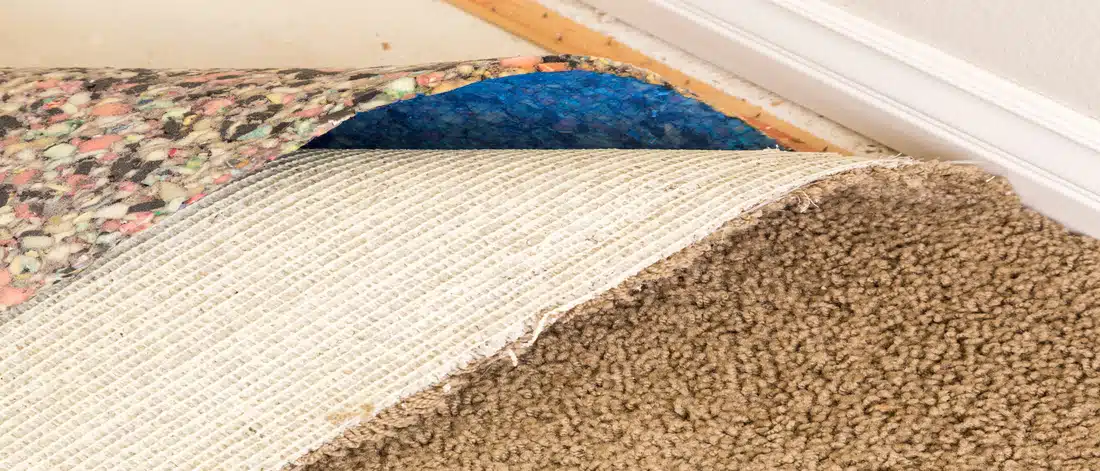
The type of carpet cushion determines whether wet padding can be dried or must be replaced. In water damage situations, technicians evaluate both the cushion material: bonded urethane, prime urethane, rubber, or fiber, and the level of contamination based on IICRC S500 standards. Highly absorbent materials like bonded foam and fiber often require replacement, especially with contaminated water, while less absorbent options like rubber or prime foam may be salvageable under limited conditions. Fast, informed decisions are critical, as moisture, contamination, and time all directly impact mold growth, health risks, and long-term restoration outcomes.
Understanding Carpet Cushion Materials and Their Properties
Carpet cushion materials vary in composition, performance, and how they respond to moisture. These differences play a critical role in durability, comfort, and water damage outcomes.
- Polyurethane foam (most common)
- Includes bonded (rebond) and prime foam
- Available in varying densities that affect lifespan and moisture retention
- Tends to absorb and hold significant amounts of water
- Rubber cushions
- Made from natural or synthetic rubber compounds
- Excellent resilience and shape recovery
- Resist absorption but dry very slowly once wet
- Fiber cushions
- Made from natural fibers (like jute) or synthetics (like polypropylene)
- Absorbs less water than foam
- Can trap dirt, debris, and contaminants deep within the material
- Density and performance
- Measured in pounds per cubic foot
- Lower-density cushions dry faster but wear out more quickly
- Higher-density cushions last longer but retain more moisture
- Water damage considerations
- Each material absorbs and releases water differently
- Foam holds the most moisture, rubber dries the slowest, and fiber can trap contaminants
- Proper identification is essential; each type requires a specific drying or replacement approach to prevent mold growth and structural damage
Understanding these material differences helps restoration professionals choose the safest and most effective course of action after water exposure.
Bonded Urethane Cushion: Composition and Water Response
Manufacturers create a bonded urethane cushion by shredding high-density polyurethane foam scraps into small chips. They bind these particles together with adhesive under heat and pressure. This recycled foam product creates a dense, firm cushion material. The cushion’s porosity (space between particles) varies based on particle size and how much adhesive spreads throughout.
The bonded structure presents major challenges when water damage occurs. Water soaks through gaps between the bonded particles, creating many internal pockets where moisture collects. The adhesive binder absorbs water like a sponge, which weakens the bonds holding particles together. This water absorption causes delamination (separation of bonded layers).
Water extraction equipment cannot remove moisture effectively from bonded urethane. Capillary action (water movement through small spaces) and surface tension trap water within the cushion’s irregular internal structure. The cushion requires long drying periods, sometimes several days. Complete moisture removal is difficult to confirm, even with professional moisture meters.
These water retention characteristics make replacement more practical than restoration in most cases. Category 2 water (contaminated greywater from sources like washing machines or dishwashers) and Category 3 water (heavily contaminated blackwater from sewage or flooding) create health risks when trapped in porous materials.
The Institute of Inspection, Cleaning and Restoration Certification (IICRC) recommends disposal of Category 3-affected porous materials. Bonded urethane cushions exposed to contaminated water typically require disposal rather than cleaning attempts.
Rubber Cushion: Challenges With Water Absorption
Natural rubber and synthetic rubber materials make up rubber carpet cushions. Rubber cushion offers strong bounce-back ability and long-lasting performance in dry conditions. The cellular structure inside the rubber padding creates serious problems when water gets inside.
The connected cell network works like tiny tubes that pull moisture through the entire material. Water fills these cells and stays trapped inside. The drying process takes much longer than what restoration professionals consider safe. The IICRC S500 Standard states that water removal should happen within 48-72 hours to stop mold and bacteria growth. The rubber cushion needs much more time to dry completely.
The thick, heavy composition blocks air from moving through the material. Air circulation helps water evaporate from wet materials. Professional water extraction machines struggle to dry the rubber cushion because air cannot reach deep into the padding. Fans and dehumidifiers work on the surface but cannot force air through the dense rubber structure.
These water-holding properties mean carpet installers and restoration technicians must remove and replace the cushion after flood damage, pipe breaks, or sewage backups. The cost of cushion replacement adds to the total restoration expenses. Property owners face decisions about salvaging carpet versus complete removal when rubber padding stays wet beyond the 72-hour window.
Padding alternatives like rebond foam or synthetic felt offer better drainage and faster drying times in areas with water damage risk. Understanding how different cushion materials respond to moisture helps building owners make informed choices during new carpet installation or replacement after water loss events.
Fiber Cushion: Natural Materials and Saturation Issues
Carpet installers find fiber cushion products in commercial buildings and older homes. These cushions contain jute fibers, animal hair, and recycled textile materials. The natural and synthetic fiber blends work by resisting compression instead of using a foam structure with air pockets.
Water exposure creates serious problems for the fiber cushion. Jute and animal hair absorb water quickly because these organic materials are hygroscopic (they naturally attract and hold moisture). The fibers pull water deep into the cushion through capillary action—the same process that pulls water up through a paper towel.
The dense fiber padding blocks air from moving through the material, which prevents proper drying. Fiber cushion lacks the open cell structure found in foam products. This dense composition traps moisture inside the pad where air cannot reach it.
When contaminated water soaks into the cushion, the organic fiber materials become a breeding ground for mold, mildew, and bacteria.
Water damage professionals classify water contamination in three categories. Category 1 water comes from clean sources like supply lines. Category 2 water contains contamination from sources like washing machine discharge or toilet overflow (urine only). Category 3 water includes sewage, flooding, or any water that contacted contaminated surfaces.
Industry restoration standards recommend removing and replacing the fiber cushion rather than attempting to dry and save it. This applies especially to Category 2 (gray water) or Category 3 (black water) exposure incidents.
The removal decision considers several factors: the material has low resale value, drying proves difficult or impossible, and health risks from microbial growth outweigh the cost of replacement.
Professional remediation protects building occupants from exposure to mold spores, bacteria, and other biological contaminants that thrive in wet organic materials.
Category 1 Water Exposure: When Drying May Be Possible
Clean water from broken supply lines creates a single situation where restoration professionals can try to save the fiber cushion. Category 1 water (potable water from pipes, fixtures, or appliances) has no significant contamination. This water type allows drying within strict time limits. The cushion must be extracted within 24-48 hours before microorganisms (bacteria, mold, mildew) start growing.
| Factor | Requirement | Risk if Not Met |
| Water Source | Clean supply line only | Exposure to contaminants (sewage, chemicals, soil) |
| Response Time | Under 24 hours | Microbial colonization (mold growth, bacterial spread) |
| Extraction Method | Weighted extraction equipment | Incomplete moisture removal from foam cells |
Technicians must get the moisture content below 20% using weighted extraction. This process involves placing heavy equipment on the cushion to squeeze out water. After extraction, workers use air movers (high-velocity fans) and dehumidifiers (machines that remove humidity from air) to complete the drying process.
Many contractors still recommend replacement instead of drying. This decision protects them from liability (legal responsibility) if incomplete drying leads to hidden mold growth, odor problems, or structural breakdown of the cushion material. The risk of customer complaints and health concerns often outweighs the cost savings from drying.
Category 2 and 3 Water: Contamination Concerns
When water damage involves contaminated water, fiber cushions cannot be saved. The contamination level determines whether cushions pose health risks.
Category 2 Water (Greywater) comes from appliances and fixtures inside the home:
- Washing machines that overflow
- Dishwashers that leak or discharge
- Toilet bowls containing only urine (no solid waste)
This water carries chemicals, bacteria, and dirt that soak into cushion fibers. The contamination spreads throughout the material, making the cushion unsafe to use.
Category 3 Water (Blackwater) contains dangerous germs and waste:
- Sewage that backs up from drains
- Floodwater from rivers, streams, or lakes
- The toilet overflows with fecal matter
These water sources contain disease-causing organisms called pathogens. Any cushion exposed to blackwater must be thrown away to protect family health.
Why Cushions Cannot Be Cleaned
Fiber cushions work like sponges. Their porous structure pulls contaminated water deep inside, where cleaning solutions cannot reach.
The bacteria, chemicals, and waste particles become trapped within the cushion material.
Professional water damage restoration companies follow Industry standards from the Institute of Inspection, Cleaning and Restoration Certification (IICRC).
The IICRC S500 Standard for Professional Water Damage Restoration requires the disposal of all cushions exposed to Category 2 or Category 3 water.
Even synthetic rubber cushions rarely survive contaminated water exposure.
While these materials resist absorption better than fiber, the cost of professional decontamination treatment exceeds replacement costs in most cases.
Disposal remains the safer, more economical choice.
Assessing Saturation Levels and Moisture Penetration
Water damage assessment begins by determining how deeply moisture has penetrated the carpet cushion and how far it has spread. Restoration technicians rely on a combination of specialized tools and visual inspection to evaluate the full extent of water intrusion.
Moisture meters with probe attachments are used to penetrate cushion layers and measure water content at different depths. These tools provide percentage-based readings for foam, rubber, or fiber padding, allowing technicians to map moisture levels across the affected area. Multiple readings are taken throughout the space to create an accurate moisture profile.
Visual inspection also plays a key role in identifying damage. Technicians look for compressed or flattened cushion areas, discoloration, and signs of delamination or separation between layers. These indicators reveal how water traveled through the carpet system, from surface fibers down to the subfloor.
Thermo-hygrometers are used to measure temperature and relative humidity both at the carpet surface and beneath the padding. This helps detect trapped moisture that standard meters may miss. When humidity levels are higher beneath the carpet than at the surface, it signals that moisture remains locked within the cushion.
Saturation is generally classified into two categories based on depth and coverage. Complete saturation occurs when water penetrates the entire thickness of the cushion, causing it to lose structural integrity and its ability to drain. In these cases, replacement is typically required. Partial saturation affects only the upper layers or isolated areas, where drying may still be effective if the remaining material is intact.
Industry standards from the Institute of Inspection, Cleaning and Restoration Certification S500 guide proper assessment procedures. Technicians document their findings through moisture readings, diagrams showing wet and dry zones, and photographs of visible damage. This documentation supports accurate, defensible decisions on whether the carpet cushion can be restored or must be replaced.
Timeframe Considerations: The 24-48 Hour Window
The most important time for saving wet carpet padding starts when water first touches it and continues for 48 hours. During this short period, germs and damage grow faster and faster.
Bacteria move into wet materials during the first 24 hours. Mold spores start to grow between 24 and 48 hours when moisture and warmth create the right conditions. The IICRC S500 marks these 48 hours as the key decision point for whether padding can be saved or must be thrown out.
Carpet padding left wet beyond 48 hours without proper water removal and drying almost always needs replacement. Restoration becomes impossible.
Waiting too long creates bigger problems. Extended moisture contact:
- Weakens the glue holding the padding layers together
- Causes layers to separate and fall apart
- Allows deep contamination that cleaning cannot fix
The clock starts ticking the moment water touches your carpet padding. Fast response during this critical window determines whether your padding survives or gets replaced.
Microbial Growth Risks in Wet Cushion Materials
Wet carpet cushion becomes a breeding ground for germs, bacteria, and mold that damage both the padding itself and the air people breathe indoors. Water-soaked padding creates perfect conditions for fast germ growth, with organisms taking hold within 24 to 48 hours after water exposure.
Main germ-related problems include:
- Mold types (Aspergillus niger, Penicillium chrysogenum, Stachybotrys chartarum) that grow quickly in foam and fiber padding made from natural materials
- Harmful bacteria from toilet overflows, sewer backups, or contaminated floodwater entering the building
- Toxic mold byproducts (mycotoxins) that affect people’s health when microscopic spores float through the air and enter the lungs
- Slimy bacterial layers (biofilms) that create ongoing wet spots deep inside the cushion that never fully dry
Foam rubber padding and cushions made from natural fibers face the highest contamination risk because they soak up large amounts of water and lack built-in protection against germs.
Removal and replacement of contaminated padding protects building occupants from health hazards associated with prolonged microbial exposure in floor covering systems.
Effective Drying Techniques for Salvageable Cushions
Quick water removal decides if wet carpet padding survives or needs disposal. Industrial fans placed at key spots create powerful wind currents that speed up water evaporation from carpet underlayment materials.
Moisture-removing machines run nonstop to keep indoor humidity under 50%, stopping mold and bacteria growth while padding dries. Infrared scanning tools measure exact wetness levels to confirm carpet cushion fibers contain less than 20% water content by weight—the safe standard for building materials.
Water extraction machines pull out pooled liquid from foam rebond and rubber padding types within 24 hours after flooding or water damage incidents. Restoration workers record wetness measurements every 12 hours during the entire salvage operation.
Carpet cushions still wet after three days must be torn out and discarded, since extended water contact destroys the foam cell structure and creates permanent contamination from sewage, chemicals, or biological matter.
The restoration timeline is critical: padding materials begin deteriorating rapidly once saturation exceeds 72 hours.
Professional water damage technicians use moisture mapping techniques to identify hidden wet zones between flooring layers and wall cavities. Antimicrobial treatments applied to marginally salvageable cushions reduce pathogen risks during extended drying periods.
Signs That Replacement Is the Only Option
Some carpet padding damage cannot be fixed, no matter how much drying you do. Water contamination type determines whether you can save the padding. Category 3 water (sewage and flood water) makes most padding materials worthless because dangerous germs soak deep inside, where cleaning cannot reach them.
Check your carpet padding for these signs of permanent damage:
- Layer separation happens when the bonded foam layers pull apart, creating gaps that make the floor feel lumpy and uneven.
- Mold growth spreads deep inside the foam cells, causing bad smells that cleaning and sanitizing cannot remove.
- Material breakdown shows up as color changes, crumbling texture, or the padding losing its bounce and thickness.
- Glue failure occurs where the padding connects to the floor underneath, making it impossible to lay flat and causing wrinkles or bubbles in your carpet.
Professional moisture meters measure water levels in materials. If readings stay above safe limits after three days of drying equipment running, the padding needs replacement.
When you see several of these problems at once, replacing the padding costs less and works better than trying to save it.
The safe moisture level varies by padding type—rubber, foam, and fiber materials each have different maximum readings. Padding manufacturers provide these specifications.
Insurance companies and restoration professionals use these moisture standards to decide between drying and replacement. Waiting too long to replace damaged padding allows mold colonies to establish permanent roots in the foam structure, creating health risks for anyone in the building.
Health and Safety Implications of Retention Decisions
When people keep water-damaged carpet padding in buildings, they create dangerous conditions. Wet padding grows harmful germs, mold, and bacteria that make people sick.
Mold begins growing within 24 to 48 hours after water damage occurs. This mold releases poisonous substances called mycotoxins and tiny particles called spores into the air people breathe. Bacteria from contaminated water (sewage, flooding, or gray water) create serious infection risks. People with weak immune systems face the greatest danger.
Health Risks from Contaminated Carpet Padding
- Breathing problems develop when people inhale mold spores floating in indoor air. These spores trigger allergic reactions and worsen asthma symptoms in sensitive individuals.
- Toxic poisoning occurs in heavily contaminated spaces where mycotoxin concentrations reach dangerous levels. People absorb these toxins through their lungs.
- Skin infections happen when bare feet or hands touch contaminated surfaces. Direct contact transfers bacteria and fungal organisms to the skin.
- Spreading contamination carries microorganisms from wet padding to clean areas of the building. People track germs on shoes, pets carry spores on fur, and air circulation moves particles between rooms.
Industry Standards and Best Practices for Restoration Professionals
The IICRC S500 Standard and Reference Guide for Professional Water Damage Restoration establishes the procedures contractors follow during assessment, drying, and material removal. These guidelines require thorough documentation of moisture levels, material conditions, and drying progress before any decision is made to restore or replace carpet cushion.
Restoration professionals are expected to record moisture readings using properly calibrated meters, evaluate the condition and integrity of materials, and determine whether the affected areas can be dried within acceptable timeframes. One of the most critical benchmarks is drying speed—materials that cannot be fully dried within 48–72 hours significantly increase the risk of mold growth and must typically be removed.
Best practices also emphasize controlled drying techniques. Technicians calculate airflow, dehumidification capacity, and evaporation rates to create an efficient drying environment. Air movers are strategically placed to promote circulation across the carpet surface, while dehumidifiers remove moisture from the air to accelerate drying within the cushion and subfloor.
In addition to measurements, proper documentation is essential. Technicians create detailed records that include moisture logs, affected area diagrams, and photographic evidence of damage and drying progress. This documentation supports clear decision-making, protects both the contractor and property owner, and is often required for insurance approval.
Advanced tools such as moisture meters, thermo-hygrometers, and thermal imaging cameras are used to detect hidden moisture and verify drying results. Together, these standards and best practices ensure that restoration decisions are based on measurable data, reducing the risk of mold, structural damage, and long-term indoor air quality issues.
The type of carpet cushion significantly influences whether wet padding can be dried or needs replacement after water damage. Technicians assess the cushion material and contamination level to make informed decisions that affect mold growth and health risks.
- Bonded foam and fiber cushions often require replacement due to high absorbency, especially with contaminated water. Rubber and prime foam may be salvageable under certain conditions but take longer to dry.
- Proper identification of cushion materials is essential for effective restoration and to prevent mold growth. Each type has unique moisture retention properties that impact drying strategies.
- Restoration professionals recommend replacing fiber cushions exposed to contaminated water to mitigate health risks, while clean water scenarios may allow for drying if addressed quickly.
Carpet cushions come in various types, including bonded urethane, prime urethane, rubber, and fiber. The material affects whether wet padding can be dried or needs replacement, especially in water damage cases. Highly absorbent types like bonded foam and fiber often require replacement, while less absorbent options like rubber may be salvageable.


