
Dealing with Lingering Odors After Water Extraction
Lingering odors after water extraction indicate hidden moisture and potential mold growth, which can worsen if not addressed. This guide explains the causes of these odors, where they hide, and the effective steps to eliminate them.
- Residual moisture in materials like carpet padding and drywall feeds bacteria and mold, leading to persistent smells.
- Using air fresheners only masks the problem; proper removal of moisture and organic matter is necessary.
- When odors return or spread, it is time to call a restoration team to locate and treat the source effectively.
Lingering odors after water extraction are often caused by trapped moisture in carpets, walls, or furniture, which can lead to mold and mildew growth. Even when surfaces appear dry, these hidden damp areas can produce musty smells, surprising homeowners who expect complete recovery.
The water is gone, the carpets look dry, and yet a musty smell still hangs in the air. That gap between visible dryness and true recovery is where lingering odors live. It catches most homeowners off guard.
Odor after water extraction signals moisture or contamination you cannot see. The smell is not cosmetic. It points to conditions that can worsen if ignored.
This post covers why smells stick around after cleanup, where they hide, and the exact steps that remove them. You will learn what works, what wastes money, and when to call in help.
Why Lingering Odors Happen After Water Extraction
Lingering odors after water extraction are caused by residual moisture feeding bacteria and mold inside porous materials. Extraction pulls standing water. It does not pull the moisture soaked into drywall, subflooring, and padding.
That trapped water becomes a food source. Bacteria and mold release gases that create the musty, sour smell you notice days later.
The Difference Between Clean Water and Gray or Black Water Smells
The source of the flood changes the odor problem. A burst supply line smells different from a sewage backup.
- Clean water (Category 1): A supply line or rainwater. Odor develops from stagnation, not contamination.
- Gray water (Category 2): Washing machine or dishwasher discharge. Contains detergents, food, and light bacteria.
- Black water (Category 3): Sewage or river flooding. Carries pathogens and produces the strongest, most stubborn odors.
Category 3 smells rarely respond to surface cleaning. The affected materials usually need removal, not deodorizing.
Where Odors Hide After the Water Is Gone
Smells persist because moisture retreats into spots you cannot reach with a mop or fan. Finding these spots is the difference between fixing the problem and masking it.
Carpet Padding and Tack Strips
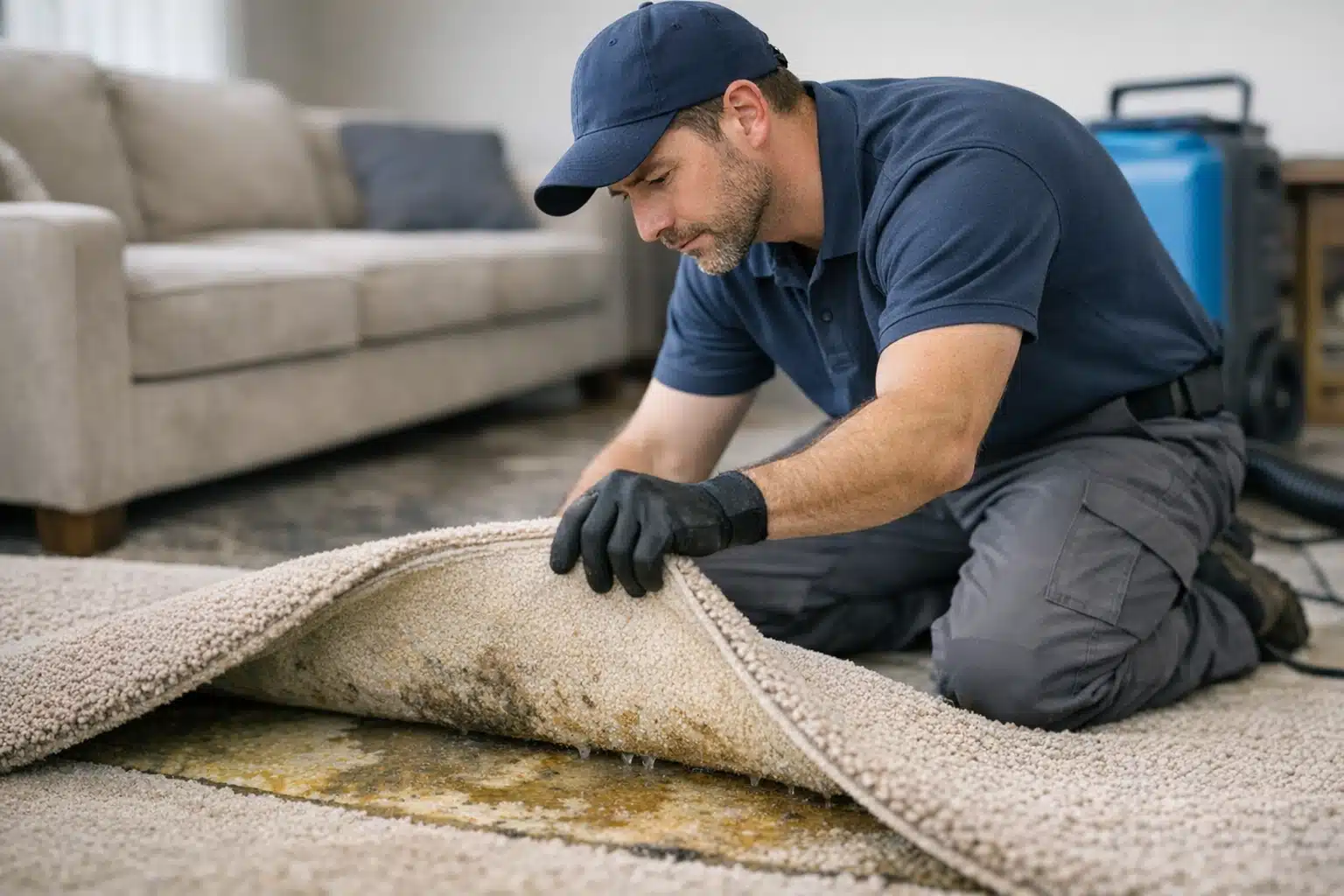
Carpet can feel dry on top while the padding underneath stays saturated. Padding acts like a sponge. It holds water against the subfloor for days.
Wall Cavities and Baseboards
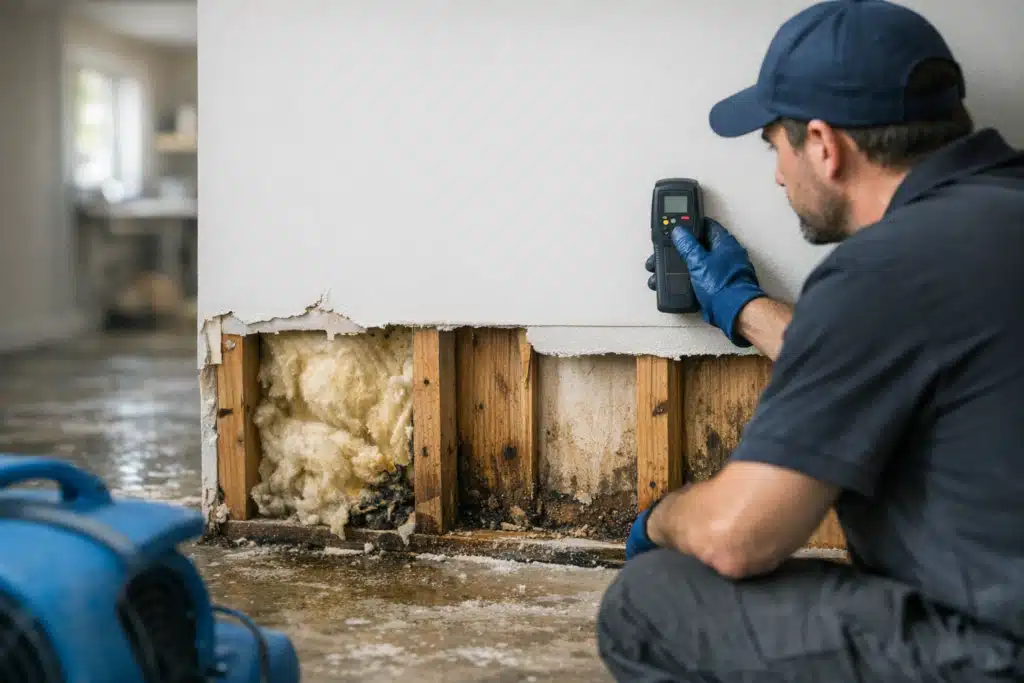
Water wicks upward into drywall by several inches. The paper backing and insulation inside the wall stay damp long after the surface dries.
Subflooring and Under Cabinets
Water flows under kitchen cabinets and into subfloor seams. In a Denver home we treated, the smell came from plywood under a dishwasher that read 38% moisture two weeks after the leak.
HVAC Ducts and Vents
If floodwater reached floor vents, moisture and debris spread into the duct system. Running the furnace then pushes the smell into every room.
How to Remove Lingering Odors After Water Extraction
Removing lingering odors requires eliminating the moisture and organic matter causing them, not covering the smell with fragrance. Air fresheners and candles only delay the fix. Follow these steps in order.
- Confirm the material is dry with a moisture meter. Anything above 16% in wood or drywall still holds active odor sources.
- Remove saturated padding and unsalvageable drywall. Materials past Category 1 water for over 48 hours rarely recover.
- Clean hard surfaces with an antimicrobial cleaner. Wipe subfloors, joists, and framing to kill bacteria left behind.
- Run air movers and a dehumidifier together. Airflow plus moisture removal starves mold before it colonizes.
- Treat the air, not just surfaces. Odor molecules float. Neutralizing them requires the right equipment.
When Baking Soda and Vinegar Work
Home remedies handle mild, clean-water smells on surfaces that are already dry. Baking soda absorbs light odors from carpet. Vinegar cuts musty smells on hard floors.
Skip these for anything involving sewage or mold growth. They cannot reach moisture inside walls or under floors.
Equipment That Removes Odors at the Source
Surface cleaning fails when odor molecules saturate the air and porous materials. Restoration crews use machines built for this exact problem.
- Hydroxyl generators: Safe to run in occupied rooms. They break down odor molecules over hours to days.
- Ozone machines: Faster and stronger, but require an empty space. People, pets, and plants must leave.
- Thermal foggers: Push a deodorizing vapor into wall cavities and fabrics that sprays cannot reach.
- Air scrubbers with HEPA and carbon filters: Capture mold spores and adsorb gases from the air.
Picking the wrong tool wastes time. Ozone on an occupied home is a health risk. A hydroxyl unit on heavy sewage odor may take too long.
Odor Mistakes That Make the Problem Worse
Certain reactions to a smell trap moisture or spread contamination. Avoid these common errors.
- Masking with fragrance: Scented sprays hide the warning sign your home is still wet.
- Sealing the room too soon: Closing off a damp space builds humidity and speeds mold growth.
- Drying carpet without checking the pad: A dry surface over wet padding keeps the odor alive.
- Running the HVAC before duct inspection: This spreads spores and moisture into clean rooms.

 Posted on Google
When the Smell Means Mold, Not Just Moisture
A persistent musty odor after 48 to 72 hours usually means mold has started growing. Mold needs only moisture, organic material, and time. A wet wall provides all three.
The Environmental Protection Agency notes mold can begin within 24 to 48 hours of water exposure. A smell that grows stronger instead of fading is a signal to stop DIY efforts.
Visible discoloration, black spots on drywall, or a sharp earthy smell all point to active growth. At that stage, testing and containment matter more than deodorizing.
When to Call ARC Restoration
Call a restoration team when the smell returns after cleaning, spreads to new rooms, or came from gray or black water. These signs mean moisture or contamination remains behind surfaces.
ARC Restoration uses moisture mapping to locate hidden water before treating odor. We match the equipment to the source, so the smell does not come back once we leave.
Key Takeaways
Lingering odors after water extraction come from moisture and bacteria trapped in materials you cannot see. Removing the smell means finding and drying that hidden moisture, not masking it with fragrance. A musty smell lasting past 72 hours points to mold and calls for expert help.
If a smell keeps returning after your cleanup, ARC Restoration can find the source and remove it. Call or text 720-799-2434, email office@advancedrestorationcolorado.com, or visit https://advancedrestorationcolorado.com.
Sources
- U.S. Environmental Protection Agency – Mold Cleanup in Your Home
- Centers for Disease Control and Prevention – Mold Cleanup and Remediation
- U.S. Environmental Protection Agency – Indoor Air Quality Resources


