
How to Prepare Your Home for Summer Monsoon Storms
Preparing your home for Colorado's summer monsoon storms is essential to minimize damage from flash flooding, hail, and high winds. This guide outlines key steps to protect your property before the storms arrive.
- Inspect and repair your roof and gutters to prevent leaks and flooding. Clear debris from gutters and extend downspouts away from the foundation.
- Grade soil away from your home and seal any foundation cracks to protect against water intrusion. Test your sump pump to ensure it functions during storms.
- Secure outdoor items and prepare a storm safety kit with essentials like flashlights, food, and a battery-powered radio. Check your flood insurance coverage to avoid unexpected damages.
To prepare your home for summer monsoon storms, ensure that gutters and downspouts are clean and functioning properly to direct water away from the foundation. Additionally, inspect windows and doors for leaks, secure outdoor furniture, and create a drainage plan to prevent flooding in your yard.
Colorado’s monsoon season runs from mid-June through September, dropping intense rain in short, violent bursts. A single afternoon storm can drop over an inch of water in under an hour along the Front Range. Good monsoon storm preparation means readying your home before that first cell builds over the foothills.
This post covers the specific risks Colorado homes face during monsoon season. You will learn how to protect your roof, drainage, foundation, and interior against sudden flooding and hail.
Why Colorado Monsoon Storms Behave Differently
Colorado monsoons pull moisture up from the Gulf of California and Gulf of Mexico. That moisture collides with afternoon heating over the mountains, triggering fast, localized downpours.
The result is short storms that overwhelm drainage in minutes. Denver, Colorado Springs, and Fort Collins all see this pattern between July and August.
Three hazards define the season for homeowners:
- Flash flooding — rain falls faster than soil and storm drains can absorb it.
- Hail — Colorado sits in “Hail Alley,” one of the most hail-prone regions in North America.
- High winds — outflow gusts can exceed 60 mph ahead of a storm cell.
Homes near burn scars, like those from past wildfires, face added debris-flow risk. Water rushing off scorched ground carries mud and rock into neighborhoods below.
Monsoon Storm Preparation: Start With Your Roof and Gutters
Your roof takes the first hit during a monsoon storm. Hail and wind expose weak spots that then let water inside.
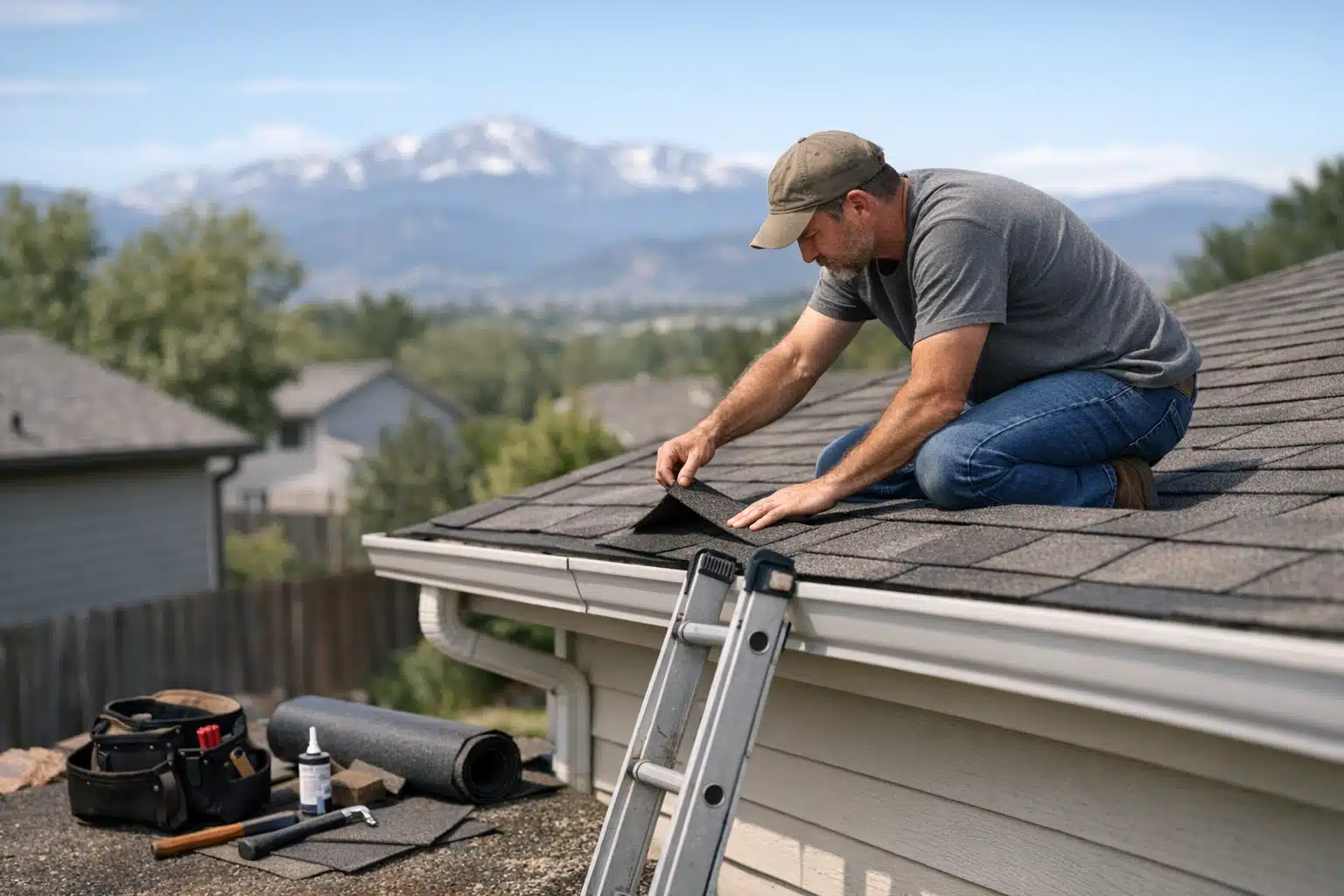
Inspect and repair the roof
Walk your property and look for these warning signs before the season:
- Cracked, curling, or missing asphalt shingles.
- Dented or bruised shingles from prior hail.
- Damaged flashing around chimneys and vents.
- Loose or exposed nail heads.
Fix small issues now. A dime-sized hail dent can turn into an active leak during the next storm.
Clear gutters and extend downspouts
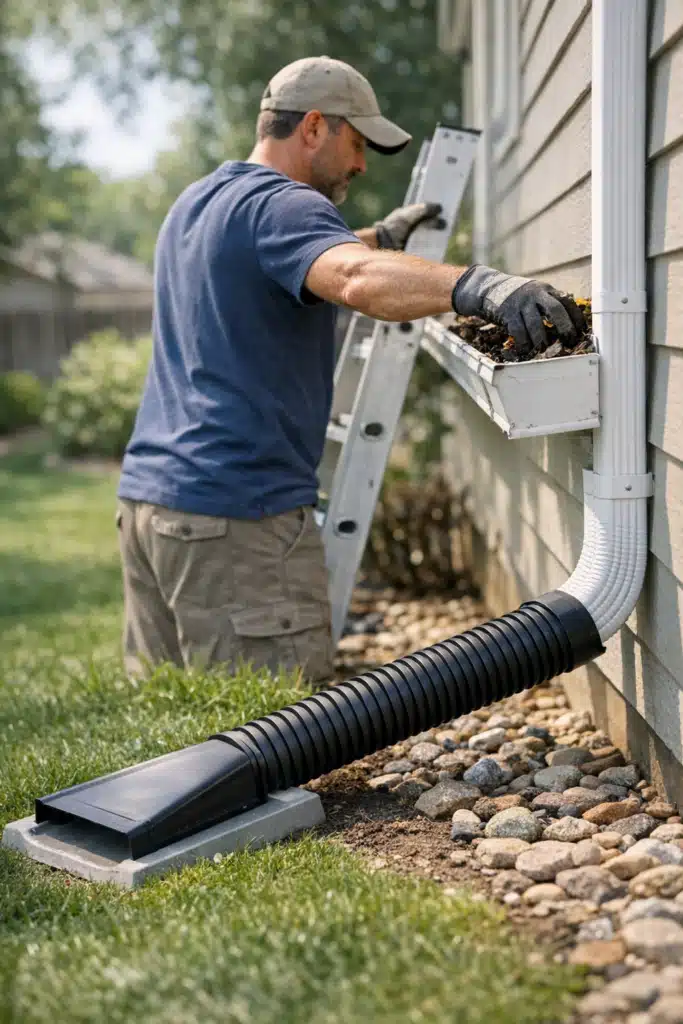
Clogged gutters send water straight down your foundation wall. Clean out pine needles, leaves, and shingle grit before July.
Extend downspouts at least four feet from the house. Direct that water toward the street or a drainage swale, not your basement window wells.
Protect Your Foundation and Basement From Flash Flooding
Basement flooding is the most common monsoon claim we handle across the Denver metro. Water finds cracks, window wells, and low grading in minutes.
Grade the soil away from your home
Soil should slope downward at least six inches over the first ten feet from your foundation. Fill in any settled areas near the wall with clean fill dirt.
Colorado’s expansive clay soils shift with moisture. That movement opens hairline foundation cracks that leak during heavy rain.
Seal cracks and check window wells
Inspect foundation walls for cracks wider than an eighth of an inch. Seal them with hydraulic cement or a polyurethane injection.
Install clear window well covers on below-grade windows. Well covers stop water from pooling and pushing against the glass.
Test your sump pump
A working sump pump moves water out before it floods your floor. Pour a bucket of water into the pit and confirm the pump activates.
Add a battery backup unit. Monsoon storms knock out power right when the pump matters most.
Defend Against Colorado Hail
Hail causes more insured property loss in Colorado than any other storm hazard. The June 2018 Fountain and Colorado Springs storms alone produced hundreds of millions in damage.
Harden vulnerable surfaces
- Roofing: Ask about Class 4 impact-rated shingles at your next replacement. Many insurers offer premium discounts for them.
- Skylights: Add impact-resistant covers or screens.
- Vehicles: Keep cars in the garage during storm watches.
- AC units: Install hail guards over condenser fins.
Move patio furniture, grills, and potted plants indoors when a warning hits. Wind-driven hail turns loose items into projectiles.
Prepare Your Windows, Doors, and Exterior
High outflow winds arrive before the rain. Secure everything that can move or break.
- Trim tree limbs hanging over the roof or power lines.
- Anchor sheds and trampolines to the ground.
- Check that all windows and door seals are intact.
- Store outdoor cushions and umbrellas in a garage or shed.
Dead or diseased trees fall first in a windstorm. Remove them before monsoon season starts.

 Posted on Google
Build a Summer Storm Safety Kit
Summer storm safety depends on being ready before the power goes out. Keep a stocked kit in an easy-to-reach spot.
Your kit should hold:
- Flashlights and extra batteries.
- A battery or hand-crank weather radio.
- Bottled water and non-perishable food for three days.
- A first-aid kit and any needed medications.
- Phone chargers and a portable battery pack.
- Copies of insurance documents in a waterproof bag.
Sign up for local emergency alerts. Most Front Range counties send flash flood warnings by text and email.
Know Your Flood Risk and Insurance Coverage
Standard homeowner policies do not cover flood damage. If your street drains poorly or sits near a creek, a separate flood policy fills that gap.
Check your address on the FEMA flood map. Many Colorado neighborhoods that flooded in 2013 sat outside the mapped high-risk zones.
Photograph your home’s interior and exterior now. Timestamped photos speed up claims if hail or flooding strikes.
What to Do When Water Gets In
Fast action limits damage after a monsoon storm. Standing water breeds mold within 24 to 48 hours in Colorado’s warm summer air.
Follow these steps if your home floods:
- Shut off electricity to affected areas if safe to do so.
- Stop the water source if you can find it.
- Move belongings to a dry level.
- Document damage with photos before cleanup.
- Call a restoration company for water extraction and drying.
Do not wait to dry out carpets and drywall. Wet materials left overnight invite mold that spreads behind walls.
Key Takeaways
Colorado monsoon storms bring flash flooding, hail, and high winds between July and September. Clear your gutters, grade your soil, seal foundation cracks, and test your sump pump before the season peaks. Build a summer storm safety kit and confirm your insurance covers flood damage.
ARC Restoration handles water extraction, storm damage repair, and mold cleanup for Front Range homes. Call or text 720-799-2434 or email office@advancedrestorationcolorado.com when a storm hits your property.
Sources
- National Weather Service – Boulder/Denver Forecast Office
- Rocky Mountain Insurance Information Association – Hail Damage in Colorado
- FEMA – Flood Maps and Flood Risk
- U.S. EPA – Mold Cleanup in Your Home


