
How to Assess Water Damage in Your Garage
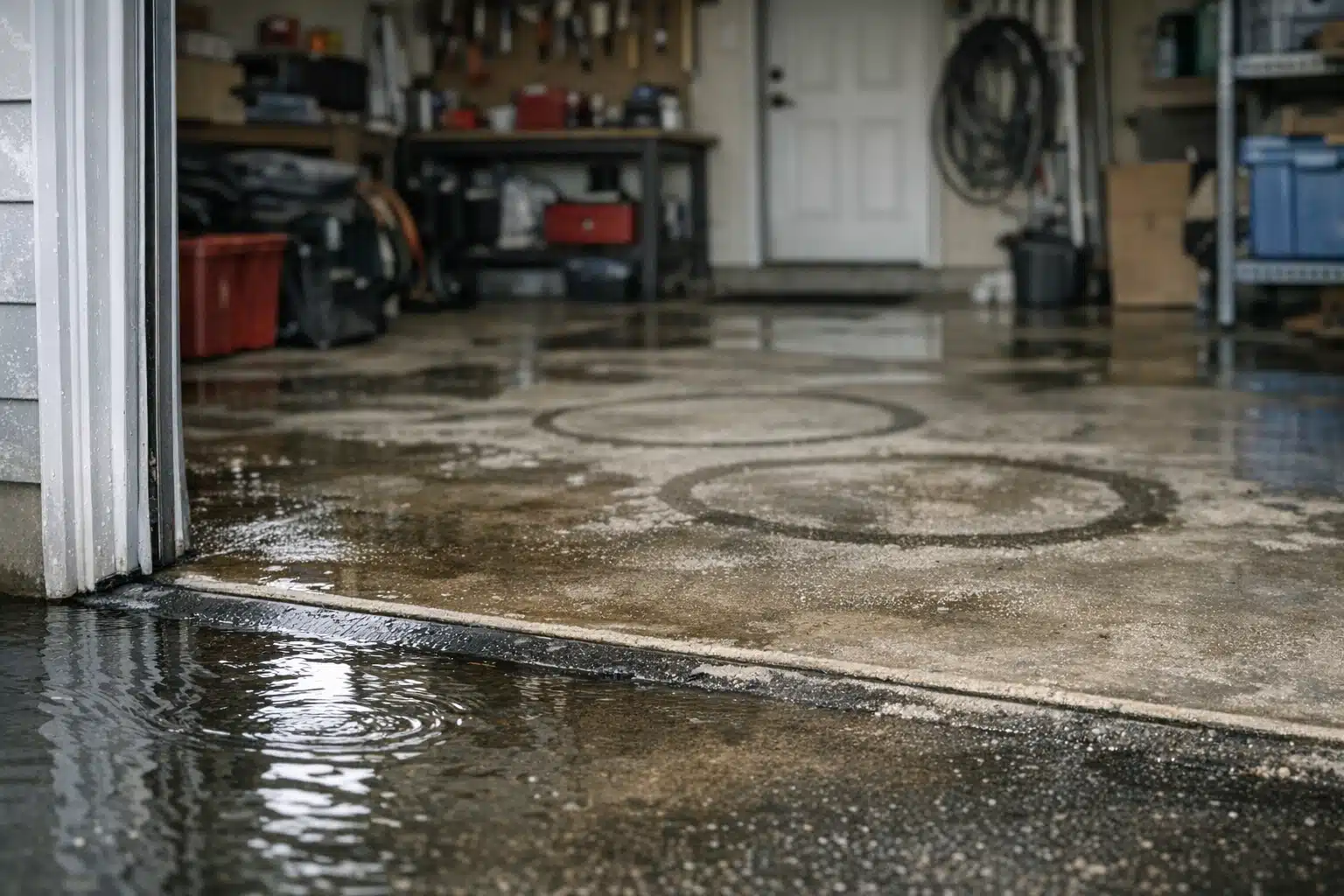
Your garage floods after a storm, and you’re staring at puddles wondering what damage lurks beneath the surface. Garage water damage often goes undetected for weeks, creating expensive problems that spread beyond your parking space.
This guide walks you through a systematic approach to identify water damage in your garage. You’ll learn to spot visual warning signs, test for hidden moisture, and determine when professional help becomes necessary.
Start with a Visual Inspection for Garage Water Damage
Water damage reveals itself through specific visual markers that appear predictably in garage environments. Your eyes serve as the first diagnostic tool in damage assessment.
Floor staining patterns tell the story of water intrusion. Look for dark rings on concrete that indicate where standing water evaporated. Fresh water damage appears as wet spots with clean edges, while older damage shows rust-colored stains from metal contact.
Examine these specific areas during your visual check:
- Garage door threshold – Water pools here first during storms
- Corner joints – Foundation settling creates water entry points
- Around floor drains – Backups leave distinct circular stain patterns
- Tool storage areas – Metal tools create rust stains when wet
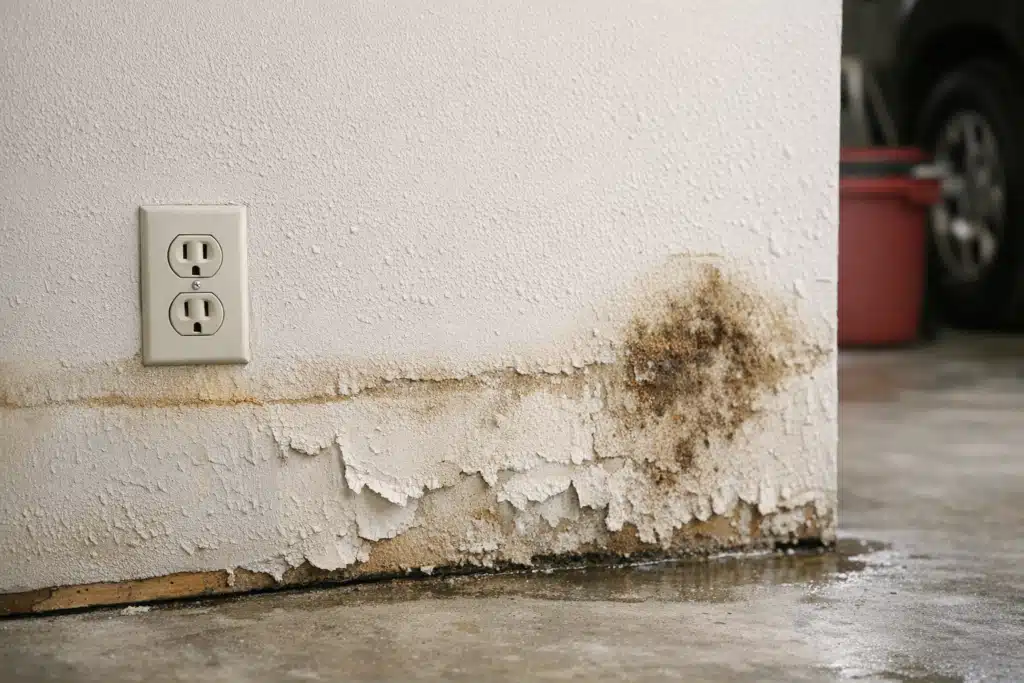
- Electrical outlet surrounds – Water damage appears as brown discoloration
Identifying Wall Water Damage
Drywall absorbs water differently than concrete, creating unique damage signatures. Water wicks upward from flooded floors, leaving a horizontal line where absorption stopped.
Texture changes in drywall indicate saturation levels. Slightly damp drywall feels soft when pressed. Severely damaged sections crumble under light finger pressure.
Test for Hidden Moisture Behind Surfaces
Visible damage represents only surface-level problems. Hidden moisture behind walls and under flooring causes the most expensive long-term damage.
A basic moisture meter costs $30 and detects water content in wood, drywall, and concrete. Insert the pins into suspect areas and look for readings above 16% moisture content in wood or 4% in concrete.
DIY Moisture Detection Methods
Professional moisture detection requires specialized equipment, but these simple tests reveal obvious problem areas:
- Plastic sheet test – Tape plastic over suspect concrete areas overnight. Condensation underneath indicates moisture migration.
- Infrared thermometer readings – Wet areas register 5-10 degrees cooler than dry surfaces.
- Smell assessment – Musty odors concentrate near hidden water damage.
- Sound testing – Tap drywall with knuckles. Wet sections produce dull thuds instead of hollow sounds.
Assess Structural Damage from Water Exposure
Structural assessment determines whether water damage affects your garage’s load-bearing capacity. Foundation issues and framing damage require immediate professional attention.
Concrete floors develop hairline cracks when water repeatedly freezes and thaws. Run your fingernail across suspected cracks – damage deep enough to catch your nail needs professional evaluation.
Wooden Frame Inspection
Garage framing lumber shows water damage through color changes and dimensional shifts. Healthy lumber maintains consistent color and straight lines.
Check these structural elements for water damage:
- Bottom plates – Look for dark staining where framing meets concrete
- Studs behind damaged drywall – Remove small sections to inspect directly
- Ceiling joists – Water stains indicate roof leaks
- Garage door header – Sagging suggests water-weakened lumber
Document Damage Patterns for Insurance Claims
Proper documentation strengthens insurance claims and helps restoration professionals plan repairs. Photographic evidence must capture damage extent and progression patterns.
Take photos from multiple angles showing damage relationship to fixed reference points. Include a ruler or coin in close-up shots to establish scale.
Essential Documentation Steps
Insurance adjusters look for specific damage indicators when evaluating claims. Your documentation should anticipate their requirements:
- Wide shots – Show entire garage layout and damage distribution
- Close-ups – Detail individual damage areas with measurement references
- Serial numbers – Photograph damaged equipment and stored items
- Moisture readings – Document meter readings with timestamp photos
- Adjacent areas – Show how damage relates to house connection points

 Posted on Google
Determine When Professional Assessment Becomes Necessary
DIY assessment reaches its limits when damage extends beyond surface-level problems. Professional water damage specialists use thermal imaging and moisture mapping equipment that reveals hidden problems.
Contact restoration professionals immediately if you discover these conditions:
- Standing water deeper than one inch
- Electrical components showing water contact
- Mold growth larger than 10 square feet
- Structural sagging or visible foundation cracks
- Sewage backup contamination
Professional Equipment Advantages
Restoration companies use specialized tools that detect problems impossible to identify through visual inspection alone. Thermal imaging cameras reveal moisture patterns inside wall cavities without destructive testing.
Hygrometers measure ambient humidity levels that indicate ongoing moisture problems. Professional-grade equipment detects humidity variations that predict future mold growth.
Create an Action Plan Based on Assessment Results
Your damage assessment results determine the appropriate response timeline. Immediate action prevents minor water damage from becoming major restoration projects.
Minor surface damage requires ventilation and dehumidification within 24-48 hours. Major structural damage needs professional intervention within hours to prevent permanent deterioration.
Prioritizing Repair Sequence
Water damage repairs follow a specific sequence that prevents additional problems during restoration:
- Stop water source – Address ongoing leaks before starting cleanup
- Remove standing water – Prevent continued absorption into materials
- Document everything – Complete photography before disturbing damage
- Begin drying process – Start fans and dehumidifiers within 24 hours
- Remove damaged materials – Pull saturated insulation and drywall
- Treat affected areas – Apply antimicrobial solutions to prevent mold
Thorough garage water damage assessment protects your property investment and prevents health hazards from hidden moisture problems. Professional restoration services become cost-effective when damage extends beyond simple surface cleaning.
Need professional water damage assessment for your garage? Contact ARC Restoration at 720-799-2434 for comprehensive moisture detection and restoration planning services.
Sources
- EPA – A Brief Guide to Mold, Moisture and Your Home
- FEMA – Dealing with Water Damage and Mold
- IICRC – Water Damage Restoration Standards
This guide provides a systematic approach to assess water damage in garages, helping homeowners identify issues before they escalate. It covers visual inspections, moisture testing, and when to seek professional help.
- Visual signs of water damage include floor stains and changes in drywall texture. Homeowners should check areas like garage door thresholds and tool storage for damage.
- Testing for hidden moisture can be done with simple methods like the plastic sheet test and moisture meters. These tools help identify problems behind walls and under floors.
- Documenting damage with photographs and measurements is essential for insurance claims. Proper documentation can significantly aid in the restoration process.
To assess water damage in your garage, start by inspecting for visible signs like puddles, mold, or discoloration on walls and floors. Check for dampness in stored items and examine the foundation for cracks. Use a moisture meter to detect hidden moisture levels, which can indicate deeper issues.


