
Tips for Managing Fire Hazards During Summer Festivals
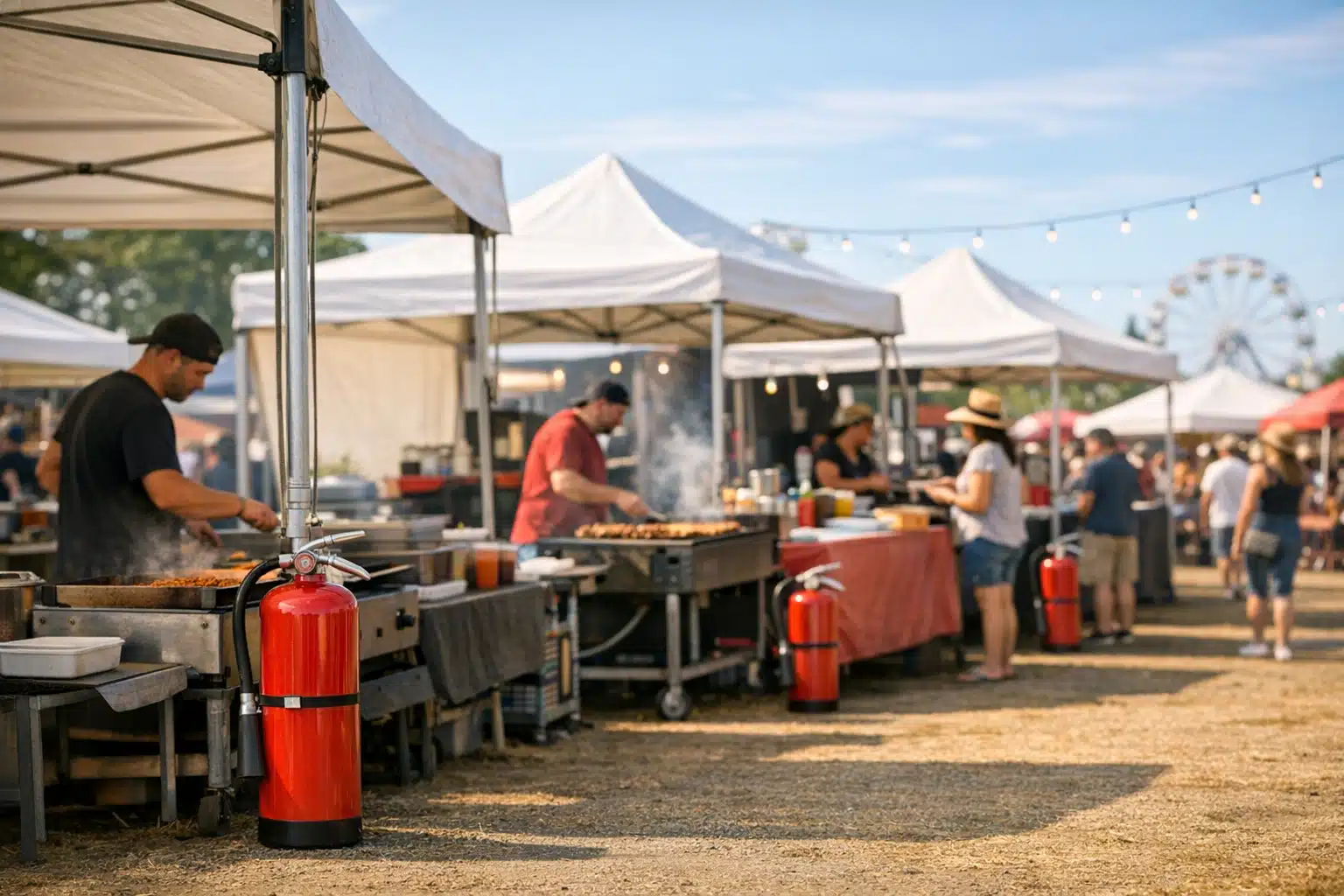
Summer festivals in Colorado present significant fire hazards due to dry conditions, open flames, and large crowds. Organizers, vendors, and attendees must work together to implement safety measures that prevent fires and ensure quick responses if incidents occur.
- Food vendors are the leading cause of festival fires, so proper spacing and equipment checks are essential.
- Fireworks pose a major risk, requiring careful planning and adherence to local fire regulations.
- Clear exit strategies and staff training are crucial for crowd safety during emergencies.
To manage fire hazards during summer festivals, it is essential to identify potential risks such as dry grass, propane grills, and fireworks. Implement safety measures like maintaining a safe distance from flammable materials, having fire extinguishers on hand, and ensuring proper supervision of grilling and firework activities to protect attendees and property.
Colorado summer festivals draw thousands of people onto dry grass, near propane grills, and around firework displays during the driest months of the year. Each of these conditions creates real fire hazards that can turn a family event into an emergency in minutes. This article breaks down the specific risks at local events and the steps that keep people and property safe.
Organizers, vendors, and attendees all share responsibility for fire prevention. Knowing where the danger sits lets you act before flames spread.
Why Summer Festivals Carry Elevated Fire Risk in Colorado
Summer festivals combine open flame, dense crowds, and dry vegetation at the worst time of year. July and August bring low humidity and cured grasses across the Front Range and mountain towns. A single dropped cigarette or spark from a food truck can ignite a field fast.
Colorado sees frequent fire bans during peak festival season. Events at parks, fairgrounds, and rural venues sit close to fuel that carries fire quickly. The combination of heat, wind, and people raises the stakes.
Common Ignition Sources at Local Events
- Food vendor equipment — propane grills, deep fryers, and generators
- Firework and pyrotechnic displays — fallout lands on dry ground
- Discarded smoking materials — tossed into grass or trash bins
- Electrical faults — overloaded power strips and daisy-chained cords
- Vehicle exhaust — hot catalytic converters parked on dry grass
Managing Fire Hazards at Food and Vendor Areas
Food vendors cause more festival fires than any other source. Grease fires and propane leaks start fast and spread to nearby tents. Vendor zones need separation, clear rules, and working extinguishers.
Steps for Safer Vendor Setups
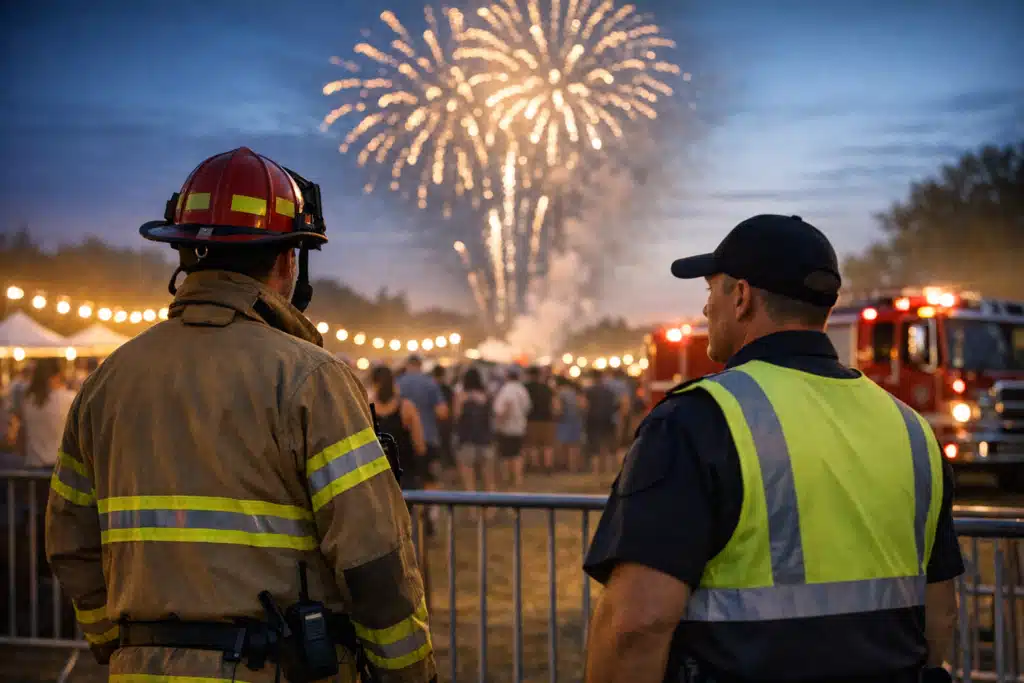
- Space cooking booths at least 10 feet apart to slow tent-to-tent spread.
- Require a Class K extinguisher at every booth using oil or grease.
- Inspect propane connections for leaks before the event opens each day.
- Ban open flame under tent canopies unless rated fire-resistant.
- Place metal grease disposal bins away from foot traffic and fuel.
A grease fire needs smothering, not water. Water spreads burning oil and widens the fire. Every vendor handling oil should know this before the gates open.
Generator and Power Safety
Generators run hot and store fuel on-site. Keep them 20 feet from tents and crowds. Never refuel a running or hot generator, since spilled gas ignites on contact.
Cords should be rated for outdoor load and kept off wet ground. Overloaded circuits melt insulation and start hidden fires inside cable runs.
Fireworks and Pyrotechnics: The Biggest Fire Hazards
Fireworks are the leading cause of festival-related wildland fires in dry states. Fallout and hot debris travel well beyond the launch zone. On cured grass, a single ember becomes a grass fire within seconds.
Rules for Firework Displays Near Dry Terrain
- Confirm the local fire ban status before planning any display.
- Keep a wetted-down buffer zone around the launch area.
- Station trained crew with charged hoses during and after the show.
- Monitor wind speed and cancel if gusts push debris toward crowds.
- Sweep the fallout zone after the finale for smoldering material.
Many Colorado counties ban personal fireworks entirely during summer. Professional-only displays with permits carry lower risk when crews follow setback rules. Attendees should never bring their own fireworks to a public event.
Protecting Attendees and Crowd Flow
Fire safety at festivals depends on people being able to leave fast. Blocked exits turn a small fire into a mass-casualty risk. Crowd planning matters as much as flame control.
Exit and Access Planning
- Keep fire lanes clear for engines and ambulances at all times.
- Mark at least two exits for every fenced or gated area.
- Post staff at exits who can direct crowds during an emergency.
- Avoid single-choke-point layouts that trap people in a rush.
Announce exit locations before performances start. People remember instructions when they hear them early. Calm, clear guidance prevents a panic-driven crush.

 Posted on Google
What to Do When a Fire Starts
Fast, correct action in the first 60 seconds decides how far a fire spreads. Small fires get contained; hesitation lets them grow. Every staff member should know their role in advance.
Immediate Response Steps
- Call 911 and give the exact venue location and access point.
- Use the right extinguisher — Class K for grease, ABC for general fires.
- Move people upwind and away from propane tanks or fuel stores.
- Shut off gas and generators if it can be done safely.
- Account for staff and vendors once the area clears.
Do not fight a fire that has spread beyond a single booth. Wildfire on dry grass moves faster than a person can run. Retreat and let firefighters handle it.
After the Fire: Cleanup and Recovery
Fire damage extends past the flames themselves. Smoke, soot, and water leave lasting harm on structures, vendor equipment, and nearby buildings. Recovery starts with a fast, correct cleanup.
Smoke residue is acidic and corrodes metal and electronics within days. Standing water from suppression breeds mold in warm summer heat. Both problems worsen the longer they sit.
Why Professional Restoration Matters
ARC Restoration handles fire, smoke, and water damage across Colorado. Crews respond fast to festival venues, vendor structures, and event properties. Proper cleanup removes soot, neutralizes odor, and stops secondary damage before it sets in.
Trying to clean smoke damage without the right equipment spreads soot deeper into materials. A trained crew contains the affected area and restores it correctly the first time.
Key Takeaways for Festival Fire Safety
Summer festivals face real fire hazards from cooking equipment, fireworks, and dry Colorado terrain. Separation, working extinguishers, clear exits, and a rehearsed response plan prevent most incidents. When fire does strike, fast cleanup limits lasting damage to property and equipment.
If your event property suffers fire, smoke, or water damage, ARC Restoration responds quickly across Colorado. Call or text 720-799-2434, email office@advancedrestorationcolorado.com, or visit https://advancedrestorationcolorado.com.
Sources
- National Fire Protection Association – Fireworks Safety
- U.S. Fire Administration – Fire Prevention and Safety
- Colorado State Forest Service – Wildfire and Fire Danger Information


