
How to Handle Water Damage from Leaky Summer Pools
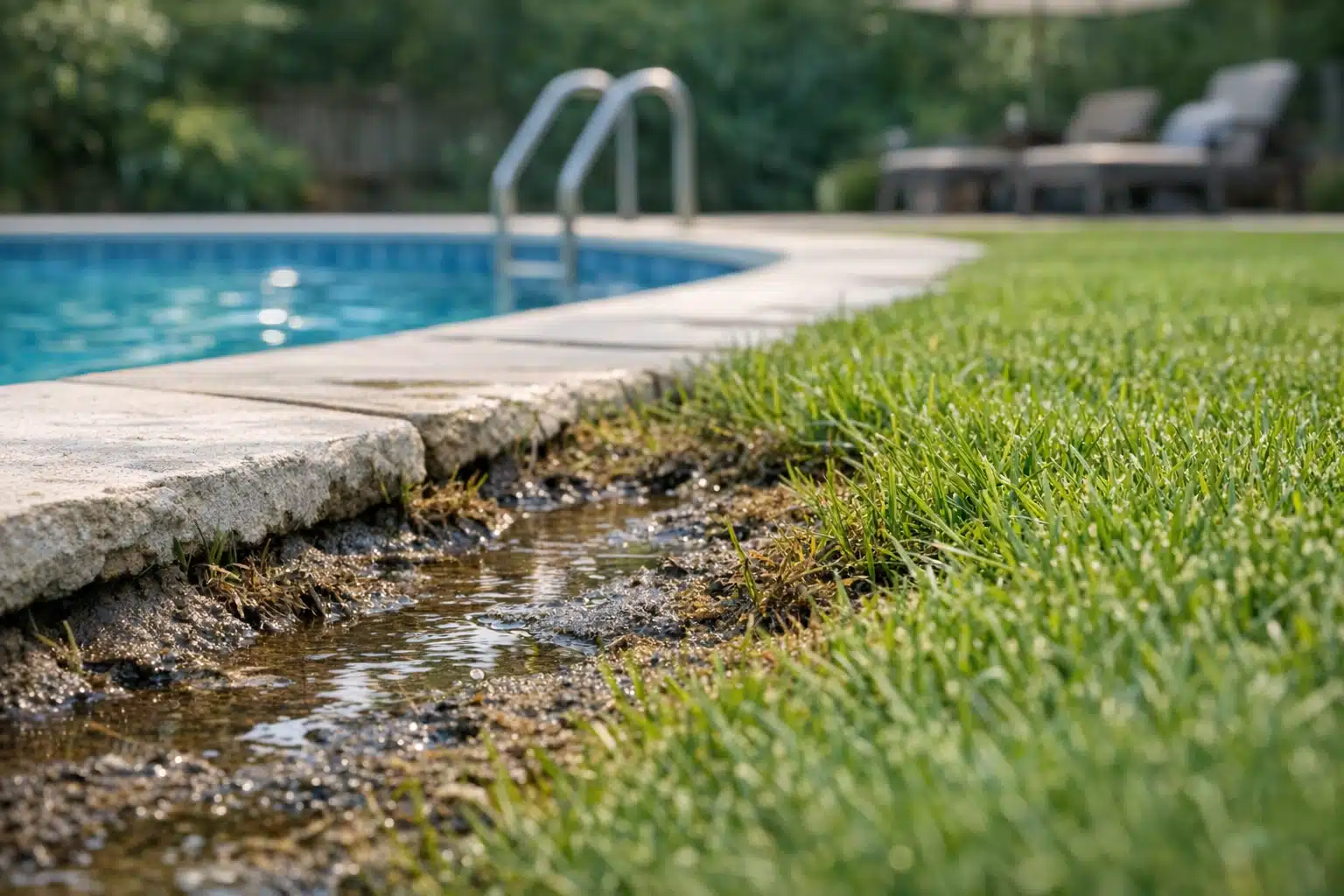
A pool losing an inch of water a day might look like normal evaporation, but it can mean hundreds of gallons seeping into your soil, foundation, or basement each week. Summer pool leaks cause a slow, hidden form of water damage that homeowners rarely catch until the drywall stains or the yard turns to mud.
This post explains how to identify a leaking pool, where the water travels, and how to stop the damage before it reaches your home’s structure. You will learn the warning signs, the fastest tests to run, and when to call for help.
Why Summer Pool Leaks Cause Hidden Water Damage
Summer pool leaks are difficult to detect because the loss blends with normal warm-weather evaporation. A pool in Colorado can lose a quarter inch to half an inch daily to sun and dry air.
When a leak adds to that number, the extra water goes somewhere. It travels down, sideways, and back toward the structure it sits near.
Common paths for leaked pool water include:
- Foundation walls — water pools against basement or crawlspace concrete
- Under patios and decks — soil washes out and slabs settle or crack
- Landscaping and grading — saturated soil redirects flow toward the house
- Equipment pads — leaks near pumps and filters saturate nearby ground
A vinyl liner tear or a cracked skimmer can leak gallons per hour. Over a hot week, that volume undermines soil and finds its way indoors.
Warning Signs of a Leaking Pool
The clearest sign of a leaking pool is water loss faster than one inch per week. Beyond the water level, your yard and home give away the problem.
Signs Around the Pool
- Soggy or sunken areas in the grass near the pool wall
- Cracks in the pool deck that widen over the summer
- Air bubbles from return jets, pointing to a suction-side leak
- Algae growth that returns days after balancing chemicals
- A visibly loose or shifting liner
Signs Inside the Home
- Damp or musty smells in a basement near the pool side of the house
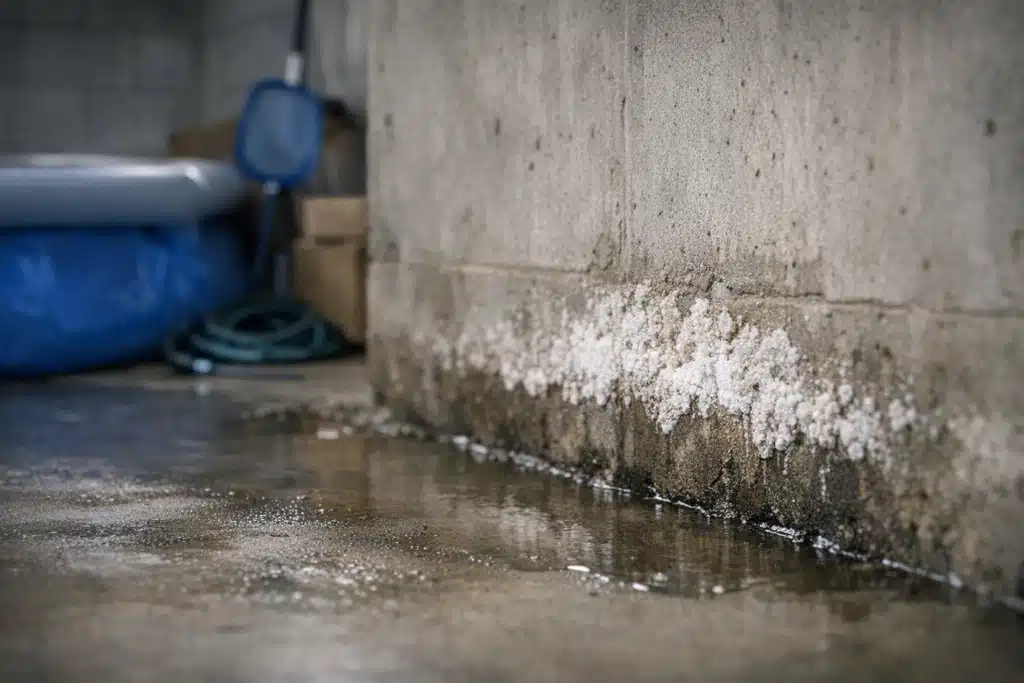
- Efflorescence — white crusty deposits on foundation walls
- Water stains on lower drywall or baseboards
- Buckling flooring in a room adjacent to the pool
A basement wall that stays wet after dry weather points to groundwater from a pool, not rain.
How to Confirm a Summer Pool Leak: The Bucket Test
The bucket test measures whether your pool loses water to evaporation or a leak. It costs nothing and takes 24 hours.
- Fill a bucket with pool water and set it on the second step of the pool.
- Mark the water level inside the bucket and on the pool wall.
- Turn off the pump and any auto-fill device.
- Wait 24 hours, then compare the two drops.
If the pool dropped more than the bucket, you have a leak. Run the test again with the pump on to check for pressure-side leaks in the plumbing.
A gap of half an inch or more over 24 hours signals a serious loss. That rate can move hundreds of gallons into your soil each week.
Steps to Take the Moment You Suspect a Leak
Fast action limits how far leaked water spreads toward your foundation. Follow these steps in order.
- Lower the pool water level below the suspected leak point to slow the loss.
- Shut off the auto-fill valve so you stop feeding water into the ground.
- Mark the water level daily to track how fast the leak grows.
- Redirect surface runoff away from the house with temporary sandbags or trenching.
- Move stored items off basement floors near the pool-facing wall.
- Photograph everything for your insurance record.
Do not refill the pool to normal levels until the leak is found. Every refill pushes more water into saturated soil.
Where Water Damage Repair Becomes Necessary
Water damage repair is needed once leaked pool water reaches wood, drywall, or foundation concrete. Soil holds moisture against the structure long after the pool is drained.
Structural Concerns
Saturated soil loses its ability to support weight. This causes foundation settling, hairline cracks, and slab movement under patios.
A basement wall exposed to constant moisture can develop bowing over months. Catching it early keeps the repair from reaching the foundation itself.
Mold and Air Quality
Mold begins growing on damp materials within 24 to 48 hours. A pool leak feeds it a steady moisture supply, unlike a one-time flood.
Basements near leaking pools show mold on framing, insulation, and the back of drywall. The musty odor is usually the first clue.

 Posted on Google
How ARC Restoration Handles Pool-Related Water Damage
ARC Restoration treats pool leak damage as an ongoing moisture source, not a single event. Our crews trace the water back to its entry point before drying begins.
Our approach for a pool-related claim includes:
- Moisture mapping with meters to find how far water traveled into walls and slabs
- Structural drying using air movers and dehumidifiers sized to the wet area
- Mold assessment on framing and insulation behind affected walls
- Foundation moisture checks to catch settling before it worsens
- Documentation that supports your insurance claim
We coordinate the dry-out so repairs hold once the pool itself is fixed. Drying a basement before the leak stops wastes time and money.
Preventing Summer Pool Leaks Before They Start
Most summer pool leaks trace back to worn seals, aging liners, and shifting ground. A short spring inspection catches problems before the heat arrives.
- Inspect the liner for thin spots, wrinkles, and small tears each May
- Check skimmer and return fittings for cracks and loose seals
- Watch the deck for new cracks after Colorado’s freeze-thaw winters
- Test equipment plumbing joints for drips at the pump pad
- Keep the pool level steady rather than draining it fully
Freeze-thaw cycles along the Front Range stress pool shells and decks harder than steady climates. A crack that opened over winter widens fast under summer sun.
When to Call a Restoration Team
Call a restoration team when leaked water reaches your home’s interior or foundation. Signs that the damage moved past the yard include wet basement walls, buckled flooring, or a musty smell that returns.
Waiting turns a drying job into a rebuild. The longer soil stays saturated, the more it threatens the foundation and framing.
Key Takeaways
Summer pool leaks cause slow, hidden water damage that reaches foundations and basements before most homeowners notice. Run the bucket test, lower the water level, and stop the auto-fill the moment you suspect a leak. Fast drying and moisture tracing keep a small loss from becoming a structural repair.
If a leaking pool has soaked your foundation, basement, or yard, ARC Restoration can find the moisture and dry it out. Call or text 720-799-2434, email office@advancedrestorationcolorado.com, or visit https://advancedrestorationcolorado.com.
Sources
- EPA – Mold Cleanup in Your Home
- CDC – Basic Facts About Mold and Dampness
- U.S. Consumer Product Safety Commission – Pools and Spas Safety
Summer pool leaks can lead to significant hidden water damage, often unnoticed until it affects a home's structure. This guide outlines how to identify leaks, test for them, and take immediate action to prevent further damage.
- A pool losing an inch of water daily may indicate a leak, leading to hundreds of gallons seeping into the soil each week. Signs of a leak include soggy areas in the yard and water stains inside the home.
- The bucket test is a simple method to determine if water loss is due to evaporation or a leak, requiring just 24 hours to complete.
- Fast action is critical; homeowners should lower the pool water level and redirect surface runoff to limit damage before repairs are needed.
To handle water damage from leaky summer pools, first identify the source of the leak and repair it. Then, assess the extent of the damage by checking for wet areas in the soil, foundation, or basement. Dry out affected areas thoroughly and consider consulting a professional for significant damage to prevent mold growth.


