
How to Spot and Prevent Water Damage in Your Kitchen
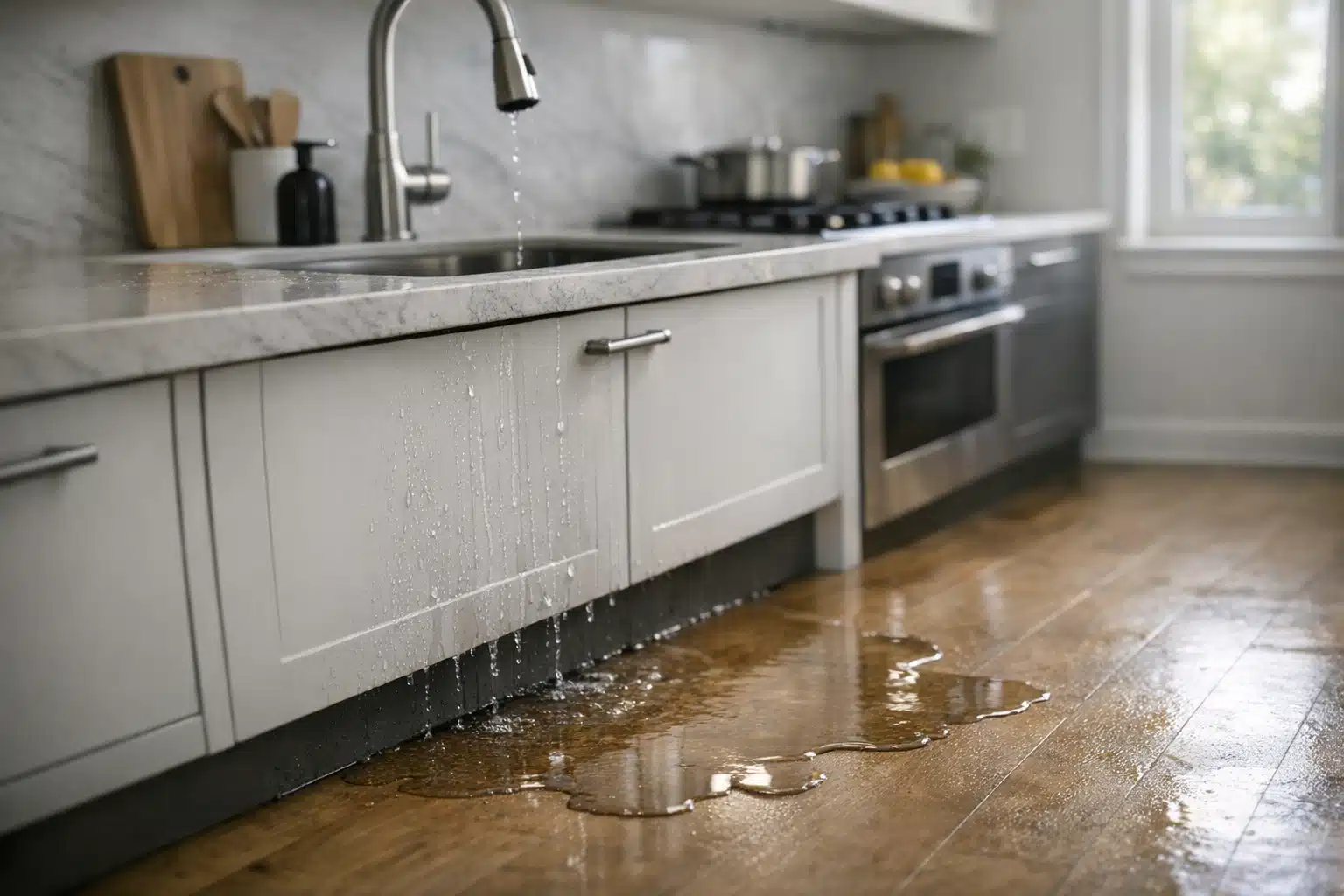
A small puddle beneath your kitchen sink can turn into a $15,000 repair nightmare faster than you might expect. Kitchen water damage accounts for nearly 30% of all residential water damage claims, making it the second most common source after bathrooms.
Your kitchen contains more water sources and potential failure points than any other room except your bathroom. From dishwashers and garbage disposals to refrigerator ice makers and multiple plumbing connections, each component presents a unique risk profile.
Early Warning Signs of Kitchen Water Damage
Catching water damage early can save you thousands in repair costs. Most homeowners miss these subtle indicators until the damage becomes extensive and expensive to repair.
Visual Indicators You Can’t Ignore
Water stains and discoloration appear as yellow, brown, or rust-colored marks on walls, ceilings, or cabinet surfaces. These stains often show up days or weeks after the initial leak begins.
Warped or buckling flooring signals water has penetrated beneath the surface. Hardwood floors cup or crown, while laminate floors separate at the seams and vinyl develops bubbles or wrinkles.
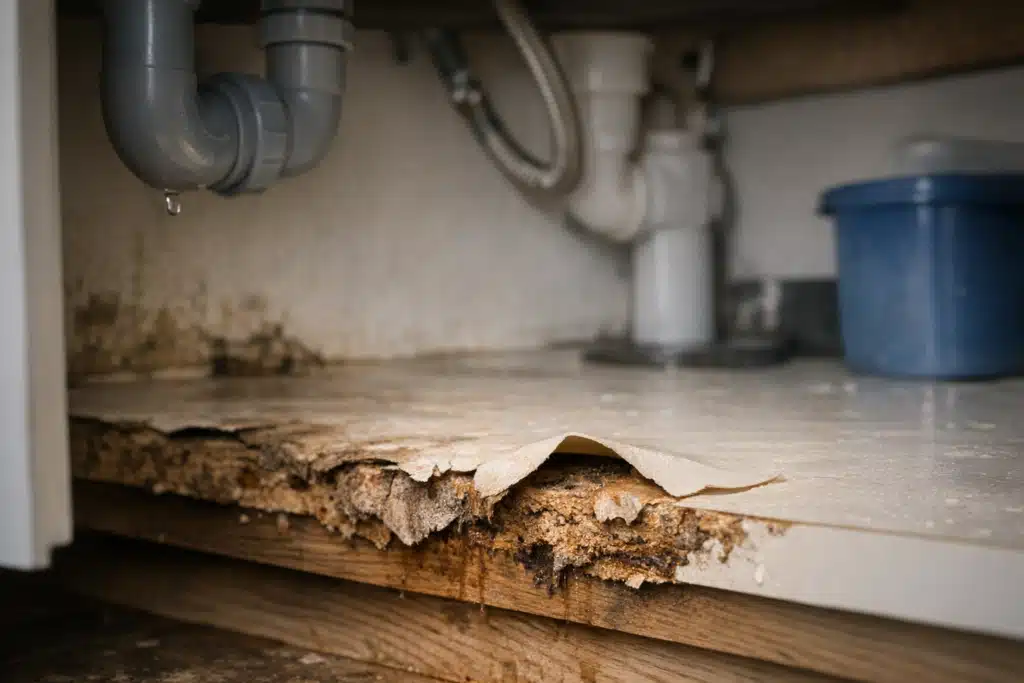
Cabinet damage manifests as peeling veneer, swollen particle board, or doors that no longer close properly. The bottom panels of sink cabinets show damage first since water naturally flows downward.
Hidden Signs That Require Investigation
Musty odors indicate mold growth has begun, even when you can’t see visible mold colonies. This smell becomes more noticeable when you open cabinet doors or drawers near water sources.
Increased water bills suggest hidden leaks somewhere in your plumbing system. A sudden spike of $20-50 per month often indicates a significant leak that requires immediate attention.
Sound changes in your plumbing, such as constant dripping, gurgling, or running water when no fixtures are in use, point to active leaks or failing components.
Common Sources of Kitchen Water Damage
Understanding where water damage typically originates helps you focus your prevention efforts on the highest-risk areas of your kitchen.
Appliance-Related Failures
Dishwasher leaks occur at three main points: the door seal, supply line connections, and drain hose. Door seal failures happen gradually as rubber gaskets age and lose flexibility after 8-10 years of use.
Refrigerator water damage stems from ice maker supply lines, defrost drain clogs, and water filter housing cracks. Ice maker lines carry pressurized water and fail suddenly, often flooding floors overnight.
Garbage disposal leaks develop at mounting assembly connections, discharge pipe joints, and internal seals. The constant vibration loosens connections over time, creating slow drips that damage cabinet floors.
Plumbing System Vulnerabilities
Supply line failures affect the hot and cold water lines feeding your sink and appliances. Copper pipes develop pinhole leaks after 15-20 years, while plastic connections crack from temperature changes.
Drain line problems cause backups and overflows when grease buildup or food debris creates blockages. Kitchen sink drains handle more debris than other household drains, increasing clog risk.
Faucet base leaks occur where the faucet connects to the sink and supply lines. These leaks often remain hidden beneath the sink until cabinet damage becomes visible.
Water Damage Prevention Strategies
Proactive water damage prevention costs far less than cleanup and restoration after a major leak occurs. These prevention measures require minimal investment but provide substantial protection.
Regular Inspection Schedule
Monthly inspections should focus on visible components and easily accessible areas. Check under your sink for moisture, examine appliance connections, and look for any changes in cabinet condition.
Follow this monthly checklist:
- Run your hands along supply lines to feel for moisture or mineral deposits
- Check dishwasher door seals for cracks or food debris buildup
- Inspect garbage disposal mounting and discharge connections
- Look for water stains on cabinet walls and floors
- Test faucet handles for unusual looseness or resistance
Appliance Maintenance Requirements
Dishwasher maintenance prevents 80% of appliance-related water damage. Clean the door seals monthly with warm soapy water and inspect the bottom panel for rust or mineral buildup.
Replace refrigerator water filters every six months and check ice maker supply lines annually. Kinked or cracked lines should be replaced immediately since they carry constant water pressure.
Garbage disposal care includes running cold water during use and avoiding grease disposal. Grease solidifies in pipes and creates backups that cause sink overflows.
Professional Assessment and Monitoring
Some water damage risks require professional evaluation to identify problems before they cause extensive damage to your home.
When to Call Water Damage Professionals
Contact restoration professionals immediately if you discover standing water, extensive staining, or soft spots in walls or flooring. These conditions indicate active damage that worsens rapidly without professional intervention.
Persistent musty odors require professional mold assessment since kitchen mold grows in hidden areas behind appliances and inside wall cavities. Mold remediation becomes exponentially more expensive as colonies expand.
Sudden increases in humidity levels, visible condensation on windows, or water pooling in unexpected areas suggest hidden leaks that need professional detection equipment to locate.
Water Detection Technology
Smart water sensors placed near high-risk appliances alert you to leaks within minutes of occurrence. Position sensors beneath dishwashers, behind refrigerators, and under sink cabinets for maximum protection.
Automatic water shut-off systems cut water supply when sensors detect leaks, limiting damage to the immediate area. These systems prevent small leaks from becoming major flooding events during overnight hours or vacations.

 Posted on Google
Emergency Response for Kitchen Water Damage
Quick action during the first 24-48 hours after discovering kitchen water damage significantly reduces repair costs and prevents secondary damage like mold growth.
Immediate Steps to Take
Turn off the water supply at the source of the leak or at the main shutoff valve if you cannot locate the specific source. Most kitchen supply valves are located beneath the sink or behind appliances.
Document the damage with photographs before moving any items or beginning cleanup. Insurance claims require evidence of the extent and cause of damage for proper coverage determination.
Remove standing water immediately using mops, towels, or wet vacuums. Water continues causing damage as long as it remains in contact with building materials and furnishings.
Professional Restoration Process
Water extraction removes all standing water and moisture from affected materials using industrial-grade equipment. Standard household tools cannot achieve the thoroughness needed to prevent mold growth.
Structural drying involves specialized dehumidifiers and air movers positioned strategically to remove moisture from walls, cabinets, and subflooring. This process typically requires 3-5 days depending on the extent of saturation.
Damage assessment determines which materials can be restored and which require replacement. Porous materials like particle board cabinets often need replacement, while solid wood can frequently be dried and restored.
Long-Term Protection Strategies
Building resilience against future water damage involves upgrading vulnerable components and establishing maintenance routines that catch problems early.
Replace aging appliances before they fail catastrophically. Dishwashers older than 12 years and garbage disposals older than 10 years have significantly higher failure rates than newer models with improved seals and connections.
Upgrade to braided stainless steel supply lines when replacing faucets or appliances. These lines resist kinking and last longer than plastic or rubber alternatives.
Install cabinet floor protection using waterproof barriers beneath sinks and near appliances. These barriers contain small leaks and direct water toward visible areas where you’ll notice problems quickly.
Preventing kitchen water damage requires consistent attention to maintenance and quick response to early warning signs. Regular inspections and proactive appliance care protect your home from the costly consequences of water damage.
If you discover signs of water damage in your kitchen, contact ARC Restoration at 720-799-2434 for professional assessment and restoration services.
Sources
- Ready.gov – Flood Safety and Preparedness
- EPA – Mold Cleanup in Your Home
- University of Minnesota Extension – Preventing Water Damage in Your Home
Water damage in the kitchen can escalate quickly, leading to costly repairs. Recognizing early signs and understanding common sources of leaks can help homeowners prevent extensive damage.
- Kitchen water damage accounts for nearly 30% of residential claims, making it a significant concern for homeowners. Regular inspections can help identify issues like water stains, warped flooring, and musty odors before they worsen.
- Common sources of leaks include dishwashers, refrigerators, and garbage disposals, each presenting unique risks that require attention.
- Proactive maintenance, such as cleaning appliance seals and replacing aging components, can significantly reduce the risk of water damage in the kitchen.
To spot water damage in your kitchen, look for signs such as discoloration on walls or ceilings, peeling paint, or warped cabinets. Additionally, check for musty odors and any visible leaks around sinks and appliances. Early detection can help prevent costly repairs and extensive damage.


