
Identifying and Repairing Springtime Roof Leaks
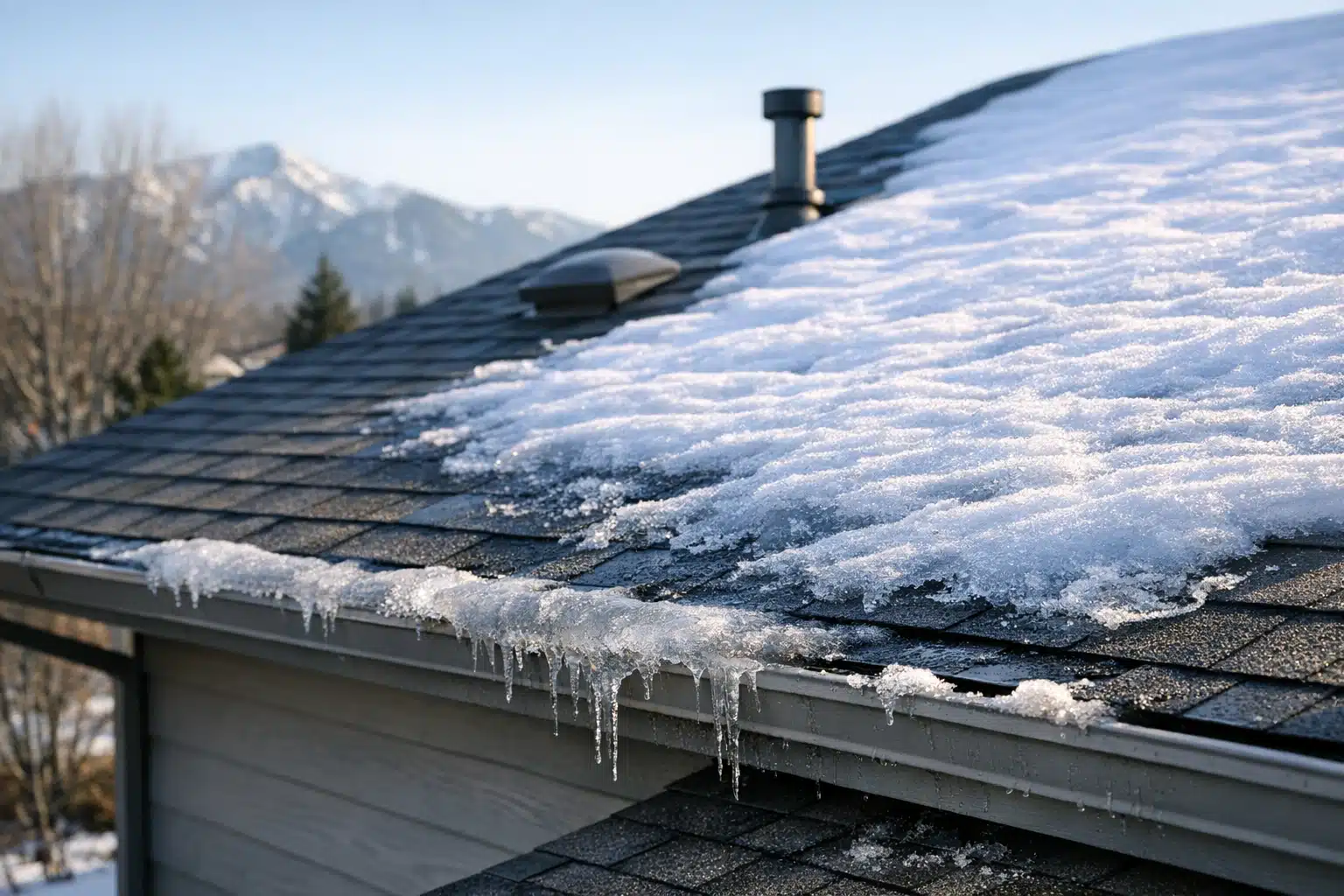
Spring snowmelt reveals what winter has hidden beneath your roof’s surface. Colorado’s freeze-thaw cycles create unique challenges that standard roof leak detection methods often miss.
This guide covers thermal imaging techniques, water tracing methods, and targeted repair strategies specific to post-winter roof damage. You’ll learn how to identify hidden moisture problems before they escalate into costly structural issues.
Winter’s Hidden Impact on Colorado Roofs
Colorado’s winter weather creates specific vulnerabilities that become apparent during spring thaw. Ice dams form when snow melts and refreezes at roof edges, forcing water under shingles where it penetrates the roof deck.
Freeze-thaw damage occurs when water enters small cracks in roofing materials, then expands as it freezes. This cycle repeats throughout winter, gradually widening openings that allow significant water infiltration come spring.
Wind-driven snow creates another problem unique to our region. High-altitude winds push snow into areas that typically stay dry, including under ridge caps and around penetrations like vents and chimneys.
Advanced Detection Methods for Hidden Roof Leaks
Thermal Imaging for Moisture Detection
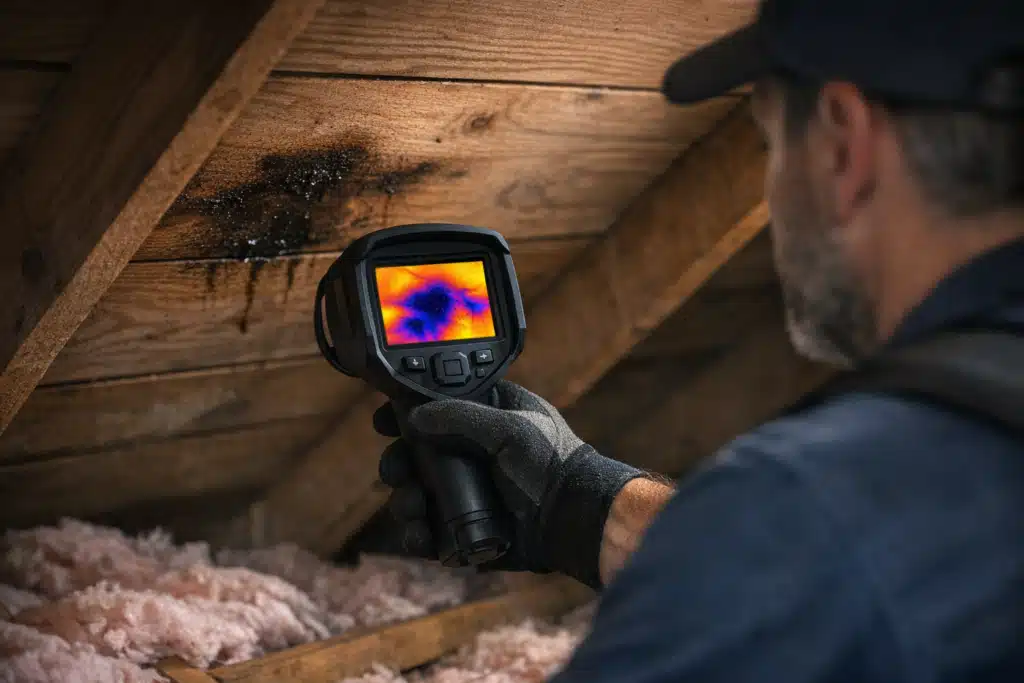
Thermal cameras reveal temperature variations that indicate moisture presence beneath roofing materials. Wet insulation appears cooler than surrounding dry areas, creating clear thermal signatures invisible to the naked eye.
The best time for thermal detection is early morning when temperature differences are most pronounced. Scan from inside the attic space, looking for dark spots that indicate cooler, moisture-laden areas.
Water Tracing Techniques
Water tracing involves systematically introducing water to suspected leak areas while monitoring interior spaces for infiltration. Start with the lowest potential entry point and work upward to isolate the exact source.
Use these steps for effective water tracing:
- Remove debris from gutters and downspouts to ensure proper drainage
- Begin water application at the roof edge, using a garden hose with controlled flow
- Work upward in sections, allowing 10-15 minutes between each test area
- Have a partner monitor interior spaces for water appearance
- Mark each leak location for targeted repair
Identifying Specific Spring Leak Patterns
Ice dam residue appears as dark staining along roof edges where repeated freezing has damaged shingles. Look for curled or lifted shingle edges and missing granules in these areas.
Flashing around chimneys and vent penetrations shows specific winter damage patterns. Sealant compounds contract and crack in cold temperatures, creating gaps that allow spring melt to enter.
Valley areas accumulate the most snow and experience the greatest temperature fluctuations. Check for separated valley flashing and damaged underlayment where metal meets roofing material.
Attic Inspection Points
Examine these critical areas during your spring roof inspection:
- Roof deck discoloration indicating water penetration paths
- Insulation compression where water has repeatedly soaked fibers
- Rafter staining that shows chronic moisture exposure
- Nail head rust indicating metal fastener exposure to moisture
- Mold growth on wooden structural elements
Professional Repair Strategies for Spring Damage
Emergency Leak Containment
Immediate containment prevents further damage while permanent repairs are planned. Place buckets under active drips and use plastic sheeting to redirect water away from electrical systems and stored items.
Apply roofing cement as a temporary patch for small holes or separated flashing. This provides short-term protection but requires proper repair within 30 days to prevent further deterioration.
Targeted Sealing Methods
Penetration sealing requires removing old caulk completely before applying new sealant. Use a utility knife to cut away hardened material, then clean the area with mineral spirits before applying fresh sealant.
Shingle replacement focuses on damaged individual units rather than large sections. Remove nails from the damaged shingle and the one above it, slide out the damaged piece, and install the replacement with appropriate overlap.
Flashing Repair Techniques
Step flashing around chimneys requires individual piece replacement to maintain water-shedding integrity. Each piece must overlap the one below by at least 3 inches to prevent water infiltration.
Valley flashing repairs involve removing shingles from both sides of the valley, installing new underlayment, and positioning metal flashing with proper slope toward gutters. Seal all nail penetrations with roofing cement.

 Posted on Google
Prevention Methods for Future Spring Issues
Install ice and water shield membrane in vulnerable areas before winter arrives. This self-sealing membrane prevents water infiltration even when ice dams form at roof edges.
Attic ventilation improvements reduce ice dam formation by maintaining consistent roof surface temperatures. Install ridge vents and soffit vents to create proper airflow that prevents snow melting and refreezing cycles.
Annual fall inspections identify potential problems before winter weather makes them worse. Replace worn sealants, secure loose flashing, and address minor shingle damage during favorable weather conditions.
When Professional Intervention Becomes Necessary
Structural damage indicators require immediate professional assessment. Sagging roof lines, cracked rafters, or widespread ceiling staining suggest problems beyond simple leak repair.
Multiple leak locations often indicate systemic issues with roof design or installation. Professional evaluation can identify underlying causes that DIY repairs cannot address effectively.
Electrical hazards develop when roof leaks affect wiring or lighting fixtures. Turn off power to affected circuits immediately and contact restoration professionals who can coordinate both electrical and roofing repairs safely.
Insurance Claim Considerations
Document all damage with photographs before beginning any repair work. Insurance adjusters need clear evidence of both the leak source and resulting interior damage to process claims accurately.
Professional damage assessment provides the detailed reporting insurance companies require. Restoration specialists understand how to document damage patterns that support successful claim outcomes.
Long-term Solutions for Colorado Roof Durability
Upgrade roofing materials to products designed for Colorado’s climate extremes. Impact-resistant shingles and enhanced underlayments provide better protection against freeze-thaw cycles and wind-driven precipitation.
Gutter system improvements prevent ice dam formation by ensuring proper drainage during temperature fluctuations. Install heated gutter cables in problem areas where ice consistently forms.
Regular maintenance schedules prevent small issues from becoming major spring repair projects. Schedule professional inspections every three years, with additional checks after severe weather events.
Identifying and repairing springtime roof leaks requires understanding Colorado’s unique winter damage patterns and applying targeted detection methods. Professional assessment ensures repairs address underlying causes rather than just visible symptoms.
If you’ve discovered roof leaks this spring or want professional damage assessment, contact ARC Restoration at 720-799-2434. Our team specializes in post-winter restoration services that protect your home from ongoing moisture damage.
Sources
- U.S. Department of Energy – Detecting Air Leaks and Moisture Problems
- National Roofing Contractors Association – Professional Roofing Standards
- Insurance Institute for Business & Home Safety – Ice Dam Prevention Research
This guide provides essential techniques for identifying and repairing roof leaks that arise in spring due to Colorado's winter conditions. It emphasizes the importance of advanced detection methods and targeted repair strategies to prevent costly damage.
- Spring snowmelt can reveal hidden roof issues caused by ice dams and freeze-thaw cycles. Understanding these vulnerabilities is key to effective repairs.
- Thermal imaging and water tracing are recommended methods for detecting moisture problems beneath roofing materials.
- Professional assessments are crucial when structural damage is suspected, ensuring that repairs address the root causes of leaks.
Roof leaks in spring are primarily caused by the melting snow from winter, which can expose underlying issues. In regions like Colorado, freeze-thaw cycles can lead to cracks and gaps in roofing materials, making it difficult for standard leak detection methods to identify these problems effectively.


