
The Role of Dehumidifiers in Preventing Spring Mold and Mildew

Dehumidifiers play a crucial role in preventing mold and mildew during Colorado's spring months by controlling indoor humidity levels. By strategically placing these units and maintaining optimal settings, homeowners can effectively combat moisture and avoid costly remediation.
- Indoor humidity above 60% can trigger mold growth within 24 to 48 hours. Dehumidifiers help maintain humidity levels between 30% and 50%, preventing mold from establishing colonies.
- The highest risk for mold occurs between March 15 and April 5 due to fluctuating temperatures causing condensation.
- Proper placement and sizing of dehumidifiers are essential for effective moisture control, especially in basements and other high-risk areas.
Dehumidifiers play a crucial role in preventing mold and mildew by reducing indoor humidity levels, which are often elevated during spring due to rains and snowmelt. By maintaining a drier environment, dehumidifiers inhibit the growth of mold spores, helping to protect homes from potential damage and health issues associated with mold.
Spring rains and snowmelt in Colorado create the perfect breeding ground for mold and mildew inside homes. While most homeowners focus on cleaning gutters and checking for roof leaks, the real battleground against mold happens indoors where dehumidifiers serve as your first line of defense.
Indoor humidity levels above 60% during spring months can trigger mold growth within 24 to 48 hours. Understanding how to deploy dehumidifiers strategically can save you from costly mold remediation projects later.
Why Spring Creates Perfect Mold Conditions
Colorado’s spring weather patterns create a humidity trap inside homes. Outdoor temperatures fluctuate between freezing nights and 60-degree days, causing condensation on windows, walls, and pipes.
Basement humidity levels can spike from 45% to 75% during spring thaw periods. This happens because ground moisture increases while homes remain sealed from winter heating patterns. Mold spores become active at 55% humidity and multiply rapidly at levels above 60%.
The three-week period between March 15 and April 5 represents the highest risk window. During this time, snow melts during the day but refreezes at night, creating continuous moisture cycles that standard ventilation cannot handle.
How Dehumidifiers Control Mold Growth
Dehumidifiers remove moisture from air by cooling it below the dew point, then collecting the condensed water in a reservoir or drain system. This process directly attacks the environmental condition mold needs most: moisture.
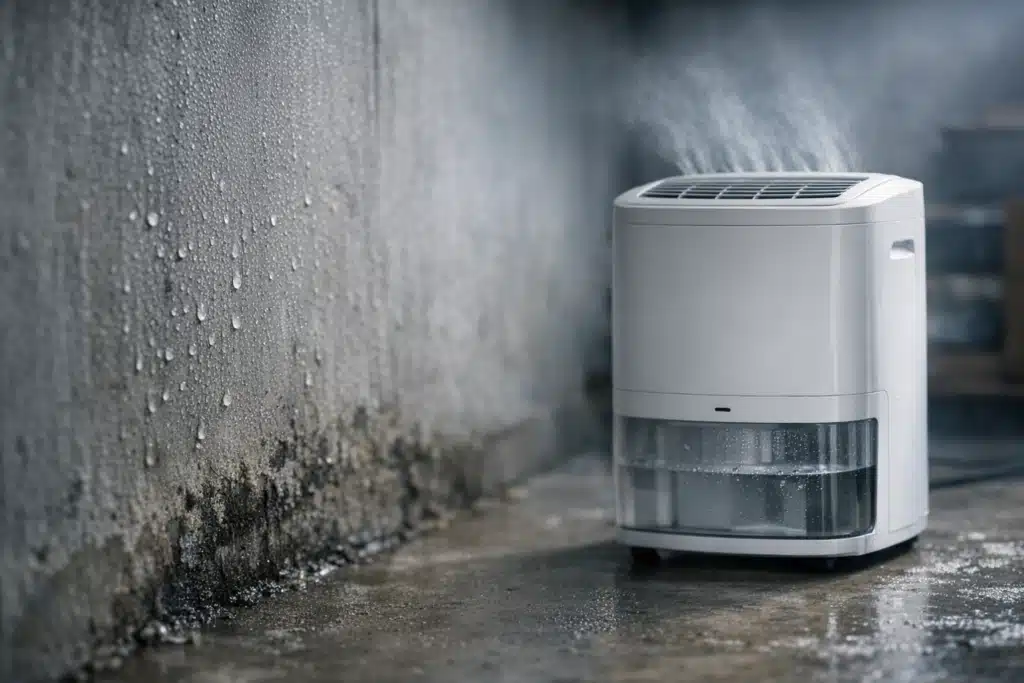
Professional restoration work shows that maintaining indoor humidity between 30% and 50% prevents most mold species from establishing colonies. This range also stops existing mold from producing new spores that spread throughout your home.
The 48-Hour Rule
Mold prevention follows a strict timeline. Once humidity exceeds 60%, mold spores begin germinating within 24 hours. By hour 48, visible colonies start forming on organic materials like wood, drywall, and fabric.
Running a dehumidifier continuously during spring months breaks this cycle. The unit removes moisture faster than natural evaporation and condensation can replace it.
Strategic Dehumidifier Placement for Spring Protection
Placement determines whether your dehumidifier prevents mold or simply moves the problem to another location. The most effective approach targets moisture sources rather than covering general living spaces.
Basement and Crawl Space Priority
Position your primary dehumidifier in the lowest level of your home where moisture naturally accumulates. Place the unit at least 12 inches from walls to ensure proper airflow around the intake and exhaust vents.
For basements over 1,000 square feet, use two smaller units rather than one large unit. This creates overlapping coverage zones and prevents humidity pockets near corners and storage areas.
Secondary Locations
Target these specific areas during spring months:
- Laundry rooms – Install a unit that drains directly to your utility sink
- Bathrooms without exhaust fans – Use a small unit that can handle steam loads
- Attached garages – Prevent moisture migration into living spaces
- Finished attics – Address condensation from temperature differentials
Optimal Settings and Operation Guidelines
Set your dehumidifier to maintain 45% relative humidity during spring months. This level provides a safety buffer above the 30% minimum that prevents wood damage while staying well below the 55% threshold where mold activates.
Run units continuously from March through May in Colorado climate conditions. The energy cost averages $30-45 per month but prevents thousands in potential mold remediation expenses.
Capacity Sizing Rules
Match dehumidifier capacity to your specific moisture load rather than room size alone. A 1,200 square foot basement needs a 50-pint unit under normal conditions but requires a 70-pint unit if you experience water intrusion or have high groundwater levels.
Check the pint rating at 80°F and 60% humidity conditions. Some manufacturers list ratings at higher temperature and humidity levels that don’t reflect real-world spring conditions.
Integration with Existing HVAC Systems
Whole-house dehumidifiers connect to your existing ductwork and work alongside your heating and cooling system. These units prevent mold more effectively than portable units because they treat air throughout your entire home.
Install the unit on the return air side of your HVAC system. This allows it to process air before heating or cooling, reducing the load on your primary system while maintaining consistent humidity levels.
Set up separate controls so the dehumidifier operates even when heating or cooling systems are off. Spring weather often requires humidity control without temperature adjustment.

 Posted on Google
Maintenance Requirements for Peak Performance
Clean the air filter every two weeks during heavy use periods. Dirty filters reduce efficiency by up to 30% and can actually increase humidity levels by restricting airflow.
Empty water reservoirs daily or connect permanent drainage to prevent overflow. Standing water in the reservoir becomes a breeding ground for the same mold you’re trying to prevent.
Check refrigerant coils monthly for frost buildup. Spring temperature fluctuations can cause coils to ice over, reducing moisture removal capacity when you need it most.
Warning Signs Your Current Strategy Isn’t Working
Monitor these indicators that dehumidifier operation needs adjustment:
- Condensation on windows or mirrors – Indicates humidity above 60%
- Musty odors in previously dry areas – Suggests mold growth has begun
- Increased allergy symptoms indoors – Often the first sign of airborne mold spores
- Warping of wood floors or trim – Shows sustained high moisture levels
- Peeling paint or wallpaper – Indicates moisture intrusion behind surfaces
Address these warning signs immediately by increasing dehumidifier capacity or adding units to additional locations.
Professional Assessment When DIY Isn’t Enough
Some moisture problems exceed what residential dehumidifiers can handle. Foundation leaks, plumbing issues, or extensive existing mold growth require professional intervention before dehumidifiers become effective.
Schedule a professional moisture assessment if your dehumidifier runs continuously but humidity levels remain above 55%. This indicates a moisture source that exceeds the unit’s removal capacity.
Professional-grade dehumidifiers can remove 150+ pints per day and operate in temperatures down to 33°F. These units handle severe moisture problems that would overwhelm consumer-grade equipment.
Conclusion
Dehumidifiers provide reliable mold prevention during Colorado’s challenging spring months by maintaining humidity below 50% when outdoor conditions create indoor moisture problems. Strategic placement in basements, proper sizing for your moisture load, and continuous operation from March through May form an effective defense against costly mold issues.
If you discover mold growth despite proper dehumidifier use, or if humidity levels remain high despite continuous operation, contact ARC Restoration at 720-799-2434 for professional moisture assessment and remediation services.
Sources
- EPA – A Brief Guide to Mold, Moisture and Your Home
- CDC – Facts about Mold and Dampness
- Department of Energy – Dehumidifiers for Home Energy Efficiency


