
Stormwater Management for Sloped Lots: Keep Runoff Away from Foundations
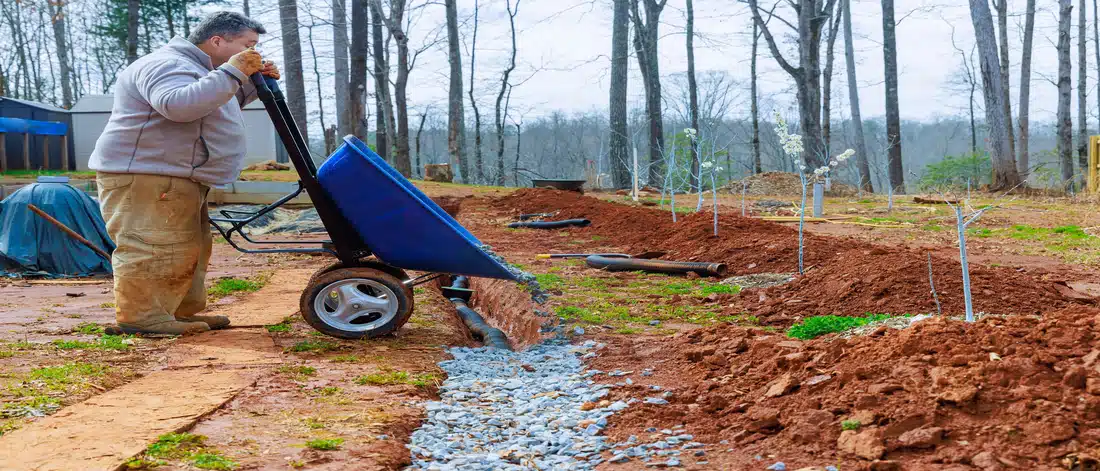
Homes on sloped lots face significant drainage challenges due to gravity pulling rainwater downhill, which can lead to foundation damage if not managed properly. Effective stormwater management systems, including proper grading and drainage solutions, are essential to protect these homes from water-related issues.
- Grading must ensure the ground slopes away from foundations to prevent water accumulation. A steeper slope of 5% is recommended for better drainage.
- French drains intercept groundwater before it reaches the foundation, reducing hydrostatic pressure and protecting basement walls.
- Swales are designed to carry surface runoff away from buildings, with specific dimensions to prevent erosion and manage water flow effectively.
Stormwater management for sloped lots involves implementing drainage systems designed to capture and redirect rainwater away from a home's foundation. This is crucial because gravity causes runoff to flow downhill, which can lead to water accumulation around the foundation, resulting in leaks, soil erosion, and potential structural damage.
Homes built on sloped lots face a unique drainage challenge: gravity naturally pulls rainwater downhill, often directing runoff toward the home’s foundation. Without proper stormwater management, this water can collect around basement walls and footings, creating hydrostatic pressure that leads to leaks, soil erosion, and long-term structural damage. Building codes require the ground around a home to slope away from the foundation for this reason, but grading alone is not always enough on steep properties. Effective drainage systems are essential to capture, redirect, and safely move stormwater away from the structure, protecting both the foundation and the surrounding landscape.
Understanding Water Flow Patterns on Sloped Properties
Water naturally flows downhill on sloped properties, but the speed and direction of that flow depend on several factors, including slope steepness, soil type, and surface conditions. Steeper slopes cause water to move quickly across the ground, reducing the amount of time it has to soak into the soil and increasing the risk of erosion. Gentler slopes slow runoff and allow more water to infiltrate the ground.
Soil type also affects how much water the ground can absorb. Dense clay soils absorb water slowly, often allowing only 0.05 to 0.15 inches per hour, while sandy soils can absorb much more, about 0.8 to 2.4 inches per hour. Because of this, clay-heavy areas are more likely to experience surface runoff and pooling during storms.
Surface features further influence drainage patterns. Vegetation helps water soak into the soil, while hard surfaces like driveways, patios, and compacted ground force water to flow across the surface. Natural low areas or swales often collect runoff, and multiple flow paths may converge at these points during heavy rain.
Understanding these natural water flow patterns helps homeowners design drainage systems that work with the landscape. By accounting for slope, soil absorption, and surface conditions, property owners can better manage stormwater and reduce the risk of erosion, flooding, and foundation damage.
The Critical Importance of Proper Grading Around Your Foundation
Foundation walls face a serious risk on sloped properties where rainwater naturally flows downhill and gathers. When grading is done wrong, water sits against foundations and creates pressure that pushes moisture through concrete and brick.
Building codes require the ground to drop 6 inches over the first 10 feet away from foundations. A steeper slope of 5% works better for moving water away.
Good grading creates a slanted surface that moves water away from your foundation before it can soak in. The soil must be packed down tightly to stop it from sinking, which would create low spots that trap water instead of draining it.
Poor grading can send thousands of gallons of stormwater straight into basement walls during heavy rain. This overwhelms waterproofing barriers and damages the building’s structure.
On sloped land, correct grading serves as the first and most important protection against water getting into your foundation.
French Drains: Your First Line of Defense on Hillside Lots
French drains are one of the most effective ways to control groundwater on hillside properties. These underground drainage systems intercept water before it reaches the foundation, reducing the risk of hydrostatic pressure building against basement or crawlspace walls. A typical French drain consists of a gravel-filled trench with a perforated pipe that collects groundwater and carries it downhill away from the home.
For proper performance, the drain is usually installed about 2–3 feet from the foundation wall. The trench should slope approximately 1%, about 1/8 inch of drop per foot, so gravity can move water through the system. Most trenches are dug 12–18 inches deep and lined with filter fabric to prevent surrounding soil from entering and clogging the drain.
Inside the trench, a 4-inch perforated pipe is surrounded by clean ¾-inch drainage rock. The perforations should face downward so water can enter through the gravel layer while minimizing sediment buildup inside the pipe. The collected water must then discharge safely away from the property, typically through a daylight outlet downhill, a storm sewer connection, or a dry well designed to hold and disperse runoff.
Placement is critical for hillside homes. Installing the drain upslope from the foundation allows it to intercept groundwater before it reaches the structure. By capturing and redirecting subsurface water early, French drains act as a protective barrier that helps keep foundation walls dry and reduces long-term structural risk.
Installing Swales to Redirect Surface Water Flow
French drains move water underground. Surface runoff needs a different solution. Swales are shallow ditches with grass that carry stormwater away from buildings at safe speeds. Good design means doing the math: measure the drainage area, check rainfall amounts, and calculate how long water takes to reach the swale. These numbers tell you the right swale size.
Most local building codes require swale sides no steeper than 3 feet horizontal for every 1 foot vertical (3:1 slope). This slope prevents erosion and makes mowing easier. The flat bottom should be 2 to 8 feet wide. The swale should drop 1 to 4 inches for every 100 inches of length (1% to 4% slope). This grade keeps water moving without creating dangerous speeds or letting puddles form.
Make the swale 6 inches deeper than your peak flow calculation requires. This extra depth (freeboard) prevents overflow during heavy storms.
Put swales where water already collects naturally, such as at the bottom of slopes or where ground elevation changes. When water speed tops 5 feet per second, plant tough grass or install special erosion-control mats.
These reinforcement mats are woven materials that hold soil in place. Plant grass before the rainy season starts so roots can establish and hold the soil.
Retaining Walls That Double as Drainage Solutions
Retaining walls hold back soil on sloped properties. These structures must manage the water pressure that builds up behind them. When drainage systems fail, hydrostatic pressure destroys walls. This pressure undermines structural stability and sends water flowing toward building foundations.
Strong retaining wall drainage systems need three key parts:
- Perforated drain pipes sit at the wall’s base inside a gravel-filled trench. These pipes move water sideways, away from your property. The pipes collect groundwater seepage and storm runoff before pressure builds.
- Gravel backfill creates a 12-inch minimum drainage zone behind the wall. Crushed stone allows water to flow down instead of soaking into soil. This permeable layer stops soil saturation and reduces the weight against the wall.
- Weep holes pierce through the wall face every 4-6 feet. These openings let trapped water escape before hydraulic forces crack the concrete or stone.
Each component addresses specific water management challenges. The perforated pipe system intercepts subsurface water migration. The gravel backfill layer filters sediment while maintaining void space for water movement. The weep holes provide immediate pressure relief during heavy rainfall events.
Together, these drainage elements protect the retaining wall’s structural integrity. They channel intercepted groundwater to safe discharge points like storm drains, dry wells, or natural drainage swales.
This integrated approach prevents erosion behind the wall and stops water infiltration near downslope foundations.
Downspout Extensions and Discharge Points for Sloped Terrain
Downspouts that end at the wrong spot dump thousands of gallons of water straight into foundation walls when it rains. Building codes (IRC Section R801.3) say downspout extensions must carry water at least 5 feet away from foundations. For properties on slopes, 10 feet works better.
Solid pipe extensions keep their shape and maintain a steady downward angle better than flexible corrugated tubes, which can sag and create puddles. The endpoint where water exits must sit at a ground level that keeps water flowing away from the house.
Don’t place discharge points uphill from the house—water will run backward toward the foundation instead of away from it. On slopes steeper than 10%, splash blocks at the end of downspouts don’t work well enough.
Underground drainage pipes work better for these situations. Bury these pipes 12-18 inches below ground surface to move concentrated water flows to safe discharge areas lower on the slope. These buried pipes need at least a 2% downward angle to keep water moving.
Connect them to drainage swales (shallow ditches), dry wells (underground collection pits), or city stormwater systems. Plan discharge locations carefully to respect property lines and avoid sending water onto neighbors’ land, which creates legal problems.
Elevation mapping tools using GPS technology help identify the best endpoints that prevent soil erosion and water seeping into foundations. These measurements show exactly where water will naturally flow and where it won’t pool or reverse direction.
Catch Basins and Channel Drains for Concentrated Runoff
Dry wells provide underground storage for stormwater when the soil cannot absorb rainfall quickly enough. They are especially useful on sloped properties where space for above-ground solutions like retention ponds or rain gardens is limited. By holding runoff below the surface, dry wells allow water to gradually soak into the surrounding soil instead of collecting near foundations or flowing across the property.
A typical dry well is an excavated pit about 3–6 feet wide and 4–8 feet deep, filled with crushed stone or gravel. The spaces between the stones temporarily store water until it slowly infiltrates the surrounding soil. Proper sizing depends on how much runoff the system must handle and how quickly the soil drains. Percolation tests help determine infiltration rates, which typically range from about 0.5 to 5 inches per hour, depending on soil type.
Building codes require dry wells to be installed a safe distance from structures and utilities—usually at least 10 feet from foundations, 25 feet from drinking water wells, and about 100 feet from septic drain fields. To prevent clogging, the stone chamber is wrapped in geotextile fabric that filters out sediment. Many systems also include an overflow outlet that directs excess water to a storm drain or surface swale during heavy storms.
Permeable Paving Options for Driveways and Walkways
Managing stormwater goes beyond underground systems. Hardscape surfaces can now let water soak through instead of running off. Permeable paving materials work on driveways and walkways, letting rainwater pass through the surface and into the ground. This keeps water away from foundation walls.
These paving systems have open spaces in the top layer. Below sits a gravel storage area that holds water while it slowly drains into the soil beneath.
Three Main Types of Permeable Paving
Pervious Concrete
This special concrete mix contains 15-25% empty space between particles. Water flows through at rates between 2 and 18 gallons per minute for each square foot of surface area. The gaps let rainfall pass through while still providing a solid driving surface.
Permeable Interlocking Pavers
These concrete blocks fit together with wider gaps between each piece. The gaps get filled with small rocks or gravel that let water drain through. The pavers stay locked in place while allowing infiltration around their edges.
Porous Asphalt
This paving material uses the same tar-like binder as regular asphalt but leaves out the small sand particles. Removing fine materials creates connected spaces throughout the mixture. Water moves through these openings into the layers below.
Installation and Care Requirements
All three paving types need a properly designed base underneath. This base consists of crushed stone layers sorted by size. The stone base acts as both a structural foundation and a temporary water reservoir.
Regular cleaning prevents dirt and debris from blocking the pores. Sweeping or power washing removes sediment buildup that would stop water from soaking through the surface.
Terracing Techniques to Slow Water Movement
Properties with slopes steeper than 15% need level platforms to reduce water speed and stop soil erosion. Terracing creates a staircase pattern that breaks up long slopes into shorter sections, cutting runoff speed by 40-60% compared to straight hillsides.
| Terrace Type | Maximum Height | Recommended Spacing | Water Storage Ability |
| Structural (Retaining Wall) | 4-8 feet | 15-25 feet | High |
| Bio-retention Terrace | 2-4 feet | 10-20 feet | Very High |
| Graded Bench | 1-3 feet | 8-15 feet | Moderate |
Each terrace platform should slope 1-2% toward drainage channels, away from buildings. Place check dams every 20 feet inside terraced drainage ditches to control water flow. Retaining walls need proper drainage systems with weep holes every 6-8 feet and at least 12 inches of gravel behind the wall to stop water pressure from building up and damaging the structure.
Subsurface Drainage Systems and Curtain Drains
Moving water under the ground causes 70% of slope failures on homes built on hills. This makes underground drainage systems essential for keeping hillsides stable. Curtain drains stop groundwater before it reaches building foundations. These drains use perforated pipes (pipes with small holes) buried inside trenches filled with gravel at depths of 2-4 feet below ground level. The system moves underground water sideways across the slope, away from houses and other structures.
Curtain drain installation needs these components:
- Perforated pipe setup – Installers position pipes with holes facing down, then wrap the pipes in geotextile fabric (a special filter cloth) to keep dirt and sediment from blocking the holes.
- Trench angle – The trench bottom slopes at 1-2% grade (about 1-2 inches of drop per 100 feet) moving toward the water exit point. Construction crews check this angle using laser levels to ensure accuracy.
- Gravel fill – Workers use ¾-inch washed stone meeting ASTM C33 standards (industry specifications for drainage rock). The gravel layer extends 6 inches above the pipe.
Water exits the curtain drain system at daylight points (where pipes emerge at ground surface) or connects to storm sewer networks. Maintenance access points called cleanouts get installed every 100 feet along the pipe run. Property owners or contractors use these cleanouts to clear blockages and inspect the drainage system.
The geotextile fabric prevents soil particles from entering the gravel zone while allowing water to flow freely. The downward-facing perforations collect subsurface water rising from below while preventing gravel from entering the pipe interior.
Gutter Guards and Roof Drainage Maintenance
Clogged gutters create serious problems for hillside homes. When gutters fill with leaves and debris, rainwater overflows toward the foundation. This excess water weakens the soil on slopes and can cause the ground to shift or slide.
Gutter Guard Systems
Micro-mesh guards protect gutters from debris while allowing water to flow through. These guards have tiny holes measuring 50-275 microns (about the width of a human hair). The small openings block leaves, pine needles, and roof grit but let rainwater pass during heavy storms.
Proper Sizing Requirements
The downspout system must handle the water volume from your roof. Building codes (IRC Section R903.4) require 1 square inch of downspout opening for every 100 square feet of roof area. A 2,000 square foot roof needs downspouts with at least 20 square inches of total opening area.
Water Direction and Distance
On slopes steeper than 10%, downspout extensions must carry water at least 6 feet away from the foundation. This distance prevents soil erosion near the house and keeps water from seeping into the basement or crawl space.
Check these outlet points every three months to ensure proper water discharge.
Material Selection
Choose aluminum or stainless steel gutter guards for hillside locations. These materials resist rust and corrosion in damp environments where moisture levels stay high.
Installation Standards
Professional installers ensure gutters slope toward downspouts at 1/16 inch per foot minimum. This pitch allows water to drain completely rather than pooling.
Secure fascia mounting supports the weight of standing water, ice, and snow without sagging or pulling away from the roof edge.
When to Call Professional Drainage Contractors
Some drainage problems go beyond simple DIY solutions and require professional expertise. If flooding continues despite basic fixes, or if you notice foundation movement, soil instability, or recurring water intrusion, it’s time to call a licensed drainage contractor. Professionals use specialized equipment, such as grading lasers, excavation machinery, and soil compaction tools, to properly design and install effective drainage systems.
A professional assessment is especially important when water is entering the foundation, which may require solutions like French drains, sump pumps, or below-grade waterproofing systems. Warning signs of hillside instability, such as cracked retaining walls, shifting soil, or rapidly eroding drainage channels, also demand expert evaluation before the problem worsens.
In many areas, drainage work must also comply with local regulations. Projects involving water discharge, erosion control, or stormwater storage may require permits and engineered plans. Licensed contractors can design systems that meet these requirements while providing long-term protection for your property. Their work is typically backed by warranties and built to comply with local stormwater regulations and building codes, helping prevent future structural and water damage.


