
Crawl Space Drying Basics: Humidity
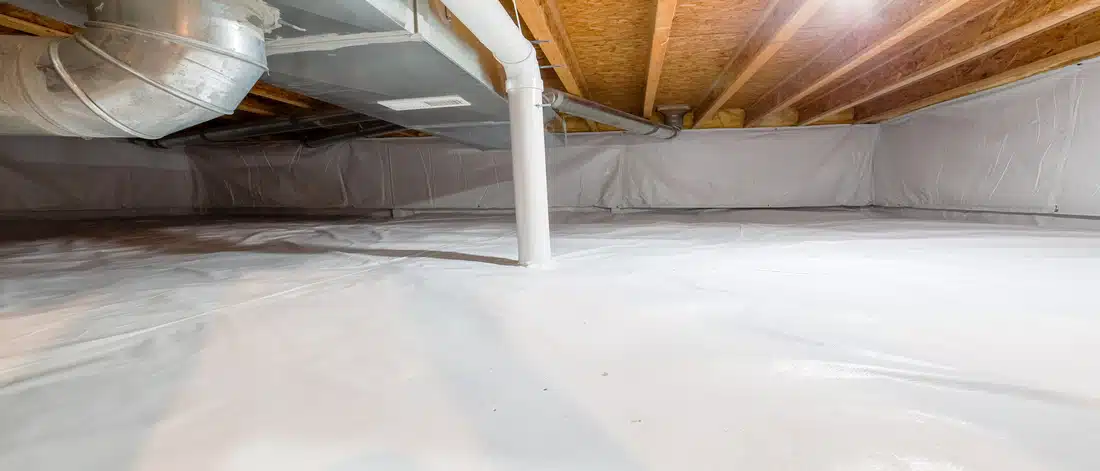
Maintaining proper humidity in crawl spaces is vital for protecting a home's structure and air quality. Keeping humidity levels between 30–50% prevents mold growth and wood decay, ensuring a healthier living environment.
- The ideal humidity range is 30–50%, while levels above 60% can lead to mold and structural damage.
- Excess moisture can come from groundwater, leaks, and outside air, making moisture control essential.
- Homeowners should use dehumidifiers and vapor barriers to manage humidity and prevent health risks associated with high moisture.
The ideal humidity level for a crawl space is between 30 and 50 percent, according to the Environmental Protection Agency (EPA). Levels exceeding 60 percent can lead to mold growth and moisture issues, which can negatively impact the structure of your home and air quality.
Maintaining proper humidity in your crawl space is essential to protecting your home’s structure, air quality, and overall health. According to the Environmental Protection Agency (EPA), the ideal relative humidity range is 30–50%, while levels above 60% create conditions where mold spores rapidly multiply. Research from the American Society of Heating, Refrigerating, and Air-Conditioning Engineers (ASHRAE) confirms that high humidity promotes moisture buildup, mold growth, and wood decay.
Excess humidity doesn’t stay confined below your floors. Through the stack effect, up to 40% of the air on your main level comes from your crawl space, carrying moisture, odors, and contaminants into your living areas. Over time, persistent dampness can cause wood joists, beams, and insulation to absorb water, weakening your home’s foundation and inviting costly repairs.
That’s why effective crawl space moisture control, using vapor barriers, dehumidifiers, and sealed vents, isn’t just a comfort issue, but a structural necessity. By keeping humidity within safe ranges, homeowners can prevent mold growth, wood rot, pest infestations, and poor indoor air quality, ensuring a healthier, longer-lasting home.
Understanding Ideal Crawl Space Humidity Levels
Keeping crawl space humidity between 30–50% protects your home’s structure and air quality. Once levels rise above 60%, mold begins growing rapidly, and at 70% or higher, wood rot and structural damage can occur within a year.
Humidity varies throughout the crawl space, so professionals use multiple hygrometers to track moisture accurately. High humidity causes condensation when warm air meets cold surfaces, while low humidity (below 30%) can dry out and crack wooden beams.
Solutions include dehumidifiers, vapor barriers, and encapsulation systems that meet ASTM E1745 standards. Common causes of crawl space moisture include:
- Groundwater vapor from soil
- Outside air entering through vents or gaps
- Plumbing leaks or poor drainage
- Seasonal temperature differences
Maintaining balanced humidity helps prevent mold, protect wood structures, and improve indoor air quality throughout your home.
Common Sources of Crawl Space Moisture
Up to 80% of crawl space humidity comes from ground moisture in homes without vapor barriers. Identifying the source is key to fixing the problem and meeting IRC Section R408.3 standards.
| Moisture Source | Daily Water Amount | Fix Priority |
| Bare dirt floors | 10–15 lbs | High
– Install 6-mil vapor barrier |
| Exterior water intrusion | 5–20 lbs | Critical
– Regrade soil away from the foundation |
| AC condensation | 2–4 lbs | Medium
– Insulate ducts (R-8 rating) |
Leaks and foundation cracks can add several pounds of moisture daily. Following ASHRAE Standard 160, homeowners should use humidity sensors and vapor barriers to block moisture, seal HVAC ducts, and improve drainage.
Fixing these sources early helps prevent rot, mold, and air quality issues, keeping your crawl space and home dry and safe year-round.
The Stack Effect: How Crawl Space Air Enters Your Home
Warm air inside your house moves upward through the rooms and escapes through attic vents and small openings near the roof. As this warm air leaves, new air must replace it. That replacement air gets pulled up from the crawl space beneath your home. Between 30-50% of the air in your entire house comes from this underground area every hour.
Building scientists call this the “stack effect.” The process works like a chimney. During winter, the difference in temperature between inside and outside air can reach 30-40 degrees Fahrenheit. This temperature gap makes the stack effect stronger, pulling even more crawl space air into your home.
The International Residential Code (IRC) Section R408.3 sets rules for how crawl spaces should have ventilation openings. These building regulations do not address how air moves from crawl spaces into the main house through the floor.
Research on residential buildings shows that homes with vented crawl spaces allow 0.5-1.0 complete air changes per hour through openings in the floor. These openings exist where pipes, electrical wires, and heating/cooling ducts pass through. Air flows constantly through these gaps.
The air moving from your crawl space carries three main types of contaminants:
- Moisture vapor from damp soil and standing water
- Allergens, that for including mold spores, dust mites, and pollen
- Volatile organic compounds (VOCs) from building materials, stored chemicals, and soil gases like radon
These pollutants enter your living rooms, bedrooms, and kitchen through floor penetrations. Your heating and cooling system’s air filters cannot remove these contaminants because they enter the home below the HVAC return vents.
The air quality problems begin at the foundation level, not at the air handler or furnace.
Health Risks Associated With High Humidity
Wet crawl spaces under homes create dangerous conditions for people living above them. When the moisture level in the air goes above 60%, several health problems become more likely:
- Mold growth – Microscopic fungi spread across wood, insulation, and cardboard boxes. These organisms release toxic substances and particles that cause allergic reactions. Air naturally flows upward from crawl spaces into rooms where families eat, sleep, and spend time together.
- Dust mites – These tiny bugs multiply rapidly when moisture stays above 50%. Their waste and dead body parts float in the air and cause breathing problems, sneezing, and itchy eyes in sensitive people.
- Chemical fumes – Wet conditions cause paints, adhesives, plywood, and stored household items to release harmful gases faster.
These invisible vapors enter the home through floor gaps and air vents.
Medical research shows that breathing this contaminated air for months or years worsens asthma symptoms, causes chronic sinus inflammation, and triggers serious lung diseases.
Children, elderly family members, and people with weakened immune systems face the greatest danger.
Keeping crawl space moisture below 50% prevents these health threats. Proper ventilation systems, dehumidifiers, and moisture barriers protect indoor air quality.
Regular humidity monitoring with digital meters helps homeowners maintain safe conditions year-round.
Structural Damage Caused by Excess Moisture
Water buildup in crawl spaces damages home structures in three main ways that building scientists have measured and recorded.
Wood rot fungi grow on floor joists, beams, and support posts when wood stays wet (above 20% moisture content) for weeks or months. The USDA Forest Products Laboratory found that these fungi eat away at wood fibers until structural timbers lose 90% of their strength and can no longer hold up the house safely.
Metal corrosion attacks steel jacks, fasteners, anchor bolts, and support columns when crawl space humidity stays above 60%. ASTM G101 laboratory tests show that galvanized steel coatings break down and lose 40% of their rust protection within five years in damp crawl space conditions.
Foundation settling happens when wet soil under concrete piers and footings becomes soft and loses its ability to support the weight above it. The structure sinks unevenly, creating cracks and slopes that violate the International Residential Code Section R401.4 safety standards for maximum foundation movement.
These three damage patterns feed into each other. Wet wood attracts fungi. Fungi create more moisture. More moisture corrodes metal supports. Corroded supports shift weight onto weakened wood members. Uneven loads cause foundation posts to sink into saturated soil. Each problem makes the others worse.
Homeowners who wait more than two years after noticing moisture problems typically face repair bills three times higher than those who fix crawl space water issues right away.
Signs Your Crawl Space Has a Humidity Problem
1. What You Can See
Look for mold growing on wooden beams, water drops forming on metal pipes and ducts, white crusty salt marks on concrete walls, or rotting wood in support beams.
These signs mean too much moisture has built up over time. Building codes require proper airflow under your home to prevent this damage.
2. What You Can Smell
A musty or earthy smell coming up through your floors means mold and mildew are growing underneath your house.
This happens when the plastic moisture barrier on the ground isn’t working correctly or wasn’t installed properly. Building standards require this barrier to keep ground moisture from entering your crawl space.
3. Changes to Your Home’s Structure
Watch for buckling or curved floor boards, rusty nails and metal brackets, wet or falling insulation, or puddles of water on the crawl space floor.
These problems show your ventilation system isn’t removing moisture like it should. You need to fix the water problem right away and make sure your crawl space meets local building requirements for proper airflow and moisture control.
Measuring Humidity: Tools and Techniques
Getting the right readings in crawl spaces means using tools that measure both moisture levels and temperature at the same time. Digital thermo-hygrometers show current conditions with accuracy within 2%. Building codes like IRC Section R408.3 require this level of precision for moisture control. Data loggers track conditions non-stop for 24-48 hours, showing changes that happen between single checks.
| Instrument Type | Accuracy Range | Application |
| Digital Thermo-Hygrometer | ±2-3% RH | Single location checks |
| Data Logger | ±2% RH | Round-the-clock tracking |
| Infrared Thermometer | ±1°C | Surface temperature |
| Moisture Meter | ±1% MC | Wood and material wetness |
| Psychrometer | ±0.5% RH | Lab-quality testing |
Tools must be calibrated using saturated salt solutions to keep readings trustworthy. Place sensors 36 inches above the floor (the height where people breathe) and keep them away from vents or air movement sources. This placement gives readings that represent actual crawl space conditions.
Vapor Barriers and Ground Covers Explained
Every crawl space needs a physical barrier between the ground and the air above to control water vapor transmission from soil. Polyethylene sheeting serves as the primary defense against moisture intrusion, with material specifications impacting performance outcomes.
Essential vapor barrier requirements:
- Thickness specification: Use 6-mil polyethylene as the minimum; 10-mil or thicker provides better durability and puncture resistance.
- Permeance rating: Materials must measure 0.1 perms or less per ASTM E1745 standards to qualify as Class I vapor retarders.
- Installation protocol: Overlap seams by 6 inches minimum and seal with approved tape; extend barrier up foundation walls at least 6 inches.
Installed barriers reduce relative humidity by 30-50% in crawl spaces. Ground covers prevent soil moisture evaporation rates that exceed 10 pounds per 1,000 square feet daily.
Crawl Space Ventilation: Pros and Cons
Vented and sealed crawl spaces use opposite methods to control moisture underneath buildings. Different building codes and local construction standards recommend each type based on factors like climate zones, humidity levels, and temperature patterns. Vented crawl spaces bring in outside air through foundation openings to dry out moisture. Sealed crawl spaces treat the area like an indoor room with climate control and moisture barriers.
| Approach | Ventilation Strategy | Climate Suitability |
| Vented | Natural airflow through foundation vents | Dry regions with low rainfall and humidity |
| Sealed | Indoor air circulation with a plastic vapor barrier | Areas with high humidity, cold winters, or mixed weather |
| Hybrid | Vents that open and close with automatic controls | Regions with changing seasonal conditions |
The International Residential Code (IRC) Section R408 allows both vented and sealed crawl spaces when builders follow specific requirements. Vented crawl spaces need 1 square foot of vent opening for every 150 square feet of floor area. Sealed crawl spaces must have Class I vapor retarders (thick plastic sheeting rated at 0.1 perms or less) covering the ground and walls, plus a heating/cooling air supply connected to the home’s HVAC system.
Dehumidifiers for Crawl Space Moisture Control
Dehumidifiers are the most effective solution for controlling crawl space humidity when ventilation alone isn’t enough. These systems extract moisture from the air to keep levels below 60%, preventing mold growth, wood rot, and structural damage.
What to Look For in a Crawl Space Dehumidifier:
- Capacity: Choose a unit that removes 1 pint of water per 50–75 sq. ft. of crawl space.
- Energy Efficiency: Models with an Energy Factor (EF) above 2.0 deliver better performance with lower energy costs.
- Low-Temperature Operation: Select a cold-climate model designed to run efficiently in 40–50°F conditions.
Installation Tips:
Follow NEC Article 210.52 standards for safe electrical wiring with a dedicated outlet. Ensure continuous drainage through a gravity drain, condensate pump, or plumbing connection to prevent overflow and maintain consistent operation.
Properly installed, a crawl space dehumidifier offers year-round moisture control, protecting your home’s foundation, air quality, and long-term value.
Encapsulation as a Long-Term Solution
A vapor barrier system seals your crawl space from ground moisture. This barrier turns the crawl space into a protected part of your home’s structure. The encapsulation process uses thick plastic sheeting (at least 6-mil thickness, following IRC Section R408.2.2 building standards).
Workers install this moisture barrier across the dirt floor, foundation walls, and support columns. Where plastic sheets meet, they must overlap by 6 inches. These seams get sealed with special tape or fasteners designed to resist moisture and humidity.
When crews install the system correctly, it blocks 99% of water vapor coming up from the ground. The vapor barrier system needs fresh air circulation to work at its best. This air movement comes from a dehumidifier, HVAC vents, or mechanical ventilation fans.
Studies from building science research show that sealed crawl spaces keep humidity levels below 60% throughout all seasons. This consistent moisture control stops mold colonies from forming and prevents wood rot in floor joists and subflooring.
The International Residential Code (IRC building regulations) accepts this sealed crawl space method as equal to traditional vented crawl spaces. The requirement is that you must also install continuous insulation on the interior foundation walls.
Property owners typically spend between $5,000 and $15,000 for professional encapsulation installation. The final cost depends on your crawl space square footage and whether moisture damage repair is needed before installing the barrier system.
Drainage Systems and Sump Pumps
When groundwater rises above the foundation footer, vapor barriers alone can’t stop flooding. That’s when drainage systems and sump pumps become essential for managing hydrostatic pressure and keeping your crawl space dry.
How It Works:
An interior perimeter drain, a 4-inch perforated PVC pipe installed along the foundation edge, collects groundwater and directs it to a sump basin. Once water reaches a set level, the sump pump automatically removes it through a discharge pipe, sending it safely 10 feet or more away from the foundation.
System Requirements:
- Drain tile: 4″ PVC pipe with 3/8″ holes, sloped ¼ inch per foot
- Sump basin: Minimum 18″ wide × 24″ deep, sealed lid
- Pump capacity: At least ⅓ HP, rated for lift height + 20% reserve
- Battery backup: Keeps the system running during power outages
Together, these components form a complete waterproofing solution, preventing crawl space flooding, foundation damage, and mold growth.
Insulation Considerations for Humidity Management
Wrong insulation location in crawl spaces causes condensation (water drops that form when warm, moist air hits cold surfaces). This condensation increases humidity and helps mold grow.
Old-style fiberglass batts placed between floor joists soak up water like a sponge.
Wet insulation loses its ability to block heat (measured as R-value). These wet spots create thermal bridges, places where inside warm air meets cold surfaces and forms water droplets.
Code Requirements for Wall Insulation
Building codes (IRC Section R408.2) require putting insulation on foundation walls instead of floors when you create a closed crawl space.
The International Energy Conservation Code sets R-10 as the minimum insulation level for crawl space walls.
Best Insulation Materials
Rigid foam boards work best for crawl space walls.
Two types perform well:
- Polyisocyanurate foam
- Extruded polystyrene foam
These foam boards attach directly to concrete or block foundation walls. They keep wall surfaces warm enough to stay above the dew point (the temperature where water vapor turns into liquid drops).
No condensation forms when surfaces stay warmer than the dew point.
Spray Foam Benefits
Spray foam insulation serves two jobs at once.
It blocks heat loss and stops water vapor from moving through walls. This double function makes spray foam an effective choice for crawl space moisture control.
Critical Installation Step
Remove all old insulation from between floor joists before installing wall insulation.
Two insulation layers trap moisture between them, creating hidden water damage and mold growth inside the building envelope.
Seasonal Humidity Fluctuations and Adjustments
Crawl space humidity changes 30-50% from summer to winter. Temperature differences and moisture in the air cause these shifts. You need regular checking and adjustment methods to keep conditions right all year.
Key seasonal adjustment factors:
- Summer Protocol (May-September): Run your dehumidifier 40-60% more when outside dewpoint goes above 60°F. Keep relative humidity under 55%. Hot air holds more water vapor, making crawl spaces damper during warm months.
- Winter Protocol (November-March): Lower dehumidification by 30-40% when cold weather reduces moisture naturally. Keep relative humidity at 45-50% to stop air from getting too dry. Cold air cannot hold as much moisture as warm air.
- Transition Periods (April, October): Check humidity levels each week during spring and fall. Change equipment settings based on the average readings from the past seven days. These shoulder seasons need flexible approaches because weather conditions vary quickly.
Digital hygrometers with memory storage let you track humidity patterns over time. This information helps you make changes before water damage or mold growth starts.
Automated systems with built-in seasonal programs make adjustments without manual work.
Smart crawl space management connects to broader home moisture control. Your HVAC system, insulation quality, and ventilation all affect crawl space conditions.
Ground moisture barriers and proper drainage systems work together with dehumidifiers to control humidity levels effectively.
Maintenance Schedule for Optimal Humidity Control
Equipment inspections catch 85% of humidity control problems before they become failures in crawl spaces. Clean your dehumidifier filter each month to keep air moving at full strength.
Flush the condensate drain line every three months to stop mold, algae, and bacteria from blocking water flow. IRC Section 408.3 sets these drainage requirements as building code standards.
Check your hygrometer twice each year to confirm it measures moisture correctly within ±3% accuracy. Inspect the vapor barrier once per year for rips, tears, or areas where it has shifted position.
Fix any damage right away to keep the 6-mil polyethylene plastic barrier meeting ASHRAE 160P moisture control standards.
Weather changes require different humidity targets. Set your dehumidifier to 55% relative humidity from June through August when outdoor air holds more moisture. Change the setting to 50% from December through February when cold air causes water droplets to form on pipes, ducts, and HVAC equipment.
Write down each maintenance task with the date completed. These records show who performed the work and help spot patterns in equipment performance over time.
Replace dehumidifiers based on the manufacturer’s recommended lifespan, typically 8-10 years for units running continuously in damp crawl space conditions.


