
Tips for Maintaining Your Home’s Foundation During Hot Summers
Hot summer temperatures can severely damage home foundations, especially in Colorado where clay soils expand and contract. Maintaining consistent soil moisture is essential to prevent costly repairs from foundation issues.
- Water the soil around your foundation regularly to keep it damp but not soggy. This helps prevent extreme drying that can lead to cracks.
- Proper grading and drainage are vital to direct water away from your foundation and avoid uneven pressure.
- Inspect your foundation monthly for cracks, as early detection can save significant repair costs.
To maintain your home’s foundation during hot summers, regularly water the soil around your foundation to prevent it from drying out and shrinking. Additionally, ensure proper drainage away from your home and inspect for any cracks or signs of settling to address issues early and avoid costly repairs.
Summer heat does more damage to your foundation than most Colorado homeowners realize. When temperatures climb past 90 degrees for weeks, the soil around your house dries out and shrinks. That shrinking pulls support away from your foundation and leads to cracks, settling, and costly repairs.
Foundation maintenance during summer comes down to one goal: keeping soil moisture steady. This post covers the exact steps that prevent heat-driven damage, from watering schedules to spotting early warning signs.
These hot summer tips draw on what our crews see across the Front Range every July and August, when clay-heavy soils swing between bone-dry and saturated.
Why Hot Summers Threaten Your Foundation
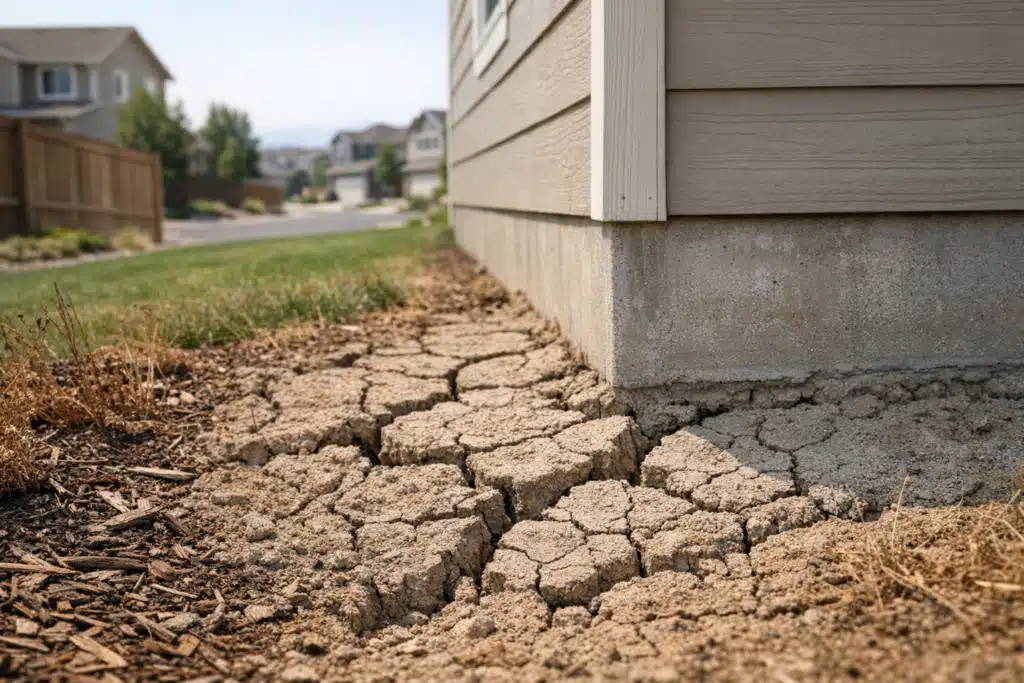
Foundation damage in summer starts with soil movement. Colorado’s expansive clay soils shrink when dry and swell when wet. That constant motion stresses concrete and shifts your home’s footing.
During a dry July, soil can pull back several inches from your foundation walls. This creates gaps and uneven pressure. One side of your house may settle faster than the other.
The Clay Soil Problem in Colorado
Bentonite clay covers much of the Denver metro area. It expands up to 10 percent of its volume when saturated. When it dries, it contracts and leaves voids beneath slabs and footings.
Homes on clay soil face the highest summer risk. The wetter-then-drier cycle each season widens existing cracks and starts new ones.
Foundation Maintenance Tips for Hot Weather
Consistent soil moisture protects your foundation from heat damage. The steps below keep the ground around your home stable when temperatures spike.
1. Water Your Foundation on a Schedule
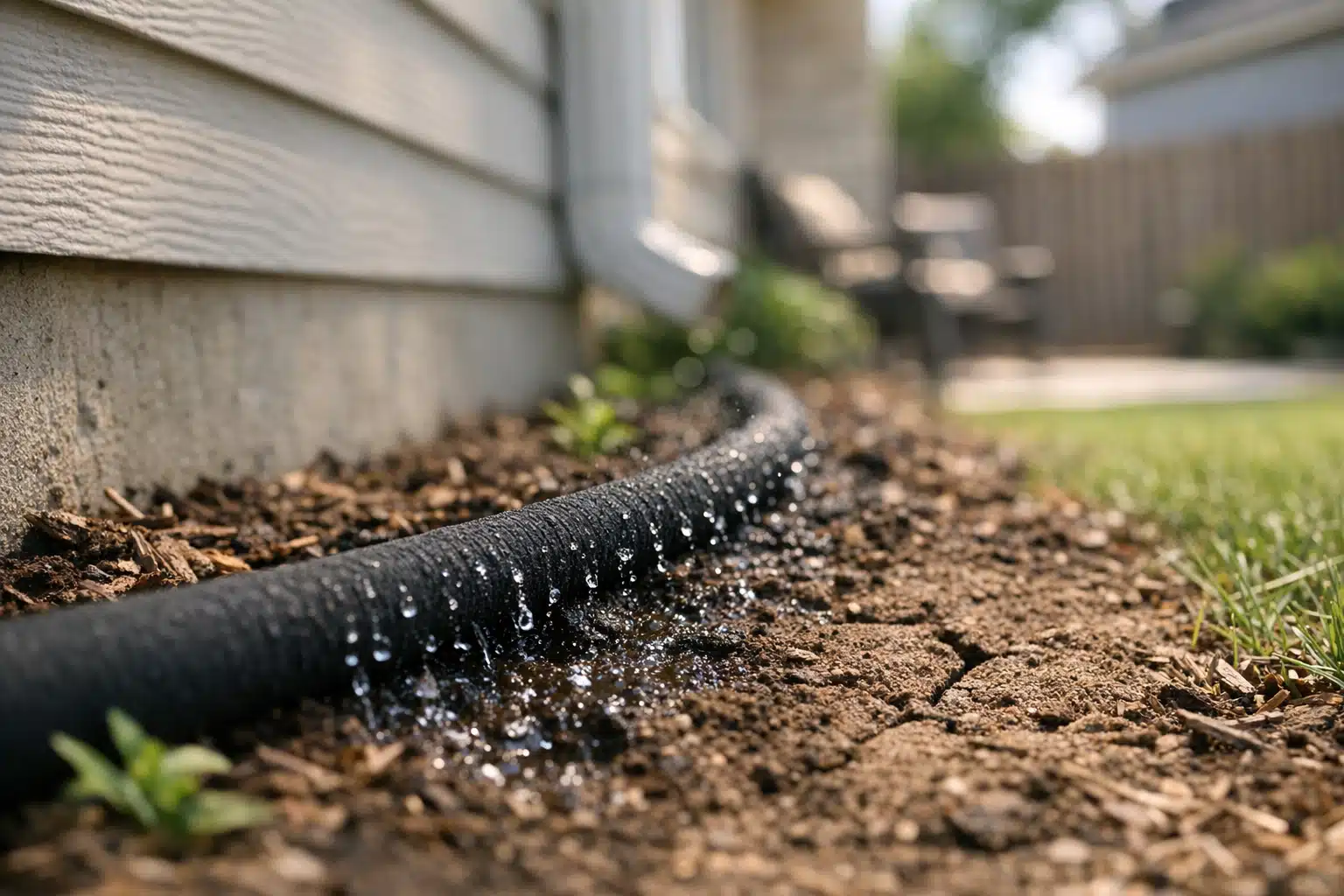
Watering the soil around your foundation prevents extreme drying. Run a soaker hose 12 to 18 inches from the foundation walls. This keeps the soil evenly damp without flooding it.
- Place a soaker hose around the perimeter of your home.
- Run it 20 to 30 minutes two or three times per week during heat waves.
- Water in early morning before the sun evaporates it.
- Check the soil — it should feel damp, not soggy.
Skip watering after heavy rain. Oversaturating clay causes swelling, which is just as damaging as drying.
2. Fix Grading and Drainage
Proper grading directs water away from your foundation. The ground should slope down at least six inches over the first ten feet from your house.
Flat or reverse grading pools water at the base of walls. During summer storms, that pooling saturates one area unevenly. The soil swells there and shifts your foundation.
- Add soil to low spots against the foundation.
- Extend downspouts at least five feet from the house.
- Clear debris from gutters before summer storm season.
3. Manage Trees and Large Shrubs
Tree roots pull huge amounts of moisture from soil during hot months. A mature cottonwood can draw over 50 gallons a day. Roots near your foundation dry the soil unevenly.
Plant large trees at least 20 feet from your foundation. For existing trees close to the house, install a root barrier or water that zone more heavily.
4. Inspect for Early Cracks
Small cracks in summer signal soil movement underneath. Walk your foundation walls monthly during hot months. Look for new cracks or ones that widen over weeks.
Hairline cracks under 1/8 inch are common and low-risk. Cracks wider than 1/4 inch, or ones running diagonally from window corners, need attention.
Warning Signs Your Foundation Is Moving
Foundation movement shows up inside your home before it becomes severe. Catching these signs early saves thousands in repairs.
- Doors and windows that stick where they opened fine in spring.
- Cracks above door frames and window corners.
- Gaps between walls and ceilings or floors.
- Sloping or uneven floors you can feel underfoot.
- Cracks in exterior brick that follow a stair-step pattern.
Sticking doors in August are a classic summer clue. Dry soil settling on one side twists the frame just enough to bind.
When to Call a Specialist
Call a foundation expert when cracks grow wider than 1/4 inch or spread quickly. Sudden interior cracks after a dry spell also warrant an inspection.
Water intrusion in a basement during summer storms points to grading or foundation problems. That combination causes mold, which our crews handle alongside structural drying.
A Summer Foundation Maintenance Schedule
A month-by-month routine keeps foundation problems from building up. Use this timeline across the hottest part of the year.
- June: Clean gutters, check grading, set up soaker hoses before peak heat.
- July: Water on schedule, inspect walls monthly, watch tree-heavy zones.
- August: Test doors and windows, log any new cracks with photos.
- September: Adjust watering as temperatures drop, review the season’s changes.
Photograph cracks each month with a coin for scale. This tracks whether a crack is stable or growing over the summer.

 Posted on Google
What Happens If You Ignore Summer Foundation Care
Neglected foundations cost far more to repair than to maintain. A single dry summer can widen a crack enough to let water in the next season.
Structural repairs like pier installation run into five figures. Consistent watering and drainage upkeep cost a fraction of that each year.
Summer damage compounds. Each dry-then-wet cycle worsens what the last one started, until movement becomes structural.
How ARC Restoration Helps
ARC Restoration handles water damage, mold, and structural drying tied to foundation issues across Colorado. When summer cracks let water into your basement, our crews dry the space and stop mold before it spreads.
We assess moisture problems that grading and foundation shifts create. Early action limits the damage a failing foundation causes indoors.
Key Takeaways
Steady soil moisture is the goal of all summer foundation maintenance in Colorado’s clay soils. Water on a schedule, fix your grading, and inspect walls monthly to catch movement early.
Rising cracks or water in your basement signal a problem that needs fast attention. Contact ARC Restoration at 720-799-2434 by call or text, email office@advancedrestorationcolorado.com, or visit https://advancedrestorationcolorado.com.
Sources
- Colorado Geological Survey – Expansive Soils
- U.S. Geological Survey – Evapotranspiration and the Water Cycle
- U.S. Department of Housing and Urban Development – Foundation Grading and Drainage


