
Essential Summer Maintenance to Prevent Air Conditioner Water Leaks
Preventing air conditioner water leaks requires proactive maintenance before summer heat arrives. Regular checks and simple tasks can help avoid costly damage from leaks.
- Clogged drain lines, frozen coils, and failing drain pans are common causes of AC leaks. Regular maintenance can prevent these issues from developing.
- Monthly checks of the condensate drain line and air filter can significantly reduce the risk of leaks. Clear airflow is essential for proper AC function.
- Early detection of leaks can save homeowners from extensive damage and mold growth. Regular inspections of key areas can help identify problems before they escalate.
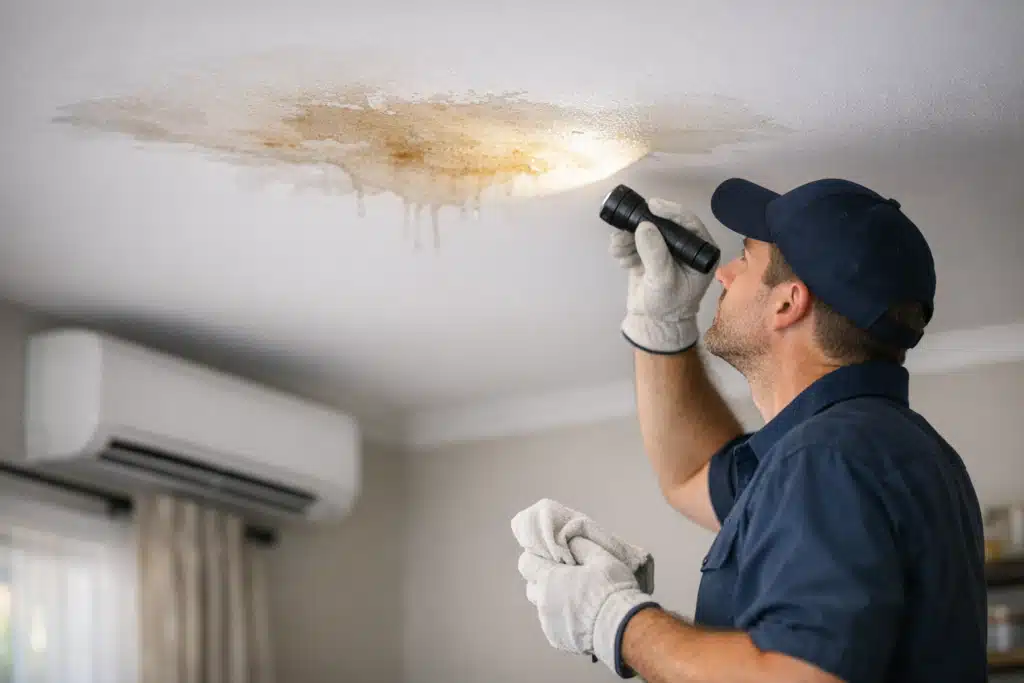
Summer maintenance for air conditioners is crucial to prevent water leaks, which often manifest as water stains on ceilings or damp patches near the furnace. Regular upkeep helps ensure the drain line remains clear, avoiding potential damage and costly repairs associated with leaks.
A leaking air conditioner rarely announces itself. The first sign is a water stain spreading across a ceiling or a damp patch near the furnace. By then, the drain line has been clogged for weeks.
AC water leak prevention starts before the first hot day of the season. A few targeted checks stop the exact failures that flood Colorado basements and warp drywall every July.
Below are the maintenance steps that address the common summer AC problems our restoration crews trace back to their source.
Why Air Conditioners Leak Water in Summer
Air conditioners produce condensation as they cool humid air. That moisture drips into a pan and exits through a drain line.
Leaks happen when this drainage path fails. The three failures we see most from June to August:
- Clogged condensate drain line — algae and dust form a plug that backs water into the pan.
- Frozen evaporator coil — a coil turns to ice, then melts faster than the pan can hold.
- Rusted or cracked drain pan — an aging pan lets water slip past its edges.
Each of these has a warning sign you can catch during a routine check. The steps below target them directly.
AC Water Leak Prevention Step-by-Step
AC water leak prevention is a set of five maintenance tasks that clear the drainage path and keep the coil from freezing. Do them at the start of summer and repeat the drain flush monthly.
1. Clear the Condensate Drain Line
The condensate drain line is the number one cause of summer AC leaks. It is a PVC pipe, usually white and about ¾ inch wide, running from the indoor unit to a drain or outside.
- Shut off power to the unit at the thermostat and breaker.
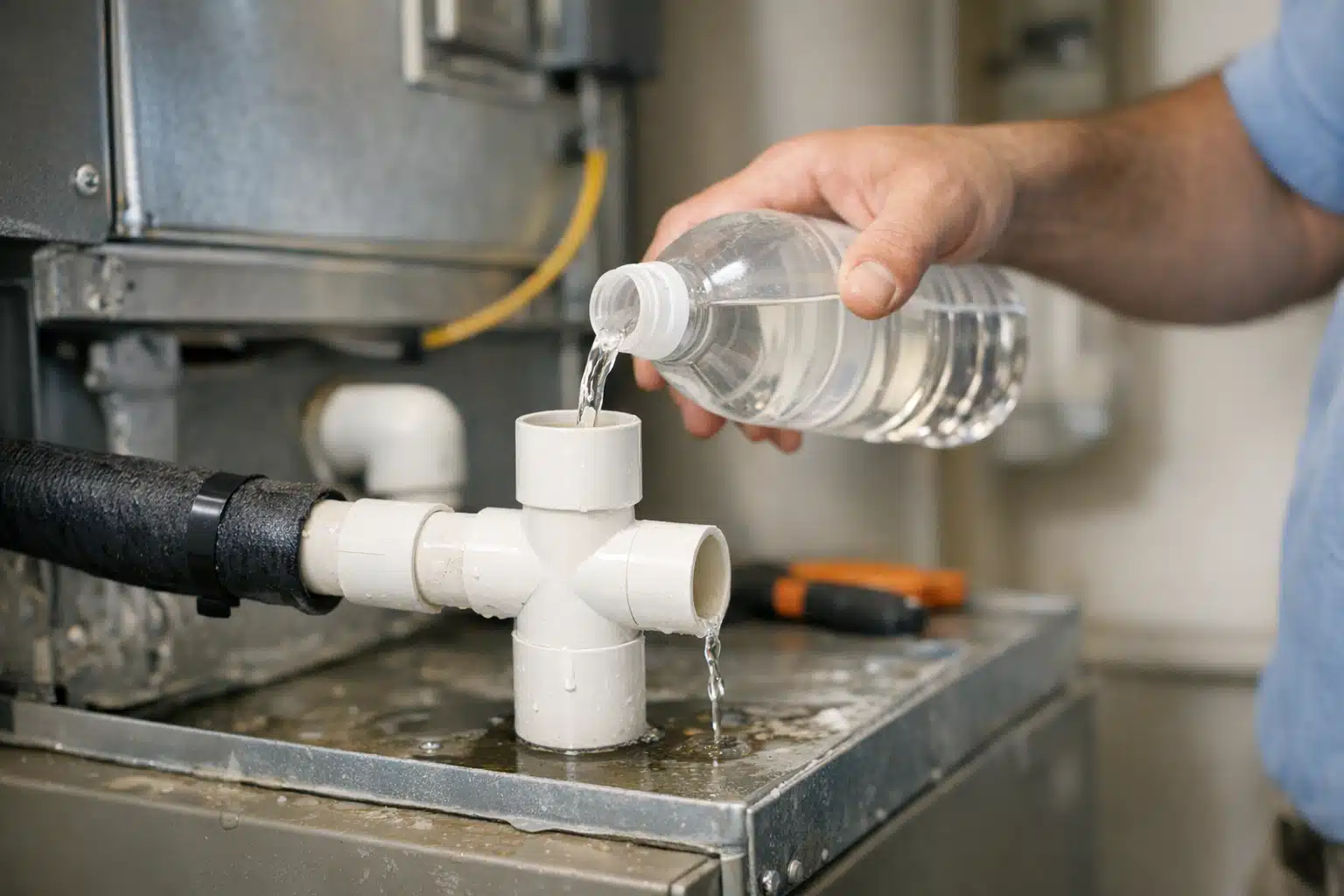
- Find the drain line access point, a capped T-shaped fitting near the air handler.
- Remove the cap and pour in a cup of distilled white vinegar.
- Let it sit 30 minutes to break down algae and slime.
- Flush with warm water and confirm it drains freely.
A wet/dry vacuum on the outdoor drain exit pulls out stubborn clogs. Seal the connection with your hand or a rag for stronger suction.
2. Check and Empty the Drain Pan
The drain pan sits under the evaporator coil and catches condensation. Standing water in the pan means the drain line is not moving water fast enough.
Wipe the pan dry and inspect it for rust holes or hairline cracks. A pan that holds water without draining points to a downstream clog you missed.
Metal pans on older Colorado furnaces corrode after ten to fifteen years. A cracked pan needs replacement, not patching.
3. Replace the Air Filter
A dirty air filter is the hidden cause behind most frozen coils. Restricted airflow drops the coil temperature below freezing, and ice forms.
When the ice melts, it overwhelms the pan and spills onto the floor. Replace the filter every 30 to 60 days during heavy summer use.
Homes with pets or near dusty Front Range construction need the shorter interval. Hold the filter to a light — if you cannot see through it, change it.
4. Inspect the Evaporator Coil for Ice
The evaporator coil freezes when airflow or refrigerant runs low. A frozen coil is a direct path to water on the floor.
Signs your coil is icing over:
- Warm air blowing from vents on a hot day.
- Visible frost on the copper lines near the unit.
- A hissing sound, which can point to a refrigerant leak.
If you spot ice, turn the system off and run the fan only. Let it thaw fully before restarting. Repeated freezing means a technician should check refrigerant levels.
5. Clear the Outdoor Condenser Unit
The outdoor condenser needs open airflow to release heat. Cottonwood seeds, grass clippings, and dust choke it during Colorado summers.
Keep a two-foot clearance around all sides. Rinse the fins gently with a garden hose from the inside out. A blocked condenser makes the whole system strain and raises freeze risk indoors.
Common Summer AC Mistakes That Cause Leaks
Some habits speed up the failures listed above. Avoiding them costs nothing.
- Setting the thermostat too low — pushing 65°F on a 95°F day overworks the coil and invites freezing.
- Skipping the monthly drain flush — algae rebuilds fast in warm, damp lines.
- Ignoring a musty smell — that odor is standing water in the pan or line.
- Closing too many vents — restricted airflow starves the coil and freezes it.
A slow leak behind a wall can run for days before it shows. By that point, mold has a foothold in the drywall and insulation.
How to Spot an AC Leak Before It Causes Damage
Early detection saves thousands in restoration costs. Water from an AC unit follows gravity into ceilings, walls, and finished basements.
Check these spots weekly during summer:
- The floor and area directly under the indoor air handler.
- The ceiling below an attic-mounted unit for brown rings or sagging.
- The drain pan and line connection for drips.
- Baseboards and carpet near the furnace for dampness.
A water leak detector placed in the drain pan sends an alert when moisture rises. It costs under $20 and pays for itself the first time it trips.

 Posted on Google
When to Call a Restoration Team
Water from an AC leak becomes a bigger problem once it reaches building materials. Drywall wicks moisture upward within hours, and mold can start growing in 24 to 48 hours.
Call for help when you find:
- A ceiling stain or bulge under an attic AC unit.
- Soaked carpet or subflooring near the furnace.
- A musty smell that returns after cleaning.
- Visible mold on walls or baseboards.
ARC Restoration handles water extraction, structural drying, and mold remediation across Colorado. Our crews document the damage for your insurance claim from the first visit.
Key Takeaways
Most summer AC leaks trace back to a clogged drain line, a frozen coil, or a failing drain pan. A monthly vinegar flush, fresh filters, and clear airflow stop these three failures before they reach your ceiling.
Catch a leak early and the fix is a bucket. Catch it late and it is drywall, insulation, and mold.
If an AC leak has already caused water damage, ARC Restoration responds fast for cleanup and drying. Call or text 720-799-2434, email office@advancedrestorationcolorado.com, or visit https://advancedrestorationcolorado.com.
Sources
- U.S. Department of Energy – Maintaining Your Air Conditioner
- U.S. Environmental Protection Agency – Mold Cleanup in Your Home
- U.S. Consumer Product Safety Commission – Home Safety Information


