
How to Handle Water Damage from Sprinkler System Failures
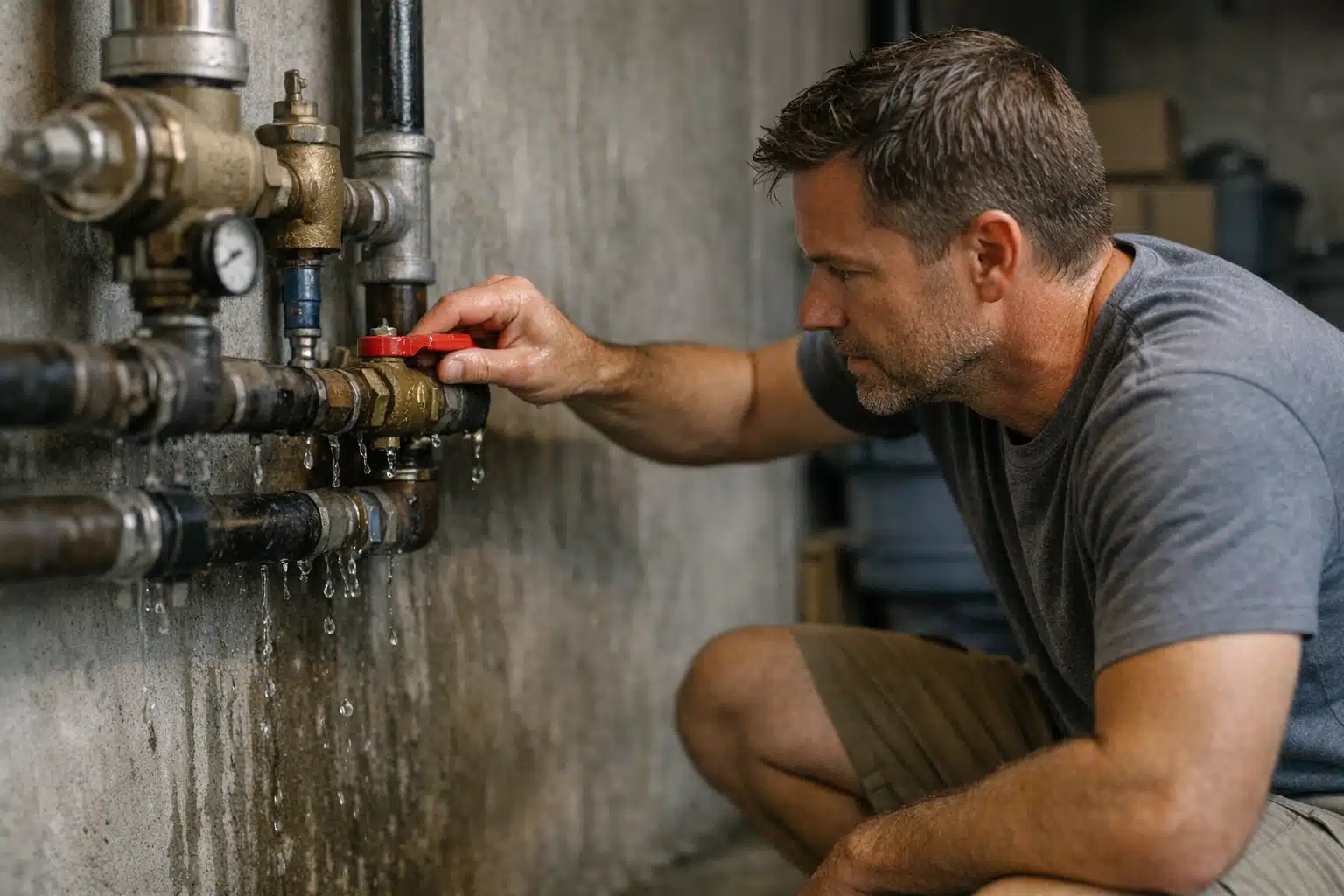
Sprinkler system failures can lead to significant water damage, particularly during the summer months when irrigation systems are under more pressure. This guide outlines immediate actions to take, how to document the damage, and the importance of timely repairs.
- Shut off the water supply immediately to minimize damage. Move belongings to prevent further soaking and use a wet/dry vacuum to remove standing water.
- Document the incident with photographs and notes to support any insurance claims. Identify the source of the water to differentiate between sprinkler and plumbing issues.
- Regular maintenance and seasonal checks can prevent future failures. Simple actions like inspecting for leaks and scheduling blowouts can save homeowners from costly repairs.
To handle water damage from sprinkler system failures, first turn off the water supply to prevent further flooding. Next, document the damage with photos and notes for insurance purposes. Remove any standing water and dry the affected area thoroughly. If the damage is extensive, consider contacting a professional for assistance.
A cracked sprinkler line can dump hundreds of gallons under your foundation before you notice a single wet spot. Summer runs your irrigation system harder than any other season, and that extra pressure is when a sprinkler system failure turns into indoor water damage. This post walks you through what to do in the first hour, how to document the loss, and when to call for help.
ARC Restoration handles these calls across Colorado every summer. The steps below come from what we see on-site, not a generic checklist.
Why Sprinkler System Failures Spike in Summer
Irrigation systems fail most in June, July, and August because they run daily and sit in the sun. Heat expands PVC fittings, dries out seals, and stresses valves that stayed idle all winter.
The failures we respond to fall into a few patterns:
- Backflow preventer cracks: A freeze-thaw crack from spring opens up under summer pressure and sprays against the foundation.
- Broken lateral lines near the house: Water saturates soil next to the basement wall and seeps inside.
- Failed valve solenoids: A zone stays on for hours overnight while you sleep.
- Manifold leaks in the basement: Homes with indoor irrigation manifolds flood the mechanical room directly.
The dangerous part is timing. Sprinklers run at dawn, so a stuck zone can flow for six hours before anyone wakes up.
What to Do First When a Sprinkler System Failure Floods Your Home
Shut off the water supply before anything else. Every minute of flow adds gallons to the cleanup.
- Turn off the irrigation shutoff valve. It sits near your main water line or in the basement where the irrigation branch splits off.
- Kill power to affected areas. If water reached outlets, appliances, or the electrical panel, shut those circuits off at the breaker.
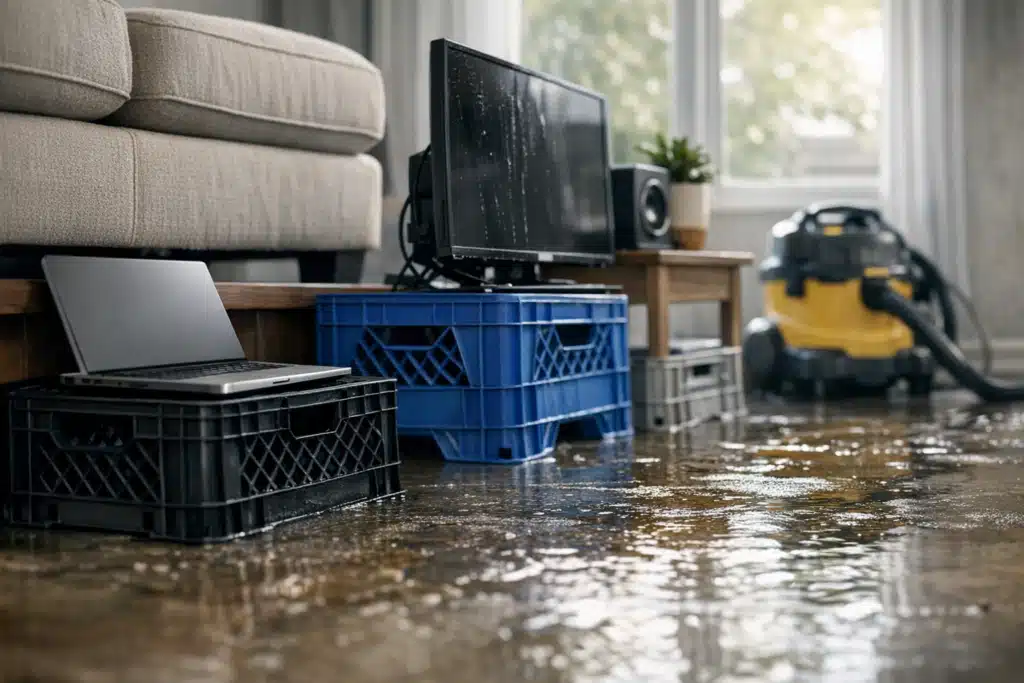
- Move belongings up and out. Lift furniture, boxes, and electronics off wet floors before soaking spreads.
- Pull standing water fast. A wet/dry vacuum or push broom moves surface water toward a drain.
- Photograph everything. Wide shots and close-ups of the source, the standing water, and damaged items.
Do not wait to see if it dries on its own. Colorado’s dry air fools people into thinking a floor is fine when the subfloor stays wet for weeks.
How to Tell Where the Water Came From
Tracing the source matters for both repair and insurance. A sprinkler system failure leaves clues that separate it from a plumbing leak.
Signs the source is your irrigation system
- Water appears along a foundation wall facing a sprinkler zone.
- The flooding follows a watering schedule and stops when the system does.
- A soggy or sunken patch shows up in the yard near the house.
- The basement wall wicks moisture upward from the base.
When indoor plumbing is the culprit instead
Clean water from a supply line looks identical to sprinkler water. Check whether the leak continues after you shut the irrigation valve. If it stops, your sprinklers caused it.
Does Homeowners Insurance Cover Sprinkler Water Damage?
Most homeowners policies cover sudden, accidental water damage from a sprinkler system failure. A cracked line that bursts and floods your basement usually qualifies as a covered event.
Coverage gets denied when the cause looks like neglect. Insurers push back on claims tied to:
- A leak you knew about and left running for weeks.
- Gradual seepage from a line that failed slowly over time.
- Missing maintenance, like skipping the fall blowout that caused a freeze crack.
Document the sudden nature of the failure. Photos, the watering schedule, and a repair invoice showing a fresh break all support a clean claim.
What your policy pays for
Standard coverage handles the water damage to your structure and contents. It rarely pays to fix the broken sprinkler part itself. That repair comes out of pocket, separate from the interior restoration.
The Hidden Damage People Miss
Surface water is the obvious part. The costly damage hides in materials that hold moisture out of sight.
After a summer irrigation flood, we routinely find:
- Wet insulation inside walls that never dries and grows mold within 48 hours.
- Saturated subfloor under laminate or vinyl plank that looks dry on top.
- Wicking drywall that draws water a foot above the visible waterline.
- Trapped moisture under baseboards and behind cabinet kickplates.
Colorado summers make this trickier. Low humidity dries the surface fast, so homeowners assume the job is done while the wall cavity stays soaked.

 Posted on Google
Why Fast Drying Matters More in Summer Heat
Warm, damp materials grow mold faster than cool ones. A flooded basement in July becomes a mold problem in two to three days.
Correct drying means more than fans and open windows. It takes moisture meters, air movers, and dehumidifiers sized to the wet area. Reading moisture inside walls and floors tells you when the structure is truly dry.
We set drying equipment and monitor daily until readings match the home’s baseline. Skipping this step is how a small leak becomes a mold remediation job.
How to Prevent the Next Sprinkler System Failure
Most failures are preventable with seasonal checks. Summer maintenance keeps small cracks from becoming floods.
- Walk each zone monthly. Watch for geysers, weak heads, and pooling near the house.
- Inspect the backflow preventer. Look for cracks and drips after the first hot week.
- Test your rain sensor. A stuck controller runs zones for hours unnoticed.
- Grade soil away from the foundation. Keep sprinkler water flowing away, not toward, the wall.
- Schedule a fall blowout. Draining lines before winter prevents the freeze cracks that fail next summer.
Add a smart controller with leak alerts if a zone runs at odd hours. Catching a stuck valve at 4 a.m. saves thousands.
Key Takeaways
Shut off the irrigation valve first, then pull standing water and photograph the damage before it spreads. A sprinkler system failure usually qualifies for insurance coverage when it happens suddenly, so document the source right away. Fast, measured drying stops summer heat from turning a leak into mold.
If a sprinkler line flooded your home, ARC Restoration responds across Colorado with water extraction and structural drying. Call or text 720-799-2434, email office@advancedrestorationcolorado.com, or visit https://advancedrestorationcolorado.com.
Sources
- EPA – Mold Cleanup in Your Home
- FEMA – How to Dry Out Your Home After a Flood
- Insurance Information Institute – What Does a Standard Homeowners Policy Cover?


