
Early Signs of Foundation Issues to Watch for This Spring
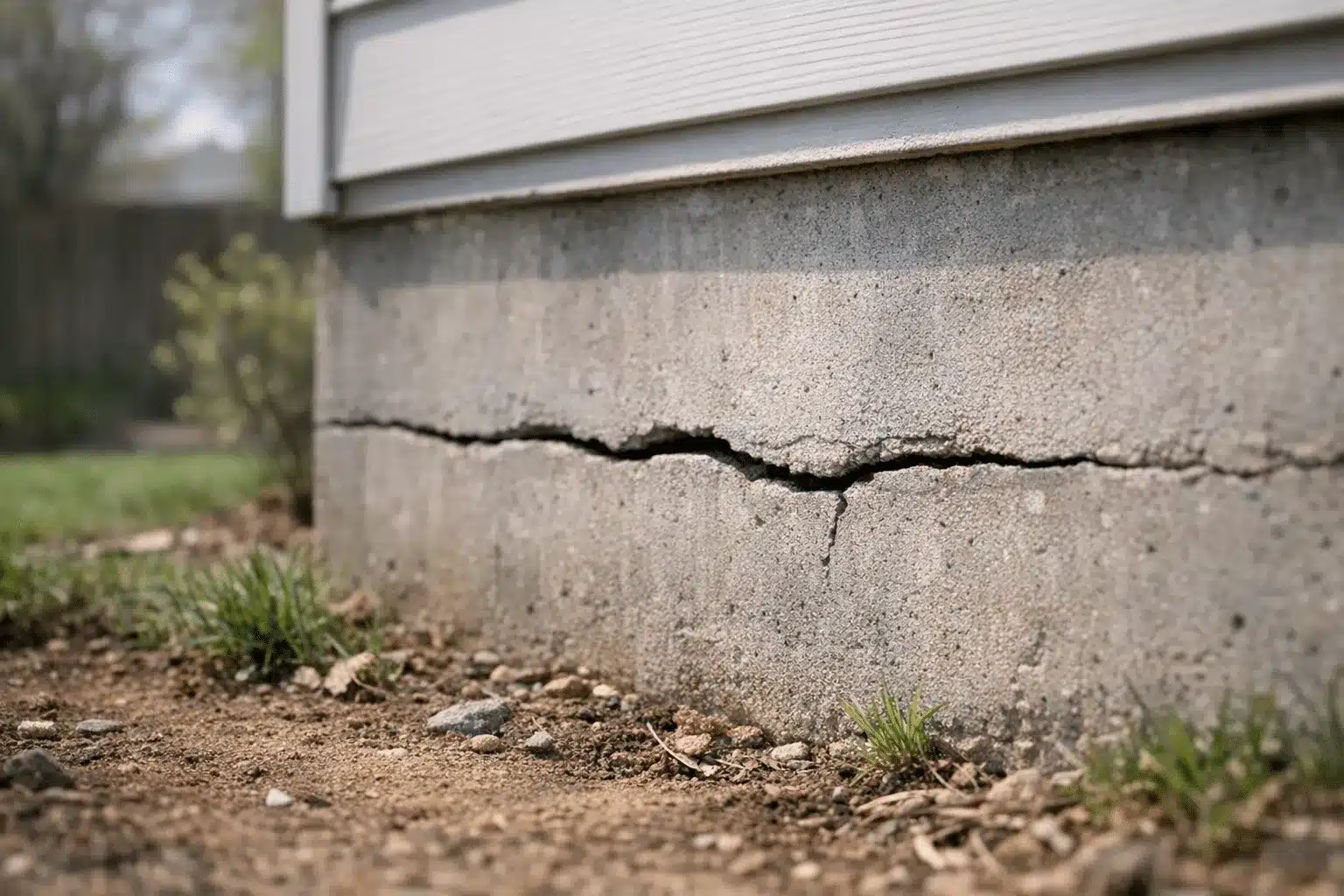
Spring thaw in Colorado reveals what winter’s freeze-thaw cycles did to your foundation. Snow melts, soils shift, and **foundation issues** that developed during cold months become visible for the first time.
Catching these problems early saves thousands in repair costs. This guide shows you exactly what to look for during your **spring inspection** and when to call professionals.
Why Spring Reveals Hidden Foundation Problems
Winter’s freeze-thaw cycles create significant stress on foundation materials. Water expands 9% when it freezes, creating pressure that cracks concrete and shifts soil around your foundation.
Spring brings three conditions that expose foundation damage:
- Snowmelt saturation – Oversaturated soil loses stability and shifts
- Temperature fluctuations – Daily freeze-thaw cycles continue into spring
- Visible access – Melting snow exposes foundation walls previously buried in drifts
Colorado’s clay-heavy soils make these seasonal shifts particularly destructive. Clay expands when wet and contracts when dry, creating constant pressure changes around foundations.
Exterior Signs of Foundation Issues to Check First
Start your foundation inspection outside where damage shows most clearly. Walk around your home’s perimeter and document what you find with photos.
Cracks in Foundation Walls
**Horizontal cracks** indicate serious structural pressure and require immediate professional evaluation. These cracks suggest soil pressure is pushing against your foundation wall.
**Vertical cracks** wider than 1/4 inch signal settling or shrinkage problems. Small hairline vertical cracks may be normal settling, but monitor them for growth.
**Stair-step cracks** in block foundations show uneven settling. These zigzag patterns follow mortar joints and indicate one section of your foundation is moving differently than another.
Foundation Settlement Warning Signs
Foundation settlement creates visible changes in your home’s exterior profile. Look for these indicators:
- Gaps between foundation and siding
- Windows or doors that appear tilted in their frames
- Porches or steps pulling away from the main structure
- Chimneys leaning or separating from the house
Water Damage and Drainage Problems
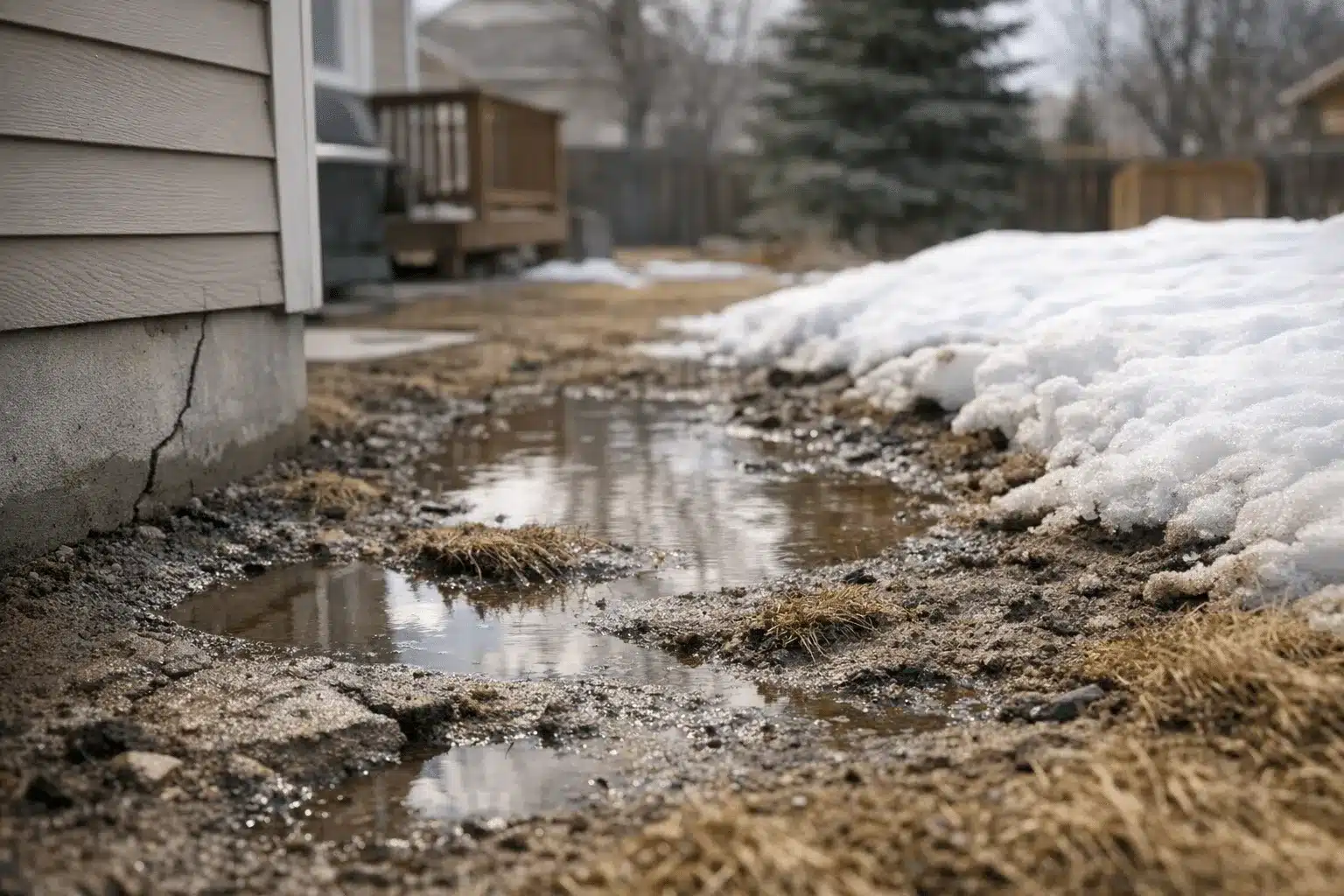
Spring snowmelt reveals winter water damage around foundations. Check for white chalky deposits (efflorescence) on foundation walls, which indicate water has been penetrating and evaporating.
Standing water or soggy soil against foundation walls shows drainage problems that will worsen with spring rains. Poor drainage creates hydrostatic pressure that can crack foundation walls or cause basement flooding.
Interior Foundation Issues That Develop Over Winter
Interior signs often appear before exterior damage becomes obvious. Check your basement or crawl space for these warning signs.
Basement Wall and Floor Cracks
**Fresh concrete dust** around cracks indicates recent movement. Clean, sharp crack edges suggest new damage from winter freeze-thaw cycles.
**Basement floor cracks** that run wall-to-wall often indicate foundation settling. These cracks may allow groundwater to enter during spring thaw.
**Bowing basement walls** show extreme soil pressure. Even slight inward bowing requires immediate structural evaluation.
Moisture and Water Intrusion
Spring brings increased basement moisture as groundwater levels rise. New water stains, musty odors, or condensation on basement walls indicate foundation waterproofing problems.
**Mold growth** on basement walls or stored items signals ongoing moisture problems that winter conditions may have worsened.
Structural Changes Inside Your Home
Foundation movement affects your entire house structure. These interior signs often appear before foundation damage becomes visible.
Door and Window Problems
Doors and windows that worked fine in fall but now stick or won’t close properly indicate foundation movement. **Gaps around door frames** or windows that weren’t there before winter show structural shifting.
New cracks in drywall, especially around door and window openings, result from foundation settlement stressing the frame.
Floor Issues
**Squeaky floors** that developed over winter may indicate floor joists shifting due to foundation movement. **Sloping or bouncy floors** suggest foundation supports have settled or shifted.
Cracks in tile floors or gaps in hardwood planks can result from foundation issues causing structural movement throughout the house.
When Foundation Issues Require Professional Inspection
Some foundation problems need immediate professional evaluation to prevent catastrophic damage and expensive repairs.
**Call a foundation specialist immediately** for these conditions:
- Horizontal cracks in foundation walls
- Basement walls bowing inward
- Doors or windows that won’t close
- New cracks larger than 1/4 inch
- Standing water in basements after snow melts
- Chimneys separating from the house
**Schedule professional inspection within 30 days** for these issues:
- Multiple small cracks in foundation walls
- New moisture problems in basements
- Minor door or window sticking
- Small gaps between foundation and siding

They are knowledgeable, organized, and genuinely care about doing things the right way. If you’re looking for a restoration company that values communication and accountability, this is a team worth calling.
 Posted on Google
Preventing Spring Foundation Damage
Proper drainage prevents most spring foundation problems. **Ensure gutters direct water at least 6 feet from your foundation** and clean them before spring rains begin.
**Grade soil away from your foundation** to prevent water pooling. Soil should slope down from your house at least 6 inches over 10 feet.
**Remove snow buildup** against foundation walls before it melts. Large snow piles create excessive moisture and freeze-thaw pressure against foundation materials.
Professional Foundation Repair and Restoration
Foundation repairs become more complex and expensive when delayed. Early intervention can often prevent minor settling or cracking from becoming major structural problems.
Professional foundation repair includes structural stabilization, waterproofing, and drainage corrections. Modern repair methods can permanently stabilize foundations and prevent future damage.
Spring foundation inspections help homeowners address problems before they worsen during summer storms or next winter’s freeze-thaw cycles. Professional restoration teams can also identify and repair water damage that foundation leaks may have caused to basements or crawl spaces.
Conclusion
Spring reveals foundation damage that winter’s freeze-thaw cycles created or worsened. Early detection of cracks, settlement, moisture intrusion, and structural changes saves thousands in repair costs and prevents catastrophic foundation failure.
Don’t wait for small foundation problems to become major structural issues. If you’ve noticed any of these warning signs around your Colorado home, contact ARC Restoration at 720-799-2434 for a professional foundation and moisture damage assessment.
Sources
- FEMA – Foundation Protection and Flood Risk
- American Concrete Institute – Freeze-Thaw Damage in Concrete
- USGS – Groundwater and Foundation Impacts
Spring in Colorado exposes foundation issues caused by winter's freeze-thaw cycles. Early detection of these problems can save homeowners significant repair costs.
- Inspect the exterior for cracks, gaps, and signs of water damage around the foundation. Horizontal cracks and bowing walls require immediate professional attention.
- Look for interior signs like sticking doors, new drywall cracks, and moisture in basements that indicate foundation movement.
- Proper drainage and maintenance can prevent many spring foundation problems, so ensure gutters direct water away and remove snow buildup before it melts.
Early signs of foundation issues in spring include visible cracks in walls or floors, doors and windows that stick or do not close properly, and uneven or sloping floors. These symptoms often emerge after winter's freeze-thaw cycles, as the melting snow and shifting soils can reveal underlying problems with the foundation.


