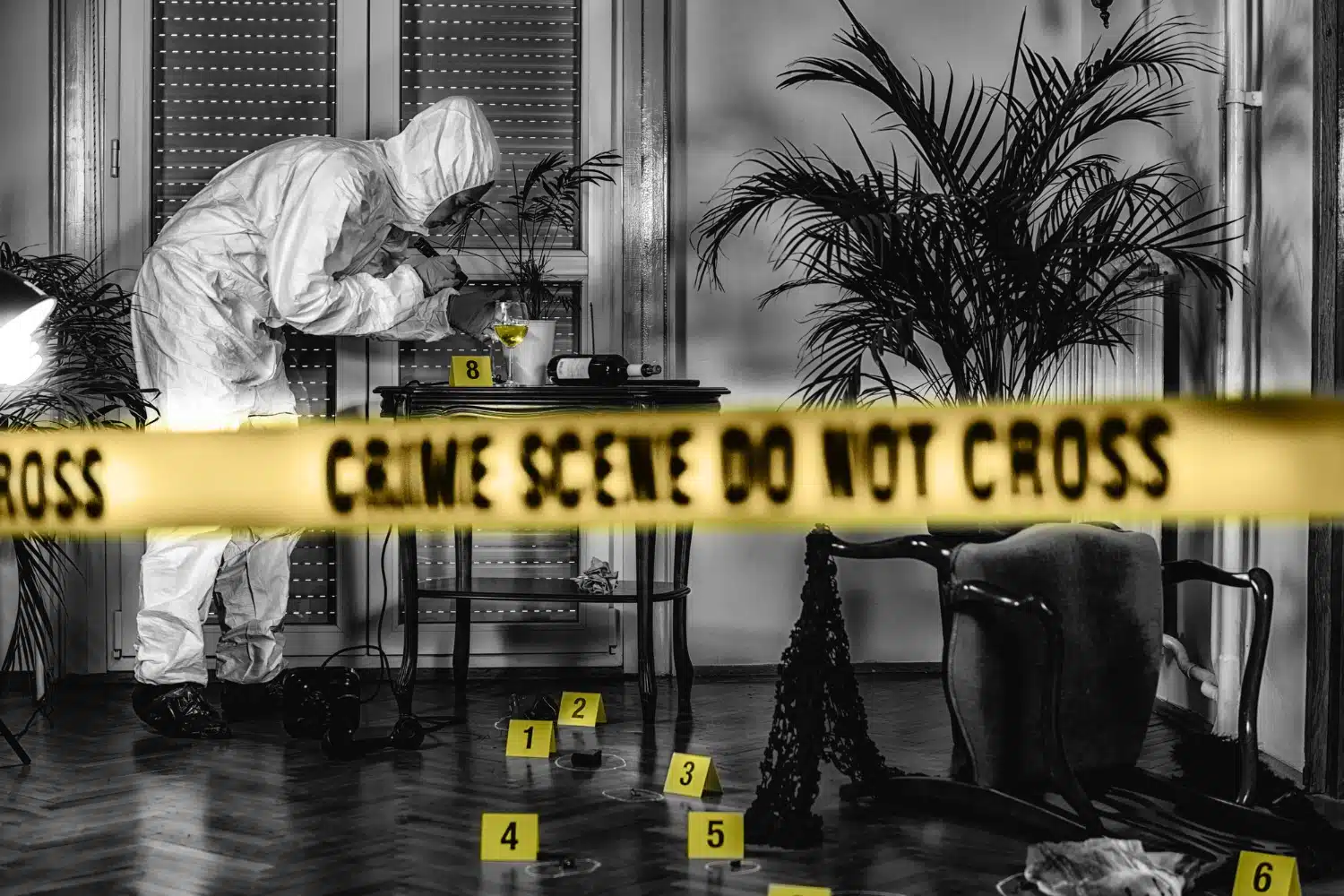
Professional scene cleanup in Aurora, CO involves specialized removal, decontamination, and restoration of areas affected by traumatic events, crime scenes, or biohazard incidents. ARC Restoration provides 24/7 emergency services with trained technicians and hospital-grade equipment.
Aurora's diverse housing stock – from post-war ranch homes to modern apartments – presents unique challenges, as older porous materials and shared ventilation systems can absorb and spread biohazardous contamination.
The semi-arid climate with 300 days of sunshine and significant temperature swings accelerates the bonding of biological materials to surfaces and can drive contaminants deeper into porous materials.
ARC Restoration handles insurance documentation, arrives in unmarked vehicles for privacy, and maintains IICRC certifications along with OSHA training to meet Colorado biohazard disposal regulations.
What is scene cleanup and why is it necessary?
Scene cleanup is the specialized removal, decontamination, and restoration of areas affected by traumatic events, unattended deaths, crime scenes, or biohazard incidents. This work goes beyond standard cleaning and requires trained technicians, specialized equipment, and strict adherence to health and safety protocols to properly sanitize and restore affected spaces for safe use.
Overview
When tragedy strikes in Aurora, professional scene cleanup becomes a necessity that no family or property owner should face alone. Scene cleanup involves the specialized removal, decontamination, and restoration of areas affected by traumatic events, unattended deaths, crime scenes, or biohazard incidents. This work goes far beyond standard cleaning – it requires trained technicians, specialized equipment, and strict adherence to health and safety protocols to properly sanitize and restore affected spaces.
Professional scene cleanup services protect both your health and your property. Biological materials pose serious infection risks, and improper handling can lead to contamination, disease transmission, and long-term structural damage. In Aurora’s climate, with its temperature swings and moderate humidity levels, biohazards can quickly compromise building materials and create persistent odor problems if not addressed correctly.
Complete removal and proper disposal of all biohazardous materials following Colorado regulations
Advanced decontamination using hospital-grade disinfectants and EPA-approved antimicrobial treatments
Thorough odor elimination using specialized equipment and techniques
Compassionate service that respects the sensitivity of these difficult situations
Common Issues in Aurora, CO
Aurora’s position as Colorado’s third-largest city brings unique challenges for scene cleanup services. The city’s diverse housing stock – ranging from post-war ranch homes to modern apartment complexes – means contamination can affect everything from hardwood floors and carpet to concrete slabs and shared ventilation systems. Properties built between the 1960s and 1990s, which make up a significant portion of Aurora’s housing, often feature porous materials like unsealed concrete in basements and older carpet padding that can absorb biohazardous materials.
The area’s semi-arid climate creates specific concerns for scene cleanup. Aurora experiences approximately 300 days of sunshine annually, with low humidity levels that can accelerate the drying and bonding of biological materials to surfaces. Temperature fluctuations between day and night can exceed 30 degrees, causing expansion and contraction that drives contaminants deeper into porous materials. Winter freezing and summer heat both affect how quickly biological materials decompose and spread odors.
Multi-family properties and apartment buildings where contamination can spread through shared HVAC systems and flooring
Basement areas with concrete floors that absorb fluids and require specialized treatment
Older homes with hardwood flooring that can be permanently damaged by biological materials
Properties near high-traffic areas along major corridors like Colfax Avenue or I-225 requiring discreet service
Seasonal challenges including winter ice that delays response times and summer heat that accelerates decomposition
Situations requiring coordination with Aurora Police Department or Arapahoe County Coroner’s office
How ARC Restoration Can Help
ARC Restoration approaches every scene cleanup situation with professionalism, discretion, and thorough attention to detail. Our process ensures complete decontamination while treating your property and your situation with the respect both deserve.
Our Scene Cleanup Process
Initial Assessment and Safety Evaluation: We conduct a comprehensive inspection to identify all affected areas, including hidden contamination in subflooring, walls, or ventilation systems. Our technicians establish containment zones and implement safety protocols before beginning work.
Biohazard Removal: All biological materials are carefully removed using specialized tools and techniques. We handle everything from surface contamination to deeply penetrated materials, ensuring nothing hazardous remains.
Deep Cleaning and Decontamination: We use hospital-grade disinfectants and EPA-registered antimicrobial solutions to sanitize all affected surfaces. Our cleaning extends beyond visible areas to treat porous materials, HVAC systems, and structural components.
Odor Elimination: Advanced equipment including hydroxyl generators and thermal fogging systems neutralize odors at the molecular level rather than simply masking them.
Proper Disposal: All biohazardous waste is packaged, transported, and disposed of according to Colorado Department of Public Health regulations and OSHA standards.
Final Inspection and Verification: We conduct ATP testing and visual inspections to verify complete decontamination before returning the space to you.
Advanced Methods and Equipment
Personal protective equipment meeting or exceeding OSHA bloodborne pathogen standards
HEPA filtration systems to prevent airborne contamination during cleanup
Enzyme-based cleaners that break down biological materials at the molecular level
Negative air machines to maintain proper air pressure and prevent cross-contamination
Moisture detection equipment to identify hidden contamination in building materials
Throughout the process, we maintain clear communication with you and coordinate with insurance companies, law enforcement, or other parties as needed. We understand that timing matters – both for your emotional wellbeing and to prevent further property damage.
Insurance & Documentation
Scene cleanup situations often involve complex documentation requirements, and ARC Restoration handles these details so you can focus on what matters most. We work directly with insurance companies to streamline the claims process and ensure you receive the coverage you’re entitled to under your homeowner’s or commercial property policy.
Our documentation process creates a complete record of all work performed. We photograph affected areas before, during, and after cleanup, maintain detailed logs of all materials removed and cleaning agents used, and provide itemized invoices that meet insurance company requirements. For situations involving law enforcement or legal proceedings, we can provide documentation that meets chain-of-custody standards and expert testimony when needed.
Detailed written estimates breaking down all cleanup phases and associated costs
Photographic documentation showing extent of contamination and thoroughness of restoration
Certificates of completion verifying proper decontamination and safe occupancy
Waste disposal manifests proving compliant handling of biohazardous materials
Direct insurance billing to minimize your out-of-pocket expenses during difficult times
Compliance with Colorado Department of Public Health regulations and OSHA bloodborne pathogen standards
We maintain all relevant certifications including IICRC Applied Microbial Remediation Technician credentials and OSHA Hazardous Waste Operations training. Our technicians understand Colorado-specific regulations governing biohazardous waste transport and disposal, ensuring complete legal compliance throughout every job.
Why Choose ARC Restoration
ARC Restoration brings specialized expertise that goes beyond what general cleaning companies can provide. Our technicians receive ongoing training in bloodborne pathogen handling, biohazard remediation, and trauma scene cleanup – not just once, but continuously as techniques and regulations evolve. We maintain certifications from the Institute of Inspection, Cleaning and Restoration Certification (IICRC) and complete annual OSHA training to ensure we’re using the most current, effective methods available.
Our presence in the Aurora community means we understand local factors that affect scene cleanup work. We know how Aurora’s housing stock, climate patterns, and municipal systems impact restoration needs. We’ve established relationships with local authorities, medical examiners, and support services, allowing us to coordinate seamlessly when situations require multiple agencies. Our response commitment ensures we’re available when you need us – because these situations don’t wait for business hours.
What sets us apart is our combination of technical excellence and genuine compassion. We arrive in unmarked vehicles to protect your privacy. We treat every property as if it were our own, working carefully to preserve unaffected areas and personal belongings. Our follow-up doesn’t end when the work is complete – we check in to ensure you’re satisfied and the space remains properly decontaminated. We’re not just restoring properties; we’re helping people move forward after unimaginable circumstances.
Housing Characteristics & Scene Cleanup Considerations
Aurora’s housing landscape reflects the city’s rapid growth from the 1950s through the 1990s, with the majority of homes built during the post-war boom and subsequent suburban expansion. Approximately 40% of Aurora’s residential properties were constructed between 1970 and 1990, featuring the ranch-style layouts, split-level designs, and early townhome developments typical of that era. These properties often include features that complicate scene cleanup: wall-to-wall carpeting with thick padding, particle board subflooring that absorbs liquids readily, and textured drywall that’s difficult to fully decontaminate.
The city’s housing stock includes a significant proportion of multi-family properties – apartments, condominiums, and townhomes – particularly in areas along major corridors and near Buckley Space Force Base. These shared-wall structures present unique challenges for scene cleanup because contamination can spread through shared ventilation systems, penetrate adjoining walls, or seep through flooring into units below. Many of Aurora’s apartment complexes from the 1970s and 1980s feature concrete slab foundations with vinyl or carpet flooring directly adhered, meaning biological contamination often requires removal of flooring and treatment of the concrete beneath.
Construction-Specific Scene Cleanup Concerns
Older homes with hardwood flooring over crawl spaces where fluids can seep between boards and contaminate substructures
Basement spaces with unsealed concrete common in Aurora homes, which absorb biological materials and require specialized enzymatic treatment
Popcorn ceilings and textured walls prevalent in 1970s-1980s construction that trap odors and require careful treatment or removal
Original HVAC ductwork in older properties that can spread contaminated air throughout the home
Shared attic spaces in townhomes where odors can migrate between units
Manufactured homes in eastern Aurora that require special handling due to thinner walls and flooring
Environmental Conditions & Scene Cleanup Implications
Aurora’s semi-arid climate and Front Range location create environmental conditions that significantly impact scene cleanup work. The city experiences low relative humidity averaging just 30-40% throughout most of the year, which causes biological materials to dry and bond to surfaces more quickly than in humid climates. This rapid drying can actually make cleanup more challenging, as dried biological materials require more aggressive treatment to remove completely. Aurora’s elevation of approximately 5,470 feet means lower atmospheric pressure, which affects how cleaning solutions evaporate and how odors disperse through structures.
Temperature extremes present additional challenges. Summer temperatures regularly exceed 90 degrees, accelerating decomposition and intensifying odors, while winter temperatures can drop below zero, freezing biological materials and complicating removal. The city’s dramatic daily temperature swings – often 25-30 degrees between daytime highs and nighttime lows – cause building materials to expand and contract, potentially driving contaminants deeper into porous surfaces. Aurora receives approximately 17 inches of precipitation annually, with much of it falling during spring and early summer, creating periods when moisture in structures can reactivate dried biological materials.
Environmental Factors Affecting Scene Cleanup
Low humidity requiring specialized humidification during cleanup to prevent dust dispersion of dried biological materials
High UV exposure from intense sunlight that can set organic stains permanently if not treated quickly
Dry air that spreads odor molecules more readily through HVAC systems and porous building materials
Seasonal allergens including cottonwood and ragweed that can complicate air quality during cleanup
Occasional high winds exceeding 40 mph that require secure containment of biohazardous materials during transport
Winter conditions that can delay response times and require heated equipment for effective decontamination
Aurora’s municipal water supply, sourced from a combination of South Platte River water and groundwater from the Denver Basin aquifer, is treated to meet all federal standards. However, the water’s mineral content – higher than in some areas due to the aquifer’s geology – means we adjust our cleaning solutions accordingly to prevent mineral deposits during the decontamination process. Air quality in Aurora is generally good but can be affected by ozone during summer months and occasional wildfire smoke, requiring us to use HEPA filtration systems that protect both our technicians and prevent spreading contaminated particles.
Population Characteristics & Scene Cleanup Considerations
Aurora’s population of approximately 390,000 makes it Colorado’s third-largest city and one of the most diverse communities in the state. The city’s demographic composition – with significant Hispanic, Asian, and African American populations alongside white residents – creates a community where cultural sensitivity and language accessibility matter in service delivery. Many Aurora households include extended family members or multiple generations living together, which can complicate scene cleanup situations emotionally and logistically. The city’s median household income of around $65,000 reflects a working-class to middle-class economic profile, meaning affordability and insurance navigation are important considerations for many families.
Aurora’s character as a military-connected community, with Buckley Space Force Base employing thousands of service members and civilians, means the population includes many transient residents and rental properties. Approximately 45% of Aurora residents are renters rather than homeowners, creating situations where scene cleanup involves coordination between tenants, landlords, and property management companies. The city’s employment base centers on healthcare (with the University of Colorado Hospital and Medical Center of Aurora), aerospace and defense, retail, and service industries – sectors where shift work and non-traditional schedules are common.
Population Factors Affecting Scene Cleanup Services
High population density in central Aurora neighborhoods requiring discreet service to protect privacy in close-proximity housing
Diverse language needs with Spanish, Vietnamese, Amharic, and other languages spoken in many households
Economic considerations requiring clear communication about insurance coverage and payment options
Rental properties where multiple parties (tenants, landlords, property managers) need coordination and documentation
Military families who may be dealing with scene cleanup while also managing deployment or relocation stress
Aging population in established neighborhoods who may need additional assistance navigating the cleanup process
Working families with non-traditional schedules requiring flexible appointment times and efficient service
The city’s age distribution includes both young families and an increasing number of older adults aging in place in Aurora’s established neighborhoods. This demographic mix means scene cleanup situations range from accidents involving young children to unattended deaths of elderly residents living alone. Understanding these population patterns helps us provide appropriate support services, connect families with community resources, and approach each situation with the specific sensitivity it requires.
Crime and Incident Statistics in Aurora
Aurora’s size and urban character mean the city experiences crime and traumatic incidents that occasionally require professional scene cleanup services. According to Aurora Police Department data, the city records several thousand property crimes and hundreds of violent crimes annually, with certain areas along East Colfax Avenue and in neighborhoods near the I-225 corridor experiencing higher incident rates. While Aurora’s overall crime rate has shown improvement in recent years through community policing initiatives and neighborhood revitalization efforts, the sheer size of the city means traumatic events requiring biohazard cleanup occur regularly.
The Aurora Police Department maintains detailed crime statistics by district, with the city’s six police districts showing varied patterns. Central and northwest Aurora tend to see higher rates of property crimes including burglaries and vehicle thefts, while certain areas experience violent crimes that may result in scenes requiring professional cleanup. Unattended deaths – whether from natural causes, accidents, or other circumstances – occur across all areas of the city but are more common in neighborhoods with older populations and in multi-family housing where residents may have limited social contact with neighbors.
Incident Patterns Affecting Scene Cleanup Demand
Violent crimes including assaults and homicides that require immediate biohazard remediation at residential and commercial properties
Unattended deaths in single-family homes and apartments, particularly in older neighborhoods and among elderly residents living alone
Accidents in homes including falls, medical emergencies, and other traumatic incidents requiring cleanup
Hoarding situations that may involve biological hazards and require specialized cleaning approaches
Drug-related incidents in certain areas that may involve contaminated needles and other biohazardous materials
Suicides occurring across all demographic groups and neighborhoods, requiring compassionate and thorough cleanup services
Beyond criminal incidents, Aurora experiences accidents and medical emergencies that necessitate scene cleanup services. The city’s busy roadways see vehicle accidents that sometimes affect residential properties. Home accidents among Aurora’s aging population create situations where families need professional help restoring spaces after traumatic medical events. Understanding these local patterns helps ARC Restoration maintain readiness to respond quickly and appropriately, with the right equipment and expertise for the specific types of scenes we encounter in Aurora. Our established relationships with Aurora Police Department, Arapahoe County Coroner’s office, and local medical facilities ensure smooth coordination when multiple agencies are involved in a scene.
Scene cleanup involves the specialized removal, decontamination, and restoration of areas affected by traumatic events, crime scenes, or biohazard incidents. This process requires trained technicians and specialized equipment to ensure that the area is properly sanitized and safe for reoccupation.
Hiring a professional for scene cleanup is crucial because it involves handling hazardous materials that pose serious health risks. Professionals are trained to follow strict safety protocols and use appropriate equipment to ensure thorough decontamination and restoration.
Response times for scene cleanup services in Aurora can vary based on the situation and time of day. However, most companies strive to arrive promptly to assess the scene and begin cleanup as soon as possible, often within a few hours.
Many scene cleanup services offer 24/7 availability to address emergencies promptly. This is particularly important for situations that require immediate attention, such as crime scenes or unattended deaths.
Scene cleanup is necessary for various incidents, including crime scenes, unattended deaths, and biohazard situations. Any event that leaves behind biological materials or hazardous substances typically requires professional cleanup.
When choosing a scene cleanup service in Aurora, look for companies with experience, proper certifications, and positive customer reviews. It's also important to ensure they follow health and safety regulations and offer compassionate service.
While waiting for scene cleanup professionals, it’s best to avoid the affected area to prevent exposure to hazardous materials. Keep the area secure and refrain from attempting to clean it yourself, as improper handling can worsen the situation.